Tel:
 E-Mail:
 English
 Chinese
 한국어
 Español




News
1. Material Quality and Manufacturing Precision
The materials used in a pneumatic actuator have a direct influence on its wear resistance, corrosion resistance, and mechanical stability.
A typical rack-and-pinion pneumatic actuator consists of a housing, pistons, a rack-and-pinion mechanism, seals, bearings, and, in a spring-return model, springs. Each component must withstand repeated movement and the forces generated during operation.
Key material and manufacturing considerations include:
Actuator housing: The housing must provide sufficient structural strength and surface protection for the intended operating environment.
Piston and rack-and-pinion mechanism: Material strength, surface treatment, and machining precision influence wear, friction, and motion consistency.
Seals and O-rings: Seal quality and compatibility with the operating temperature, lubricant, and compressed-air conditions affect air leakage and service life.
Manufacturing tolerances: Accurate machining and consistent assembly help reduce uneven wear and excessive friction.
For example, hard anodizing on suitable aluminum actuator components can improve surface hardness and resistance to wear and corrosion. The actual benefit depends on the material, treatment quality, and operating environment.
When evaluating a pneumatic actuator manufacturer, buyers should consider not only the external appearance but also component materials, surface treatment, machining quality, and quality-control procedures.
2. Compressed Air Quality
Compressed air is the actuator's power source, so its quality is one of the most important factors affecting long-term performance.
Air containing excessive moisture, dust, oil contaminants, or other particles can damage internal components, affect seals, and increase the risk of sticking or malfunction.
Common air-quality problems include:
Moisture: Condensation can contribute to corrosion and may affect components in the pneumatic system.
Dust and particles: Contaminants can accelerate wear or interfere with the smooth movement of internal components.
Unsuitable lubrication: Incorrect lubricants or incompatible oil can affect seals and other materials.
Unstable air pressure: Pressure outside the manufacturer's specified operating range may cause unreliable operation or place unnecessary stress on the system.
How to improve compressed-air quality
Install an appropriately selected air filter and, where required, a moisture separator or dryer.
Keep the air supply within the actuator manufacturer's specified pressure range.
Check filters, regulators, and air lines regularly.
Follow the manufacturer's instructions regarding lubrication. Do not assume that adding oil is necessary for every actuator.
Investigate unusual pressure drops, moisture accumulation, or contamination promptly.
Clean, properly regulated compressed air helps reduce unnecessary wear and supports consistent actuator operation.
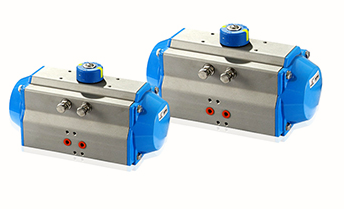
3. Operating Pressure and Load Requirements
An actuator must generate enough torque to operate the connected valve under actual working conditions.
If the available actuator torque is insufficient, the valve may fail to reach its required position. If the actuator is selected without considering the valve's operating torque and safety margin, the system may experience unreliable operation.
At the same time, operating pressure must remain within the specified limits. Excessive pressure does not automatically improve performance and may damage components or seals if the actuator is not designed for it.
When selecting an actuator, consider:
Valve type and size
Valve operating torque under actual process conditions
Minimum available air-supply pressure
Required safety factor
Valve-seat friction and differential pressure
Operating temperature and process-medium characteristics
For spring-return actuators, the available output torque varies with the actuator's operating position. The torque requirements of the valve must be checked against the actuator's torque output throughout the relevant operating stroke.
Practical tip: Select an actuator using the manufacturer's torque tables and the valve manufacturer's torque requirements. Do not rely on nominal valve size alone.
4. Operating Frequency and Duty Cycle
Operating frequency affects how quickly an actuator accumulates mechanical cycles and how much wear develops over time.
An actuator that operates several times a day experiences a different usage pattern from one that cycles repeatedly in an automated production line.
Frequent operation can increase the cumulative wear of seals, bearings, and moving components. However, cycle count alone does not determine service life. Air quality, load, pressure, temperature, installation, and maintenance also matter.
Consider the following example:
Low-frequency operation: A valve that opens and closes occasionally may accumulate cycles slowly, although corrosion, aging seals, and environmental exposure can still affect its service life.
High-frequency operation: An actuator used in a rapid automated process accumulates cycles much faster and may require more frequent inspection.
Frequent switching under heavy load: High cycle frequency combined with demanding torque requirements can increase wear and make correct sizing especially important.
When evaluating actuator durability, distinguish between cycle life and calendar service life. A cycle-life test measures performance under specified test conditions; it does not guarantee the same number of cycles in every real-world installation.
For high-cycle applications, ask the manufacturer about applicable cycle-life test conditions, maintenance recommendations, and the suitability of the selected model.
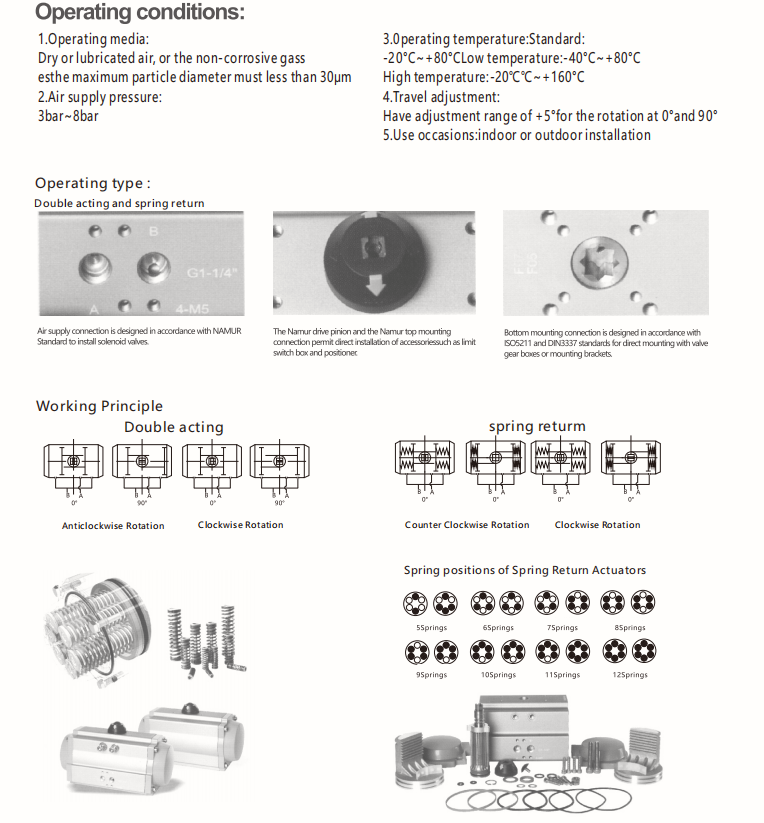
5. Operating Temperature and Environmental Conditions
Temperature and the surrounding environment can significantly influence actuator performance.
High temperatures
Elevated temperatures may accelerate seal aging, affect lubricant performance, and change the properties of internal materials. If the actuator is installed close to steam lines, hot equipment, or other heat sources, confirm that its rated ambient temperature is suitable.
Low temperatures
Low temperatures can affect seal flexibility and may contribute to moisture freezing in the compressed-air system. In cold environments, air treatment and suitable component selection become particularly important.
Corrosive or humid environments
High humidity, salt spray, corrosive gases, and chemical exposure can damage exposed surfaces and compromise components if the actuator is not appropriately protected.
To improve reliability:
Verify the actuator's specified ambient-temperature range.
Select suitable surface protection and materials for the environment.
Use appropriate protective accessories where needed.
Check enclosure and ingress-protection ratings for the installation conditions.
Avoid assuming that a high ingress-protection rating alone guarantees suitability for every corrosive or hazardous environment.
The actuator's operating environment should be considered during selection rather than addressed only after a problem occurs.
6. Installation and Alignment
Even a well-manufactured actuator may experience premature wear if it is installed incorrectly.
Poor alignment between the actuator, mounting bracket, coupling, and valve stem can introduce unwanted mechanical stress. Incorrect coupling dimensions or loose fasteners may also affect movement and reliability.
Common installation problems include:
Misalignment between the actuator and valve stem
Incorrect mounting brackets or couplings
Loose mounting bolts
Incorrect pneumatic tubing connections
Insufficient space for maintenance or accessory adjustment
Installation in an environment outside the actuator's specified limits
Installation best practices
Confirm that the actuator mounting standard and coupling match the valve.
Align the actuator and valve correctly before tightening the fasteners.
Verify the direction of rotation and the required fail position, where applicable.
Connect the air supply according to the actuator's operating instructions.
Test the complete valve-and-actuator assembly before commissioning.
Check for abnormal noise, sticking, air leakage, or incomplete travel.
Correct installation reduces avoidable mechanical stress and makes future maintenance easier.
7. Seal Wear and Air Leakage
Seals are essential to maintaining the pressure required for actuator movement. Over time, they can wear, harden, deform, or lose elasticity.
Seal deterioration may be accelerated by:
Excessive operating temperature
Contaminated compressed air
Incompatible lubricants or chemicals
Pressure outside the specified range
Repeated friction and movement
Long-term storage under unsuitable conditions
Possible warning signs include air leakage, slower movement, inconsistent operation, or difficulty completing the required stroke.
However, these symptoms do not always mean that the seals are defective. Supply pressure, solenoid valves, tubing, valve torque, and other pneumatic components should also be checked.
If leakage or abnormal movement occurs, inspect the complete pneumatic circuit and follow the manufacturer's troubleshooting and repair instructions. Replace seals with compatible parts rather than choosing replacements based only on their dimensions.
8. Maintenance and Inspection
Preventive maintenance helps identify problems before they cause unexpected downtime. The appropriate maintenance interval depends on operating frequency, environment, air quality, and the manufacturer's recommendations.
A practical maintenance plan may include:
| Inspection item | What to check | Why it matters |
|---|---|---|
| Air supply | Pressure, moisture, and contamination | Helps maintain stable operation |
| Pneumatic connections | Leakage, loose fittings, and damaged tubing | Reduces pressure loss and operating faults |
| Actuator movement | Smooth travel, abnormal noise, and response | Helps identify wear or mechanical interference |
| Mounting and coupling | Alignment, fasteners, and looseness | Reduces unnecessary mechanical stress |
| Seals and external surfaces | Visible damage, leakage, and corrosion | Helps detect deterioration early |
| Valve operation | Required torque, travel, and end positions | Confirms that the complete assembly works correctly |
Maintenance should be based on the actual application rather than an arbitrary universal schedule. Before disassembly, isolate the energy sources, depressurize the pneumatic system, and follow the manufacturer's safety procedures. Spring-return actuators may contain preloaded springs, so they should only be opened by qualified personnel using the correct procedures.
9. Correct Actuator Selection
Choosing an actuator that matches the valve and application is one of the most effective ways to support a long service life.
Before purchasing, confirm the following:
Actuator type: Rack-and-pinion, scotch-yoke, or another design suited to the application.
Action type: Double acting or spring return, based on the required operating and fail-safe behavior.
Torque output: Sufficient for the valve's actual operating requirements at the available air pressure.
Materials and seals: Compatible with the ambient temperature and environment.
Operating frequency: Suitable for the expected cycle rate.
Protection requirements: Appropriate for dust, moisture, corrosion, or other environmental factors.
Accessories and control system: Compatible with solenoid valves, limit switches, positioners, and other components.
Maintenance and spare parts: Supported by clear documentation and available replacement parts.
Oversizing or undersizing should not be decided by guesswork. Follow the manufacturer's sizing guidance and verify the complete assembly's operating requirements.
10. How KINKO Supports Pneumatic Actuator Reliability
KINKO provides pneumatic actuators and valve automation products for industrial applications. The service life of an actuator depends on both product design and how the actuator is selected, installed, and operated.
When evaluating KINKO pneumatic actuators, buyers can discuss the following with the technical team:
Application-specific actuator sizing and torque requirements
Housing, piston, and surface-treatment specifications
Compressed-air requirements and operating conditions
Compatibility with the selected valve and accessories
Inspection, maintenance, and replacement-part recommendations
KINKO's product range includes rack-and-pinion pneumatic actuators, with design features such as treated aluminum-alloy components and steel piston components available on applicable models. Confirm the exact materials, treatment specifications, and configuration with the manufacturer for the model being considered.
For OEM and ODM projects, confirming these details before production helps align actuator performance with the customer's valve design and application requirements.
11.Frequently Asked Questions
1. How long does a pneumatic actuator last?
There is no single service-life figure that applies to every pneumatic actuator. Actual service life depends on construction, materials, air quality, operating pressure, cycle frequency, load, temperature, installation, and maintenance. Ask the manufacturer for model-specific cycle-life data and the conditions under which it was tested.
2. Does a higher air pressure make a pneumatic actuator last longer?
No. The actuator should operate within its specified pressure range. Excessive pressure may damage components, while insufficient pressure may prevent the actuator from generating the required torque.
3. What causes a pneumatic actuator to move slowly?
Possible causes include insufficient air pressure, restricted tubing, clogged filters, solenoid-valve problems, internal leakage, excessive valve torque, or mechanical misalignment. Check the complete system before replacing the actuator.
4. How can I extend pneumatic actuator service life?
Use clean, properly regulated compressed air; select the correct actuator torque; install and align the assembly correctly; verify environmental compatibility; and perform inspections according to actual operating conditions and manufacturer guidance.
5. Does a high cycle-life rating guarantee a long service life?
Not by itself. Cycle-life results depend on test conditions and do not necessarily predict calendar life or performance under every application. Compare the test conditions with the intended operating environment before making a purchasing decision.
Conclusion
The service life of a pneumatic actuator is influenced by a combination of material quality, compressed-air quality, operating pressure, cycle frequency, temperature, installation, seal condition, maintenance, and correct sizing.
For valve manufacturers, distributors, and industrial end users, choosing an actuator based on the real application—not just the purchase price or nominal valve size—can help reduce downtime and improve long-term reliability.
Looking for a pneumatic actuator for your valve automation project?
Contact KINKO to discuss actuator sizing, material specifications, valve compatibility, and OEM/ODM requirements.
Website: www.kinko-flow.com
Email: kathy@kinko-flow.com
WhatsApp:+86- 13185862950
Wechat: +86- 13185862950
 info@kinko-flow.com
 +86-133 5611 9006