Tel:
Tel: E-Mail:
 English
 Chinese
 한국어
한국어
 Español




News
Ball Valve vs. Other Shut-Off Valves – Quick Comparison
| Feature | Ball Valve | Gate Valve | Globe Valve | Butterfly Valve |
|---|---|---|---|---|
| Shut-off capability | Bubble-tight (Class VI) | Moderate (metal-to-metal) | Good | Moderate (seat dependent) |
| Operation speed | ¼ turn (1 second) | Multi-turn (10+ seconds) | Multi-turn | ¼ turn |
| Pressure drop (full open) | Very low (full port) | Low | Very high | Moderate |
| Flow direction | Bidirectional | Bidirectional | Unidirectional | Bidirectional |
| Cavitation resistance | Good | Good | Poor | Moderate |
| Cost (installed) | Moderate | Low | Moderate | Low |
| Maintenance frequency | Low (every 5+ years) | Moderate | High (seat wear) | Low |
| Suitable for throttling | No (except V-port) | No | Yes | Yes (limited) |
| Fire-safe option | Yes | No | No | No |
5 Key Advantages of Ball Valves
1. Quarter-Turn Operation – Fastest Shut-Off
| Valve Type | Turns to Close | Time to Close (manual) |
|---|---|---|
| Ball valve | ¼ turn | 1 second |
| Butterfly valve | ¼ turn | 1 second |
| Gate valve | 5–20 turns | 5–20 seconds |
| Globe valve | 5–10 turns | 5–10 seconds |
Benefit: Emergency shutdown, batching accuracy, and reduced operator fatigue.
2. Bubble-Tight Shut-Off (Zero Leakage)
| Seat Type | Leakage Class | Leakage Rate |
|---|---|---|
| Soft-seated ball valve (PTFE/PEEK) | Class VI | Zero bubbles (0 ml/min) |
| Metal-seated ball valve | Class IV–V | Trace (lapping required) |
| Gate valve (metal seats) | Class II–III | Visible leakage |
| Globe valve (metal seats) | Class III | Moderate leakage |
| Butterfly valve (soft seat) | Class IV | Low leakage |
Benefit: Environmental compliance (fugitive emissions), product loss prevention, and safety.
3. Full Port Option – Minimal Pressure Drop
| Valve Type | Typical Pressure Drop (Full Open) | Energy Cost Impact |
|---|---|---|
| Ball valve (full port) | Equivalent to pipe section | None |
| Ball valve (reduced port) | Low (ΔP = 1–5 psi) | Minimal |
| Gate valve | Low (but slower operation) | None |
| Globe valve | Very high (ΔP = 10–50 psi) | Significant pumping cost |
| Butterfly valve (disc in flow) | Moderate (ΔP = 2–10 psi) | Moderate |
Benefit: Lower pumping energy, higher system efficiency.
4. Bidirectional Flow – No Installation Direction
| Valve Type | Flow Direction Required | Consequence of Reverse Flow |
|---|---|---|
| Ball valve | None (works both ways) | No issue |
| Butterfly valve | None (some designs) | May affect shut-off |
| Gate valve | None | No issue |
| Globe valve | Yes (under disc) | Seat damage, leakage |
Benefit: No risk of incorrect installation. Simplified piping design.
5. Low Maintenance – High Reliability
| Maintenance Task | Ball Valve | Gate Valve | Globe Valve |
|---|---|---|---|
| Seat replacement | Simple (remove end caps) | Difficult (grind seats) | Difficult (resurface disc) |
| Stem seal replacement | Easy (external packing) | Moderate | Moderate |
| Typical service interval | 5–10 years | 2–5 years | 1–3 years |
| Common failure mode | Seat wear (gradual) | Seat corrosion (sticking) | Disc erosion (leakage) |
Benefit: Lower total cost of ownership (TCO) over 10+ years.
Where Ball Valves Excel – Best Applications
| Industry | Application | Why Ball Valve Is Preferred |
|---|---|---|
| Oil & gas | Pipeline block valves | Quick shutdown, fire-safe option |
| Chemical | Reactor isolation | Chemical resistance (PTFE seats) |
| Water treatment | Pump discharge | Bubble-tight, low maintenance |
| Food & beverage | Sanitary lines | Easy cleaning, full port |
| Pharmaceutical | Sterile processing | Smooth bore, no crevices |
| Power generation | Cooling water | High cycle capability |
| Marine | Ballast systems | Corrosion resistance (duplex/SS) |
| HVAC | Chilled water | Quarter-turn, compact size |
When NOT to Use a Ball Valve – Limitations
| Limitation | Better Alternative | Reason |
|---|---|---|
| Continuous throttling (<40% open) | V-port ball valve or globe valve | Standard ball valve seats erode |
| High-pressure drop (>3,000 psi) | Needle valve or choke valve | Seat extrusion risk |
| Slurry with large particles | Knife gate valve | Ball traps particles |
| Extreme high temperature (>1,200°F) | Gate valve (alloy) | PTFE/PEEK seats fail |
| Very low cost (disposable) | Gate or butterfly valve | Ball valves cost more upfront |
Total Cost of Ownership Comparison (10 Years)
| Cost Factor | Ball Valve (Soft Seat) | Gate Valve | Globe Valve |
|---|---|---|---|
| Initial purchase cost | $$ | $ | $$ |
| Installation cost | $ (bidirectional) | $ | $ (directional check) |
| Energy cost (pumping) | $ (low ΔP) | $ | $$$ (high ΔP) |
| Maintenance cost (10 years) | $ (1 seat kit) | $$ (2 packing changes) | $$$ (3 trims) |
| Replacement cost (if failed) | $$ | $ | $$ |
| Total 10-year TCO | $$ | $$$ | $$$$ |
Conclusion: Ball valves have higher upfront cost than gate valves but lower TCO over time due to energy savings and less maintenance.
Ball Valve Variants for Specific Shut-Off Needs
| Variant | Best For | Key Feature |
|---|---|---|
| Floating ball | Low to medium pressure (≤1,500 psi) | Simple, low cost |
| Trunnion ball | High pressure (>1,500 psi) | Low torque, stable operation |
| Full port | Pigging, low ΔP | Same bore as pipe |
| V-port | Throttling + shut-off | Characterized flow |
| 3-way ball valve | Diversion or mixing | L-port or T-port |
| Cryogenic ball valve | Low temperature (-196°C to -40°C) | Extended stem (prevents icing) |
| Jacketed ball valve | Molten sulfur, polymers | Steam tracing prevents solidification |
| Sanitary ball valve | Food, pharma, biotech | No crevices, easy CIP/SIP |
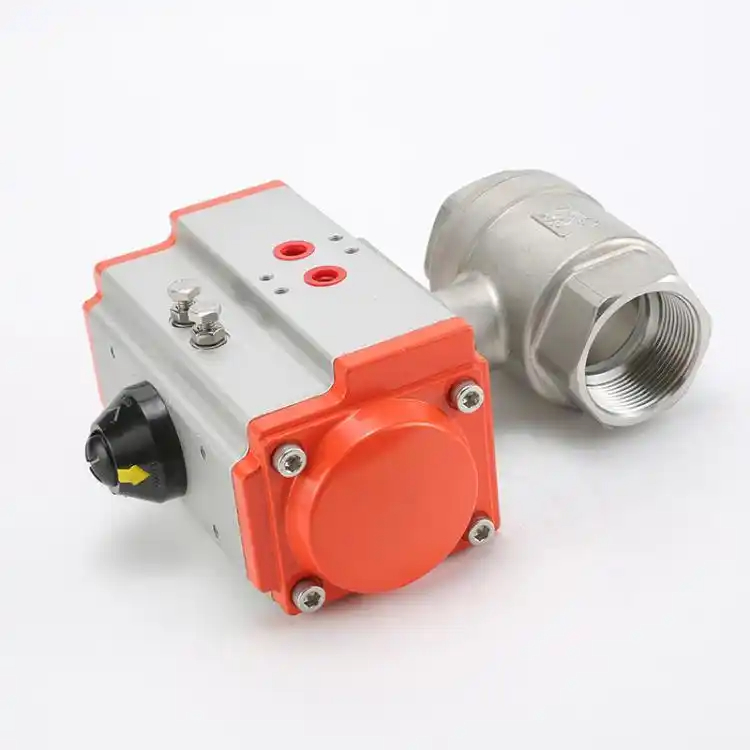
Real-World Example: Refinery Isolation
Application: Crude oil line isolation, 4", 300 psi, 200°F.
| Option | Pros | Cons |
|---|---|---|
| Ball valve (PEEK seats) | Bubble-tight, fire-safe, quick close | Higher upfront cost |
| Gate valve (metal seats) | Lower cost | Leaks after 2 years, slow operation (50 turns) |
| Butterfly valve | Low cost | Disc in flow path, not fire-safe |
Result: Ball valve selected. Zero leakage after 5 years. Gate valve replaced twice in same period.
Conclusion: Why Ball Valves Win
Ball valves are the most popular shut-off valve because they deliver:
Fastest operation (¼ turn)
Best shut-off (bubble-tight Class VI)
Lowest pressure drop (full port option)
Simplest maintenance (seat replacement without removing body)
Bidirectional flow (no installation error)
Kinko ball valves are available in floating, trunnion, full port, reduced port, V-port, and sanitary designs. Sizes from 1/4" to 24". Materials from brass to Hastelloy.
Ivan (Mobile:+86-18968769287)
WhatsApp:+86-13579991606
Wechat:+86-18968769287
Website:www.kinko-flow.com
ZHEJIANG KINKO FLUID EQUIPMENT CO.,LTD

 info@kinko-flow.com
 +86-133 5611 9006