Tel:
Tel: E-Mail:
 English
 Chinese
 한국어
한국어
 Español




News
What is a Full-Port Ball Valve?
A full-port (full bore) ball valve features a ball with a bore diameter equal to the internal diameter of the connecting pipe. When fully open, the valve presents no obstruction and no reduction in cross-sectional area.
In contrast, a standard-port (reduced bore) valve has a ball bore approximately one pipe size smaller than the connecting pipe.
Key visual difference:
Full bore: Ball opening = Pipe ID → Smooth, flush internal surface.
Reduced bore: Ball opening < Pipe ID → Internal step or shoulder.
5 Critical Benefits of Full Bore Ball Valves
1. Zero Pressure Drop (ΔP ≈ 0)
Because the flow path matches the pipe diameter, full-port valves generate negligible frictional losses. This is vital for:
Long-distance pipelines requiring sustained pressure.
Gravity-fed systems where pressure recovery is impossible.
Energy-efficient operations (lower pumping costs).
For a standard reduced-port valve, pressure drop can reach 30–50% of total system losses.
2. Pigging Compatibility
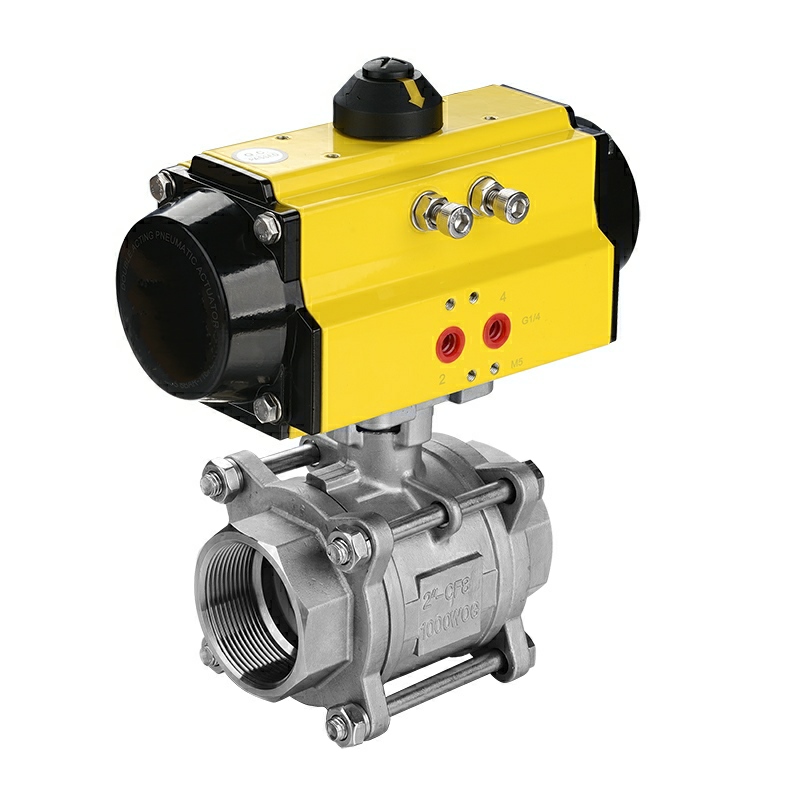
Pigging (internal pipeline cleaning or inspection) requires a uniform bore diameter. Only a full-port ball valve allows a cleaning pig to pass through the valve body without stopping or damaging equipment. Industries requiring pigging:
Crude oil pipelines
Natural gas gathering systems
Food & beverage sanitary lines (CIP pigs)
3. Handling of Slurries & Viscous Fluids
Solid particles, fibrous media, or high-viscosity fluids can accumulate behind the seat of a reduced-port valve, leading to clogging or valve failure. A full bore design allows solids to flow freely, reducing wear on seats and seals.
Typical applications:
Mining slurry lines
Pulp & paper stock lines
Wastewater treatment sludge lines
4. Lower Shear Stress on Sensitive Fluids
In pharmaceutical or food processing, standard-port valves create turbulence and shear stress. Full-port ball valves provide gentle, laminar flow – preserving the integrity of shear-sensitive products like lotions, syrups, or polymer solutions.
5. Simplified Purging & Draining
For lines requiring complete emptying (e.g., batch chemical reactors), a full port valve ensures no trapped volume remains downstream. This reduces contamination risks during product changeovers.
When to Choose a Standard-Port Ball Valve?
Despite the advantages, standard-port valves are smaller, lighter, and less expensive. Choose reduced bore if:
Media is clean gas or low-viscosity liquid.
Pipeline pressure drop is not a primary concern.
Pigging is never required.
Budget and weight constraints dominate.
For most B2B industrial applications, however, the lifecycle cost benefits of full-port valves outweigh the higher initial purchase price.
Technical Parameter Table – Kinko Full-Port Ball Valves
Below are the standard specifications for our Kinko full-port ball valve series (model KFV-FP). For custom requirements, contact our engineering team.
| Parameter | Specification |
|---|---|
| Product Name | Kinko Full-Port Floating Ball Valve |
| Size Range | 1/2" – 12" (DN15 – DN300) |
| Pressure Rating | Class 150 – Class 600 (PN16 – PN100) |
| Full Bore Diameter | Equal to pipe ID (e.g., 2" valve = 2.00" bore) |
| Body Material | WCB (Carbon Steel), CF8 (SS304), CF8M (SS316L) |
| Ball Material | SS304 / SS316L with mirror finish (Ra ≤ 0.4µm) |
| Seat Material | PTFE, RTFE, PEEK, or Metal-seated for high temp |
| End Connections | Flanged (ANSI/EN), Threaded (NPT/BSP), or Butt Weld |
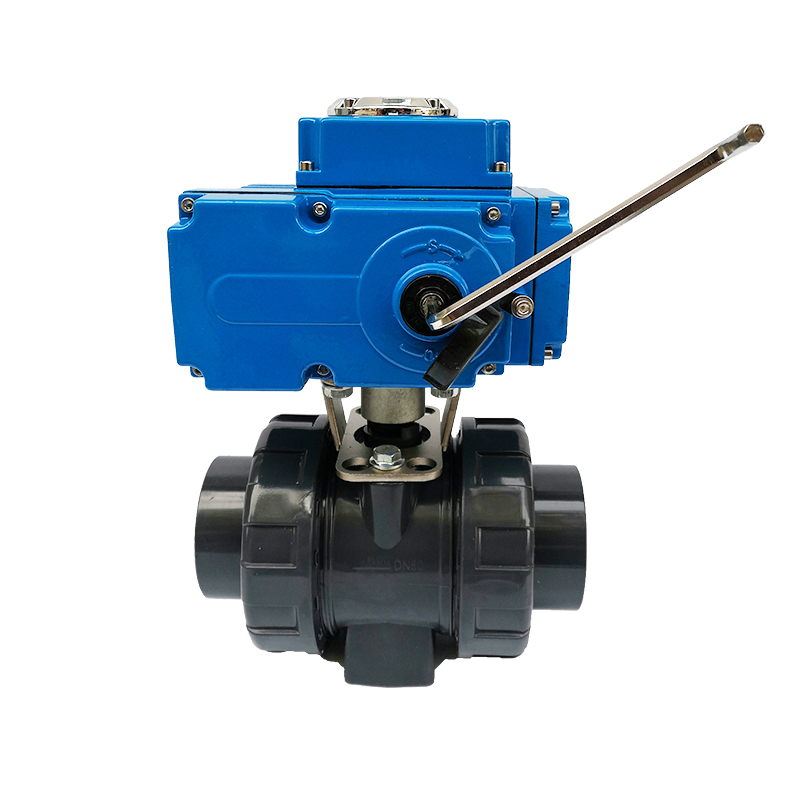
| Operation Type | Lever handle, Gear operator, Pneumatic/Hydraulic actuator, Electric actuator |
| Temperature Range | -29°C to +230°C (PTFE seats) / Up to +550°C (metal seats) |
| Leakage Rate | Zero leakage (FCI 70-2 / ISO 5208 Rate A) |
| Fire-safe Design | API 607 / ISO 10497 (optional) |
| Anti-static Device | Standard (API 608 compliant) |
| Pigging Capable | Yes (full bore only) |
Selection Guide: Matching Valve to Application
| Industry / Application | Recommended Valve | Reason |
|---|---|---|
| Oil pipeline (pigging) | Full-port, Class 600, metal seat | Pig passage, high pressure |
| Chemical dosing (low flow) | Standard-port, PTFE seat | Cost-effective, clean fluid |
| Mining slurry transport | Full-port, SS316L, hard seat | Abrasion resistance, no clogging |
| Steam tracing lines | Standard-port, socket weld | Compact, high temp capability |
| Food CIP system | Full-port, tri-clamp, 316L | Pigging, sanitary polish |
Installation & Maintenance Tips for Full-Port Valves
Verify bore alignment: Before welding or bolting, ensure the ball bore is parallel to the pipeline axis.
Use full-face gaskets: For flanged full-port valves, standard gaskets work fine – but avoid undersized gaskets that protrude into the bore.
Actuator sizing: Full-port balls have higher torque (larger ball mass). Use 20–30% higher safety factor when sizing pneumatic or electric actuators.
Inspect seats yearly: In slurry service, check seat wear via visual endoscope through the full bore (possible without disassembly – a unique benefit).
Why Kinko Full-Port Ball Valves?
100% hydrostatic tested before shipment – zero leakage guaranteed.
Strict bore finish – Ra 0.4µm to minimize particle adhesion.
Traceable materials – EN 10204 3.1 certification available.
Short lead times – Stock program for sizes 1" to 8" in SS316 and WCB.
Ivan (Mobile:+86-18968769287)
WhatsApp:+86-13579991606
Wechat:+86-18968769287
Website:www.kinko-flow.com
ZHEJIANG KINKO FLUID EQUIPMENT CO.,LTD

 info@kinko-flow.com
 +86-133 5611 9006