Tel:
Tel: E-Mail:
 English
 Chinese
 한국어
한국어
 Español




News
Key Challenges in Corrosive Chemical Service
| Challenge | Description |
|---|---|
| Body corrosion | Media attacks valve body material |
| Seal degradation | Chemicals swell, soften, or dissolve elastomers |
| Stem leakage | Corrosion damages stem surface or seals |
| Actuator failure | Fumes corrode actuator components |
| Media contamination | Valve materials leach into process |
Body Material Selection
| Material | Resistance | Best For | Not Suitable For |
|---|---|---|---|
| SS304 | Good | Dilute acids (pH 4-6), mild alkalis, water, air | Chlorides, strong acids |
| SS316 | Excellent | Most acids (dilute to moderate), chlorides, salt water | Hydrochloric acid (high conc.), hot phosphoric acid |
| SS316L | Excellent (welded parts) | Same as SS316, better for welded assemblies | Same as SS316 |
| Hastelloy (special) | Very high | Hydrochloric acid, sulfuric acid, wet chlorine | Cost-sensitive applications |
Kinko recommendation: For most corrosive chemical applications, SS316 is the standard choice. For extreme conditions, consult Kinko for special alloys.
Seal Material Compatibility
Seal material is often the limiting factor in chemical service.
| Seal Material | Chemical Resistance | Temperature Limit | Best For |
|---|---|---|---|
| PTFE | Excellent (almost all chemicals) | 180°C | Acids, alkalis, solvents, steam |
| Reinforced PTFE | Excellent (same as PTFE) | 200°C | Same as PTFE, higher wear resistance |
| FKM (Viton) | Good (oils, fuels, some acids) | 160°C | Hydrocarbons, strong acids (limited) |
| EPDM | Good (water, alkalis, some acids) | 120°C | Dilute acids, caustic solutions |
| NBR (Buna-N) | Poor (most chemicals) | 90°C | Oils, fuels (not for acids) |
| FFKM (Kalrez/Chemraz) | Excellent (aggressive chemicals) | 250°C | Extreme chemicals, high cost |
Kinko recommendation: PTFE is the default seal for corrosive chemicals. For aggressive media above 180°C, consider FFKM (consult Kinko).
Chemical Compatibility Quick Reference
| Chemical | Concentration | SS304 | SS316 | PTFE | FKM | EPDM |
|---|---|---|---|---|---|---|
| Acetic acid | 10-50% | Moderate | Good | Excellent | Good | Poor |
| Acetone | 100% | Good | Good | Excellent | Poor | Good |
| Ammonia (aqueous) | Dilute | Good | Excellent | Excellent | Poor | Excellent |
| Caustic soda (NaOH) | 10-50% | Good | Excellent | Excellent | Good | Excellent |
| Chlorine (dry gas) | 100% | Moderate | Good | Excellent | Poor | Poor |
| Citric acid | 10% | Good | Excellent | Excellent | Good | Moderate |
| Hydrochloric acid | <10% | Poor | Moderate | Excellent | Good | Poor |
| Hydrochloric acid | >10% | Poor | Poor | Excellent | Poor | Poor |
| Hydrogen peroxide | 30% | Good | Good | Excellent | Poor | Poor |
| Nitric acid | 10-30% | Good | Excellent | Excellent | Poor | Poor |
| Phosphoric acid | 30% | Moderate | Good | Excellent | Moderate | Poor |
| Seawater | N/A | Moderate | Excellent | Excellent | Good | Good |
| Sodium hypochlorite | 10% | Poor | Good | Excellent | Poor | Good |
| Sulfuric acid | <10% | Moderate | Good | Excellent | Good | Poor |
| Sulfuric acid | 10-50% | Poor | Moderate | Excellent | Poor | Poor |
| Toluene | 100% | Good | Good | Excellent | Good | Poor |
Legend: Excellent = long-term service; Good = acceptable with monitoring; Moderate = limited service; Poor = not recommended.
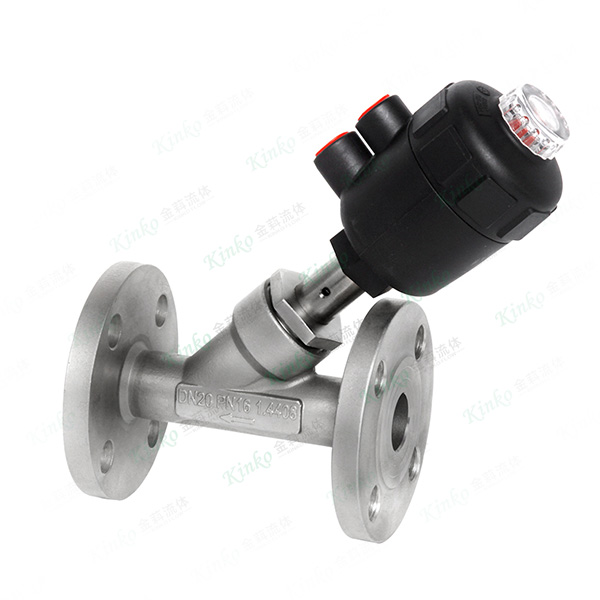
Stem Seal and External Leakage Prevention
Corrosive chemicals often attack stem seals before the main seat seal.
| Stem Seal Type | Chemical Resistance | Best For |
|---|---|---|
| PTFE V-rings (standard) | Excellent | Most corrosive chemicals |
| PTFE with spring loading | Excellent | Continuous sealing as PTFE wears |
| FKM O-rings | Good | Hydrocarbons, some acids |
| EPDM O-rings | Good | Alkalis, dilute acids |
Kinko recommendation: For aggressive chemicals, specify live-loaded PTFE stem seals. The spring maintains sealing force as the PTFE wears.
Actuator Protection in Corrosive Environments
Corrosive fumes can damage pneumatic actuators even if the valve body resists the media.
| Protection Method | Description | Best For |
|---|---|---|
| Standard aluminum actuator | No protection | Clean, dry, non-corrosive environments |
| Epoxy-coated actuator | Corrosion-resistant coating | Humid or mildly corrosive environments |
| Stainless steel actuator | Full corrosion resistance | Chemical plants, marine, outdoor |
| Remote mounting | Actuator located away from valve | Extreme fume exposure |
| Enclosure (IP67/IP68) | Sealed from environment | Washdown, dust, corrosive vapors |
Kinko recommendation: For chemical plants, specify stainless steel actuator or epoxy-coated aluminum with IP67 enclosure.
Application Examples
| Industry | Chemical | Recommended Configuration |
|---|---|---|
| Water treatment | Sodium hypochlorite (bleach) | SS316 body, PTFE seals, epoxy-coated actuator |
| Chemical processing | Dilute sulfuric acid (10%) | SS316 body, PTFE seals, remote actuator |
| Pharmaceutical | Acetic acid | SS316L body, PTFE seals, stainless steel actuator |
| Metal finishing | Hydrochloric acid (5%) | SS316 body, PTFE seals, PTFE-coated stem |
| Pulp and paper | Caustic soda (NaOH) | SS316 body, PTFE or EPDM seals |
| Food processing | Citric acid, cleaning chemicals | SS316 body, PTFE seals, sanitary clamps |
| Marine | Seawater | SS316 body, PTFE seals, stainless steel actuator |
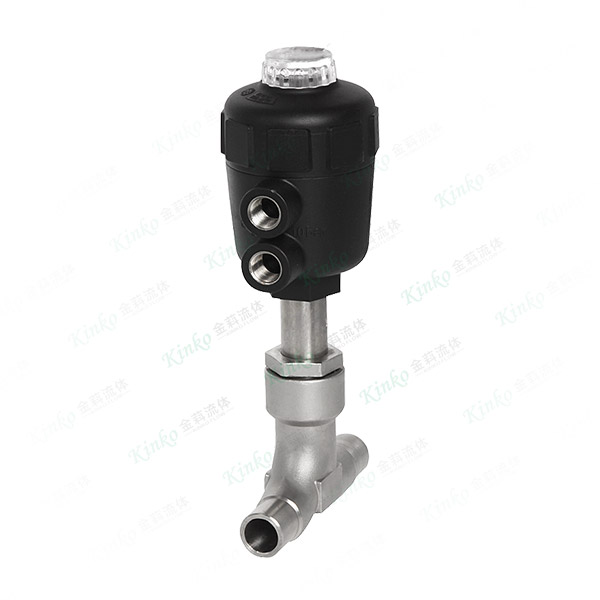
Technical Specifications: Kinko Corrosive Chemical Angle Seat Valves
| Parameter | Standard Chemical Service | Aggressive Chemical Service |
|---|---|---|
| Body material | SS316 (CF8M) | SS316L or Hastelloy |
| Seat seal | PTFE | PTFE or FFKM |
| Stem seal | PTFE V-rings (live-loaded) | PTFE V-rings with spring |
| Stem material | SS316 | SS316 with PTFE coating |
| Actuator | Epoxy-coated aluminum | SS316 |
| Enclosure rating | IP65 | IP67 or IP68 |
| Temperature range | -10°C to +180°C | -20°C to +200°C (FFKM) |
| Pressure rating | 16 bar (DN15–50) | 10–16 bar |
| Sizes available | DN15 – DN80 | DN15 – DN50 |
Installation Tips for Corrosive Chemical Service
| Recommendation | Reason |
|---|---|
| Use PTFE tape on threads (not pipe dope) | Pipe dope may react with chemicals |
| Install with actuator not pointing down | Prevents corrosive drips from entering actuator |
| Add purge port for stem (optional) | Allows inert gas purge to protect stem seals |
| Use stainless steel fittings and tubing | Prevents galvanic corrosion |
| Install strainer upstream (PTFE-lined if needed) | Removes particles that could damage seat |
| Flush valve after each batch | Prevents chemical crystallization on seals |
Maintenance for Corrosive Chemical Valves
Corrosive service accelerates wear. More frequent inspection is required.
| Task | Standard Interval | Chemical Service Interval |
|---|---|---|
| Visual inspection for external corrosion | Monthly | Weekly |
| Check stem seal for leakage | Monthly | Weekly |
| Inspect PTFE seat | 500k cycles | 200k–300k cycles |
| Replace stem seals | 500k cycles | 200k–300k cycles |
| Inspect actuator for corrosion | Quarterly | Monthly |
Signs of Chemical Attack
| Sign | What It Means | Action |
|---|---|---|
| Discolored body | Surface corrosion | Monitor; replace if pitting occurs |
| Swollen or soft seal | Chemical incompatibility | Replace with compatible seal material |
| Cracking on PTFE | Chemical attack or thermal stress | Replace seal; verify chemical compatibility |
| White powder on body | Chloride stress cracking | Replace with SS316 or Hastelloy |
| Actuator paint peeling | Fume exposure | Upgrade to stainless steel actuator |
When to Replace Instead of Repair
| Condition | Action |
|---|---|
| Pitting or crevice corrosion on body seat | Replace valve |
| Stem surface damaged | Replace stem or valve |
| Repeated seal failure (3+ times in 12 months) | Upgrade seal material or valve body |
| Actuator corroded internally | Replace actuator (upgrade to stainless steel) |
Do's and Don'ts for Corrosive Chemical Service
| Do | Don't |
|---|---|
| Do verify chemical compatibility before installation | Don't assume PTFE works for every chemical (some fluorinated chemicals attack PTFE at high temperature) |
| Do use SS316 for chloride-containing media | Don't use SS304 for bleach or seawater |
| Do flush valves after use with aggressive chemicals | Don't leave corrosive media stagnant in valve |
| Do use live-loaded stem seals | Don't use standard O-rings for aggressive chemicals |
| Do consider remote actuator mounting | Don't expose aluminum actuators to acid fumes |
| Do keep spare PTFE seals in stock | Don't wait for failure to order replacements |
Why Kinko for Corrosive Chemical Angle Seat Valves?
Kinko provides chemical service valves with:
SS316 (CF8M) bodies standard for chemical applications
PTFE seats and stem seals compatible with most chemicals
Live-loaded stem seals for continuous sealing as PTFE wears
Epoxy-coated or stainless steel actuators for corrosive environments
Material certifications (MTRs) available for traceability
Custom configurations for aggressive chemicals (FFKM seals, Hastelloy bodies)
Conclusion
Angle seat valves can handle corrosive chemicals when properly specified.
| Chemical Type | Recommended Configuration |
|---|---|
| Dilute acids and alkalis | SS316 body, PTFE seals, epoxy-coated actuator |
| Strong acids (except HCl) | SS316 body, PTFE seals, stainless steel actuator |
| Hydrochloric acid (dilute) | SS316 body, PTFE seals, flush after use |
| Hydrochloric acid (concentrated) | Consult Kinko (special materials required) |
| Chlorides, bleach, seawater | SS316 body, PTFE seals, stainless steel actuator |
| Solvents | SS316 body, PTFE seals, FKM if specified |
For reliable long-term service in corrosive environments, select the correct body material, PTFE seals, and protected actuator.
Need a valve for a specific chemical? Contact Kinko with your media, concentration, temperature, and pressure. We will provide a compatibility recommendation and quotation.
FAQ: Angle Seat Valves for Corrosive Chemicals
Q: Can I use a standard SS304 angle seat valve for bleach?
A: No. Sodium hypochlorite (bleach) attacks SS304. Use SS316.
Q: Is PTFE compatible with all chemicals?
A: PTFE is compatible with almost all chemicals except molten alkali metals and some fluorinated chemicals at very high temperatures.
Q: How do I prevent stem leakage in acid service?
A: Use live-loaded PTFE stem seals. For extreme service, add a purge port to flush the stem area with inert gas.
Q: What actuator material should I use in a chemical plant?
A: Epoxy-coated aluminum is acceptable for mild fume exposure. For aggressive environments, specify stainless steel actuator.
Q: How often should I replace PTFE seals in chemical service?
A: Every 200,000–300,000 cycles, or annually, whichever comes first. Inspect more frequently for aggressive chemicals.
Q: Can I use an angle seat valve for hydrochloric acid?
A: Dilute HCl (under 10%) is acceptable with SS316 and PTFE. Concentrated HCl requires special materials (Hastelloy, tantalum). Consult Kinko
Ivan (Mobile:+86-18968769287)
WhatsApp:+86-13579991606
Wechat:+86-18968769287
Website: www.kinko-flow.com
ZHEJIANG KINKO FLUID EQUIPMENT CO.,LTD

 info@kinko-flow.com
 +86-133 5611 9006