Tel:
Tel: E-Mail:
 English
 Chinese
 한국어
한국어
 Español




News
1. Introduction
When automating a ball valve, two actuator technologies dominate the industrial market: pneumatic (air-powered) and motorized (electric). Both convert a quarter-turn ball valve from manual to remote or automatic operation, but they serve very different applications.
Choosing the wrong actuator leads to slow cycle times, high energy bills, or premature failure. For B2B buyers, the decision comes down to five factors: speed, torque availability, control accuracy, operating environment, and total cost of ownership.
This comparison gives you a clear, technical framework to select the right actuator for your pipeline or process system.
2. How Each Actuator Works
| Actuator Type | Power Source | Motion Mechanism | Typical Signal |
|---|---|---|---|
| Pneumatic | Compressed air (40–120 psi) | Piston or rack-and-pinion | 3/2 or 5/2 solenoid valve |
| Motorized (Electric) | AC or DC power (12V–480V) | Reversible electric motor + gear train | 4–20 mA, 0–10 V, or digital |
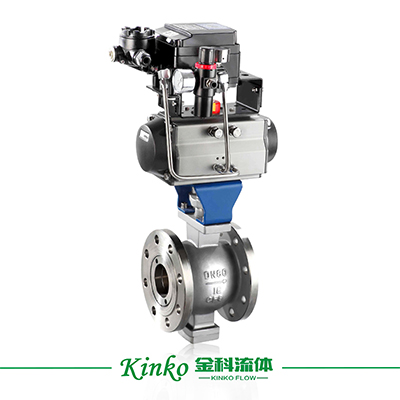
Pneumatic: Air pressure pushes a piston or rotates a rack-and-pinion mechanism, converting linear motion to 90° rotation. Spring-return models close automatically when air supply fails.
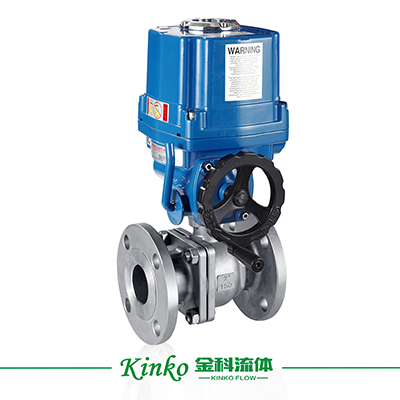
Motorized: An electric motor drives a gear train (often a planetary or worm gear) to rotate the ball valve. Position feedback is typically via potentiometer or encoder.
3. Side-by-Side Comparison Table
| Parameter | Pneumatic Actuator | Motorized (Electric) Actuator |
|---|---|---|
| Cycle Speed | Very fast: 0.5–3 seconds | Slow: 5–30+ seconds (depends on gear ratio) |
| Torque Output | High torque at start and end | Moderate torque, consistent |
| Duty Cycle | 100% (continuous operation) | Typically 30–50% (needs cool-down) |
| Control Accuracy | ±5° typical (unless with positioner) | ±1° or better with servo control |
| Fail-Safe | Standard (spring return) | Requires battery backup or capacitor |
| Energy Efficiency | Low (air compression losses) | High (only draws power during motion) |
| Operating Cost | Moderate (air supply) | Low (electricity) |
| Initial Cost (valve + actuator) | Low to moderate | Moderate to high (gear motor + controls) |
| Suitability for Hazardous Areas | Excellent (no sparks) | Requires explosion-proof enclosure |
| Maintenance | Replace seals, lubricate | Gearbox wear, capacitor failure |
| Position Feedback | Limit switches, proximity sensors | Continuous 4–20 mA feedback standard |
| Speed Control | Flow control valves (simple) | VFD or complex electronic drive |
4. Key Selection Criteria for B2B Buyers
4.1 Speed Requirement
Pneumatic is the only choice when you need fast cycling (e.g., filling stations, blow-down valves, or emergency shutoff).
Motorized works for slow, deliberate operations (e.g., tank isolation, daily on/off cycles).
4.2 Availability of Utility
Pneumatic requires an on-site compressed air system (compressor, dryer, filter, piping).
Motorized only needs an electrical supply – ideal for remote skids or sites without air infrastructure.
4.3 Duty Cycle (How Often the Valve Operates)
| Operations per hour | Recommended Actuator |
|---|---|
| 1–10 | Either |
| 10–60 | Motorized (low heat) |
| 60–300+ | Pneumatic only |
Electric motors overheat at high cycle rates. Pneumatic handles hundreds of cycles per hour easily.
4.4 Fail-Safe Requirement
Pneumatic (spring-return): Automatically closes (or opens) on loss of air supply. No power needed.
Motorized: Requires an expensive battery backup or supercapacitor to achieve fail-safe.
4.5 Control Accuracy (Modulating / Throttling Service)
Motorized actuators with 4–20 mA feedback and servo control achieve precise positioning (ideal for V-port ball valves).
Pneumatic actuators need a digital positioner to achieve similar accuracy, increasing cost significantly.
4.6 Operating Environment
| Environment | Best Choice | Why |
|---|---|---|
| Explosive / flammable (refinery, chemical plant) | Pneumatic | No electrical spark risk |
| Clean room / pharmaceutical | Motorized | No exhaust air (oil mist) |
| Outdoor extreme cold (-40°C) | Motorized (with heater) | Air lines can freeze |
| Outdoor high heat (+80°C) | Pneumatic | Electric motor insulation degrades |
| Underwater / washdown | Pneumatic (stainless) | Electric motors require IP68 rating |
5. Cost Breakdown (B2B Perspective)
| Cost Component | Pneumatic | Motorized |
|---|---|---|
| Actuator hardware | $150 – $800 | $300 – $2,000+ |
| Solenoid valve / relay | $30 – $150 | Included in most motorized |
| Positioner (if needed) | $200 – $800 | Usually built-in |
| Utility infrastructure | $2,000 – $10,000 (air compressor system) | $0 (if power exists) |
| Annual energy consumption (typical) | $300 – $1,000 (air leaks) | $20 – $100 |
| 5-year total cost (valve + actuator + operation) | Higher for continuous use | Lower for intermittent use |
Rule of thumb: Pneumatic is cheaper to buy but more expensive to run over time if the facility does not already have compressed air.
6. Application Recommendations
| Industry / Application | Recommended Actuator | Reason |
|---|---|---|
| Chemical reactor feed | Pneumatic (spring-return) | Fail-safe on power/air loss |
| Water treatment plant valve | Motorized | Air not available; daily cycles |
| Oil pipeline block valve | Pneumatic | High torque, fast, hazardous area |
| HVAC chilled water | Motorized | Low cycles, electric available |
| Packaging filling machine | Pneumatic | Extremely fast cycling |
| Remote wellhead | Motorized (solar powered) | No air compressor possible |
| Steam vent (high temp) | Pneumatic (metal seat) | Electric fails in high heat |
7. Decision Flowchart (Text Version)
Start with these questions:
Do you have compressed air on site?
No → Consider motorized (unless explosion-proof required)
Do you need fail-safe (close/open on power loss)?
Yes → Pneumatic spring-return (cheaper) or Motorized + battery (expensive)
Is the valve in a hazardous/explosive area?
Yes → Pneumatic (avoid explosion-proof motorized cost)
Do you need more than 30 cycles per hour?
Yes → Pneumatic
Do you need precise modulating control (±1°)?
Yes → Motorized (cheaper than pneumatic + positioner)
None of the above? → Motorized is usually lower total cost for general service.
8. Summary Table: When to Choose Which
| Choose Pneumatic If | Choose Motorized If |
|---|---|
| Fast cycling required | Slow, infrequent operation |
| Fail-safe is mandatory | Fail-safe not critical |
| Explosive / hazardous area | Clean, dry environment |
| High torque at low cost | Existing electrical supply |
| Plant already has compressed air | No compressed air available |
| High temperature environment | Ambient temperature only |
| Simple on/off control | Precise modulating control needed |
9. Conclusion
Both pneumatic and motorized actuators are mature, reliable technologies. The correct choice depends entirely on your application's speed, duty cycle, fail-safe requirement, environment, and utility availability.
For most general industrial on/off applications with existing electricity and no explosion risk, motorized ball valves offer lower total cost of ownership. For high-cycle, hazardous, or fail-safe-critical services, pneumatic is the proven standard.
Before purchasing, confirm:
Required cycle frequency (per hour)
Ambient temperature range
Hazardous area classification (if any)
Availability of compressed air or power
Need for modulating (throttling) control
If you have an existing application and need a specific actuator recommendation, provide your valve size, pressure class, and operating conditions to our engineering team.
Ivan (Mobile:+86-18968769287)
WhatsApp:+86-13579991606
Wechat:+86-18968769287
Website:www.kinko-flow.com
ZHEJIANG KINKO FLUID EQUIPMENT CO.,LTD

 info@kinko-flow.com
 +86-133 5611 9006