Tel:
Tel: E-Mail:
 English
 Chinese
 한국어
한국어
 Español




News
Every procurement manager faces the same pressure: lower the purchase price. But cheap ball valves are one of the fastest ways to inflate your plant's operating budget.
A low-cost valve might save 50today–butcost5,000 in unplanned downtime, leaking emissions, and early replacement next year.
At Kinko, we build ball valves for 10–20 years of reliable service. This article quantifies the long-term cost benefits of quality valves versus cheap alternatives – helping you build a data-backed business case for investing upstream.
The True Cost of a Valve: TCO Breakdown
Total Cost of Ownership (TCO) for a ball valve includes four components:
| Cost Component | % of TCO (Cheap Valve) | % of TCO (Quality Valve) |
|---|---|---|
| Initial purchase | 5–10% | 15–20% |
| Installation | 5% | 5% |
| Operation (pressure drop energy) | 10–20% | 5–10% |
| Maintenance & replacement | 60–80% | 50–60% |
Key insight: The purchase price is the smallest cost over a valve's life. Cheap valves create massive hidden costs downstream.
6 Ways Quality Ball Valves Reduce Long-Term Costs
1. Longer Replacement Cycles
| Valve Quality | Typical Service Life (Clean Service) | Replacement Frequency |
|---|---|---|
| Lowest-cost (no-name) | 6–18 months | Every 1–2 years |
| Mid-range (standard brand) | 3–5 years | Every 3–5 years |
| Kinko quality | 8–15 years | Every 8–15 years |
Savings calculation: For a plant with 500 valves, replacing cheap valves every 2 years vs quality valves every 10 years reduces labor and material costs by 80% over a decade.
2. Reduced Unplanned Downtime
Unplanned downtime costs industrial plants 10,000to250,000+ per hour (depending on industry).
A cheap valve failing closed or leaking externally forces an emergency shutdown. A quality valve prevents this entirely.
| Failure Type | Cheap Valve Probability (5 years) | Quality Valve Probability |
|---|---|---|
| Seat leak (internal) | 15–25% | <2% |
| Stem leak (external) | 10–20% | <1% |
| Seized / inoperable | 8–15% | <1% |
Example: A chemical plant losing production for 4 hours at 50,000/hour=200,000 loss. One failure pays for hundreds of quality valves.
3. Lower Maintenance Labor
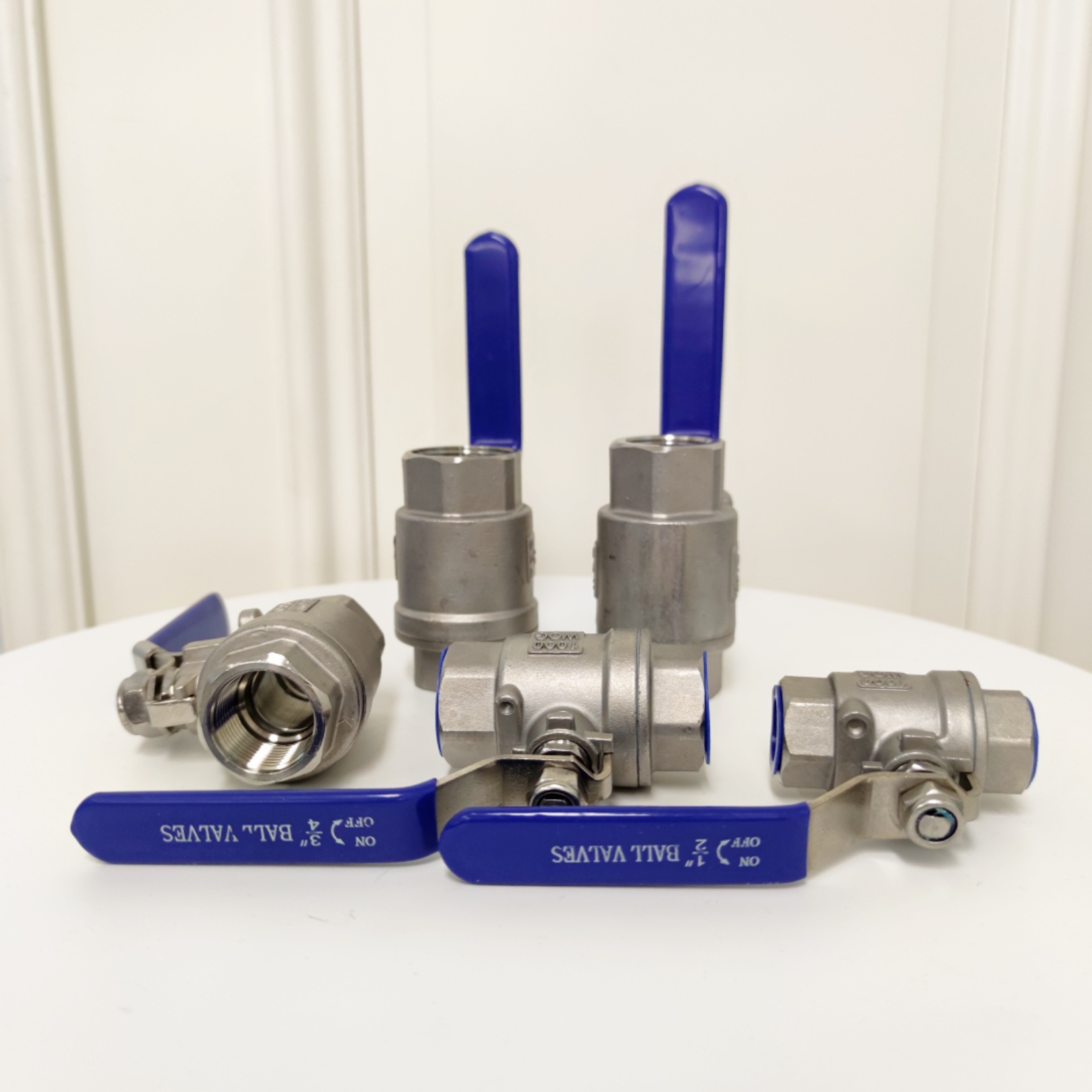
Cheap valves require frequent packing adjustments, seat replacements, and body bolt retorquing. Quality valves – especially with live-loaded packing – are fit-and-forget.
| Maintenance Task | Cheap Valve (per year) | Kinko Quality Valve (per year) |
|---|---|---|
| Packing adjustment | 2–4 times | 0 (live-loaded) |
| Seat inspection | 1–2 times | 0–1 times |
| Leak testing | 2 times | 1 time |
| Annual labor hours (per 100 valves) | 80–120 hours | 10–20 hours |
At 100/hourmaintenancelabor,qualityvalvessave6,000–$10,000 annually per 100 valves.
4. Energy Savings from Low Pressure Drop
Cheap ball valves often have:
Rough internal finishes (high friction)
Poorly aligned bores
Excessive pressure drop (ΔP)
Quality ball valves (especially full-port) approach ΔP ≈ 0 when open.
Energy cost impact:
| Valve Type | Pressure Drop at 100 GPM | Annual Pumping Energy Cost (24/7 operation) |
|---|---|---|
| Cheap reduced-port (rough bore) | 8–12 psi | 800–1,200 |
| Standard quality | 4–6 psi | 400–600 |
| Kinko full-port (polished bore) | <1 psi | <$100 |
For a plant with 200 continuously operating valves, energy savings alone can reach 50,000–100,000 per year.
5. Reduced Fugitive Emissions (Compliance Savings)
Leaking valves release volatile organic compounds (VOCs) or methane. Regulators (EPA, EU ETS) impose:
Fines for excess emissions
Mandatory LDAR (Leak Detection and Repair) programs
Carbon taxes on fugitive losses
| Valve Quality | Typical Leak Rate (methane) | Annual LDAR Cost per Valve |
|---|---|---|
| Cheap (standard packing) | 100–500 ppm | 200–500 |
| Quality (live-loaded PTFE) | <10 ppm | 50–100 |
| Kinko low-emission (ISO 15848) | <1 ppm | <$10 |
For a 1,000-valve facility, switching to low-emission ball valves saves 190,000–490,000 annually in LDAR compliance and fines.
6. Lower Inventory Holding Costs
Cheap valves fail unpredictably – forcing you to keep large safety stock. Quality valves have predictable, long lives – you can reduce inventory.
| Inventory Item | Cheap Valve Strategy | Quality Valve Strategy |
|---|---|---|
| Spare valves on shelf | 20–30% of installed count | 5–10% |
| Repair kits | 50% of installed count | 10–15% |
| Annual inventory carrying cost (per 500 installed) | 25,000–40,000 | 8,000–12,000 |
TCO Comparison: Real Example (2" Class 150, Water Service, 10 Years)
| Cost Factor | Cheap Valve ($40) | Kinko Quality Valve ($120) |
|---|---|---|
| Purchase price | $40 | $120 |
| Installation labor | $80 | $80 |
| Maintenance labor (10 years) | $300 (3 repairs) | $50 (1 inspection) |
| Replacement (10 years) | $120 (3 replacements) | $0 |
| Energy cost (ΔP) | $600 | $100 |
| Downtime risk cost | $500 (10% probability of 2-hour outage) | $50 (1% probability) |
| Total 10-year TCO | $1,640 | $400 |
Result: The quality valve costs 3x more upfront but saves 76% over 10 years – a $1,240 net saving per valve.
Payback Period for Quality Ball Valves
| Application | Typical Payback Period (vs cheap valve) |
|---|---|
| Clean water / air (low consequence) | 12–24 months |
| Chemical / hydrocarbon service | 3–8 months |
| High-cycle / automated service | 2–6 months |
| Low-pressure / gravity flow | 6–12 months |
| Fugitive emission regulated | 1–4 months |
Kinko Quality Features That Drive Long-Term Savings
| Feature | Cost Benefit |
|---|---|
| Forged body (vs cast) | No porosity leaks → zero replacement |
| Live-loaded packing | Zero packing adjustments → zero labor |
| Mirror-polished ball (Ra ≤ 0.4µm) | Lower torque → smaller actuator → energy saving |
| Hard chrome or electroless nickel plating (ENP) | Corrosion resistance → longer life |
| 100% hydrostatic tested | No leak surprises → zero unplanned downtime |
| Traceable materials (EN 10204 3.1) | Full warranty compliance → no liability risk |
When Cheap Valves Actually Make Sense (Honest Advice)
Quality is not always required. Cheap valves are acceptable for:
Temporary service (construction bypass, test lines)
Non-critical drains / vents (low consequence of failure)
Clean, low-pressure water in non-industrial settings
Single-use / disposable systems (e.g., some pharmaceutical single-use)
For any application where failure causes downtime, safety risk, or environmental release – cheap valves are the most expensive option.
Conclusion: Buy Once, Cry Once
The lowest bidder always costs more in the long run. Quality ball valves from Kinko deliver:
✅ 8–15 year service life (vs 1–2 years for cheap)
✅ 80% lower maintenance labor
✅ 90% less unplanned downtime risk
✅ Energy savings from near-zero pressure drop
✅ Fugitive emission compliance
Calculate your own TCO: Contact Kinko with your valve count, fluid service, and operating hours – we will provide a customized savings projection.
Ivan (Mobile:+86-18968769287)
WhatsApp:+86-13579991606
Wechat:+86-18968769287
Website:www.kinko-flow.com
ZHEJIANG KINKO FLUID EQUIPMENT CO.,LTD

 info@kinko-flow.com
 +86-133 5611 9006