Tel:
Tel: E-Mail:
 English
 Chinese
 한국어
한국어
 Español




News
1. Introduction: Why End Connections Matter in Ball Valve Selection
For any industrial piping system, the end connection of a ball valve is not just a fitting detail—it determines sealing integrity, installation efficiency, maintenance cost, and system safety. Whether you are sourcing for oil & gas, chemical processing, food & beverage, or pharmaceutical lines, understanding threaded vs flanged vs clamp (tri-clamp) connections is essential.
At Kinko, we manufacture precision ball valves with all three end connection types. This guide provides a technical comparison, application recommendations, and a detailed specification table to help procurement professionals make the right choice.
2. Overview of Three Main Ball Valve End Connections
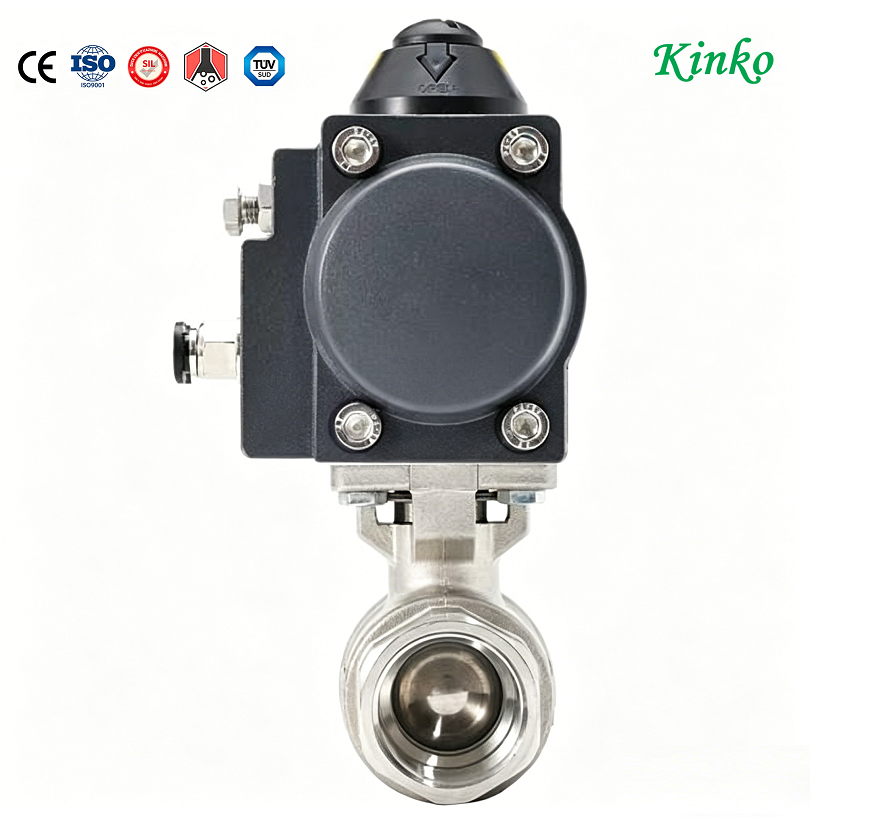
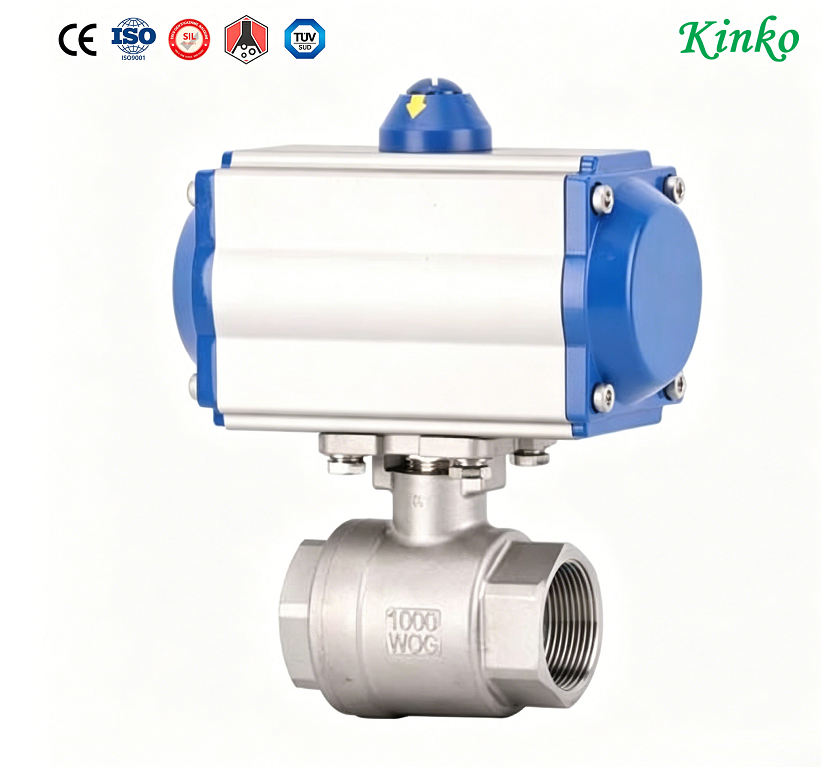
2.1 Threaded Ball Valve (Screwed End)
Standard: NPT, BSPP, BSPT (1/4” to 4”)
Features: Compact, low cost, easy installation without welding.
Best for: Small-diameter lines, instrumentation, air/water/gas applications.
2.2 Flanged Ball Valve
Standard: ANSI 150/300, PN10/16/25/40, JIS 10K/20K (1/2” to 24”)
Features: High pressure/temperature tolerance, easy disassembly, bolt-on sealing.
Best for: Large-diameter pipelines, steam, hydrocarbons, chemical transfer.
2.3 Clamp (Tri-Clamp) Ball Valve
Standard: ISO 2852, DIN 32676, 3A (1/2” to 8”)
Features: Sanitary, quick-opening, no dead leg, easy cleaning (CIP/SIP).
Best for: Food, dairy, beverage, bio-pharmaceutical, cosmetic industries.
3. Technical Comparison Table: Kinko Ball Valve End Connections
| Parameter | Threaded Ball Valve | Flanged Ball Valve | Clamp (Tri-Clamp) Ball Valve |
|---|---|---|---|
| Size Range | 1/4” – 4” (DN8 – DN100) | 1/2” – 24” (DN15 – DN600) | 1/2” – 8” (DN15 – DN200) |
| Connection Standard | NPT, BSPP, BSPT, ISO 7-1 | ANSI B16.5, EN 1092-1, JIS B2220 | ISO 2852, DIN 32676, 3A |
| Pressure Rating | Up to 1000 PSI (PN63) | Up to 1500 PSI (PN100) | Up to 600 PSI (PN40) |
| Temperature Range | -20°C to +200°C (-4°F to 392°F) | -40°C to +450°C (-40°F to 842°F) | -20°C to +150°C (-4°F to 302°F) |
| Body Material | SS304, SS316, WCB, Brass | SS316, SS304, WCB, Ductile Iron | SS316L (Sanitary grade) |
| Seat Material | PTFE, PEEK, RTFE | PTFE, PPL, Metal-seated | PTFE, Silicone, EPDM (FDA) |
| Operation Type | Lever, Electric, Pneumatic | Lever, Gear, Electric, Pneumatic | Lever, Pneumatic, Electric |
| Leakage Rate | Zero leakage (ISO 5208 Rate A) | Zero leakage (API 598) | Zero leakage / Sanitary seal |
| Cleaning Method | Manual | Manual / Chemical | CIP / SIP capable |
| Typical Industry | General industrial, HVAC, water treatment | Petrochemical, refinery, power plant | Food, dairy, pharma, biotech |
| Installation | Threaded directly into pipe | Bolted between flanges | Clamp + gasket (tool-free) |
| Reusability | Limited | High (replace gasket) | Very high (replace gasket) |
| Cost Level | Low | High | Medium-High |
4. How to Choose the Right End Connection for Your Project
Choose Threaded Ball Valve when:
Pipeline diameter ≤ DN80 (3”)
Working pressure < 1000 PSI
Budget-sensitive projects
Installation requires speed and no welding
Choose Flanged Ball Valve when:
Pipeline diameter ≥ DN50 (2”) up to large bore
High temperature or pressure (steam, thermal oil)
Frequent maintenance or replacement needed
Standard industrial or hazardous area
Choose Clamp Ball Valve when:
Strict sanitary requirements (FDA, 3A certified)
Frequent disassembly for cleaning
Product changeover is common (batch process)
Dead-leg must be avoided
5. Kinko’s Advantage for B-Side Procurement
Kinko provides full traceability, material certification (EN 10204 3.1), pressure test reports, and custom marking. All three end connection types are available with:
Actuation ready: ISO 5211 mounting pad direct
Anti-static design (flanged & threaded)
Fire-safe option (API 607/ISO 10497)
Lockable handle as standard
Short lead time for bulk orders
6. SEO Keywords Targeted (for search engine visibility)
Ball valve end connections threaded flanged clamp
Industrial ball valve procurement guide
Kinko ball valve specification table
Threaded vs flanged vs tri-clamp ball valve
Sanitary clamp ball valve supplier
High pressure flanged ball valve
B2B ball valve manufacturer
7. FAQ – Quick Answers for Engineers & Purchasers
Q1: Can I replace a threaded ball valve with a clamp valve directly?
No. The pipe end must be modified with a ferrule or adapter. Kinko offers adapter ferrules for retrofit.
Q2: Which connection is best for high-vibration lines?
Flanged connections provide the most vibration resistance. Threaded connections may loosen over time.
Q3: Are Kinko clamp valves compatible with other brands’ ferrules?
Yes, we follow ISO 2852 and DIN 32676, ensuring interchangeability with standard sanitary fittings.
Q4: Do you provide combination ends?
Yes. For example: flanged × threaded, or clamp × weld end. Contact our sales team for custom configurations.
8. Conclusion: Make the Right Connection with Kinko
Selecting the correct ball valve end connection directly impacts your system’s lifecycle cost, safety, and maintenance schedule. Whether you need threaded for compact lines, flanged for heavy-duty service, or clamp for sanitary processes, Kinko delivers certified, high-performance ball valves with global shipping and full documentation.
Ivan (Mobile:+86-18968769287)
WhatsApp:+86-13579991606
Wechat:+86-18968769287
Website: www.kinko-flow.com
ZHEJIANG KINKO FLUID EQUIPMENT CO.,LTD

 info@kinko-flow.com
 +86-133 5611 9006