Tel:
Tel: E-Mail:
 English
 Chinese
 한국어
한국어
 Español




News
1. What Is an F.R.L Unit?
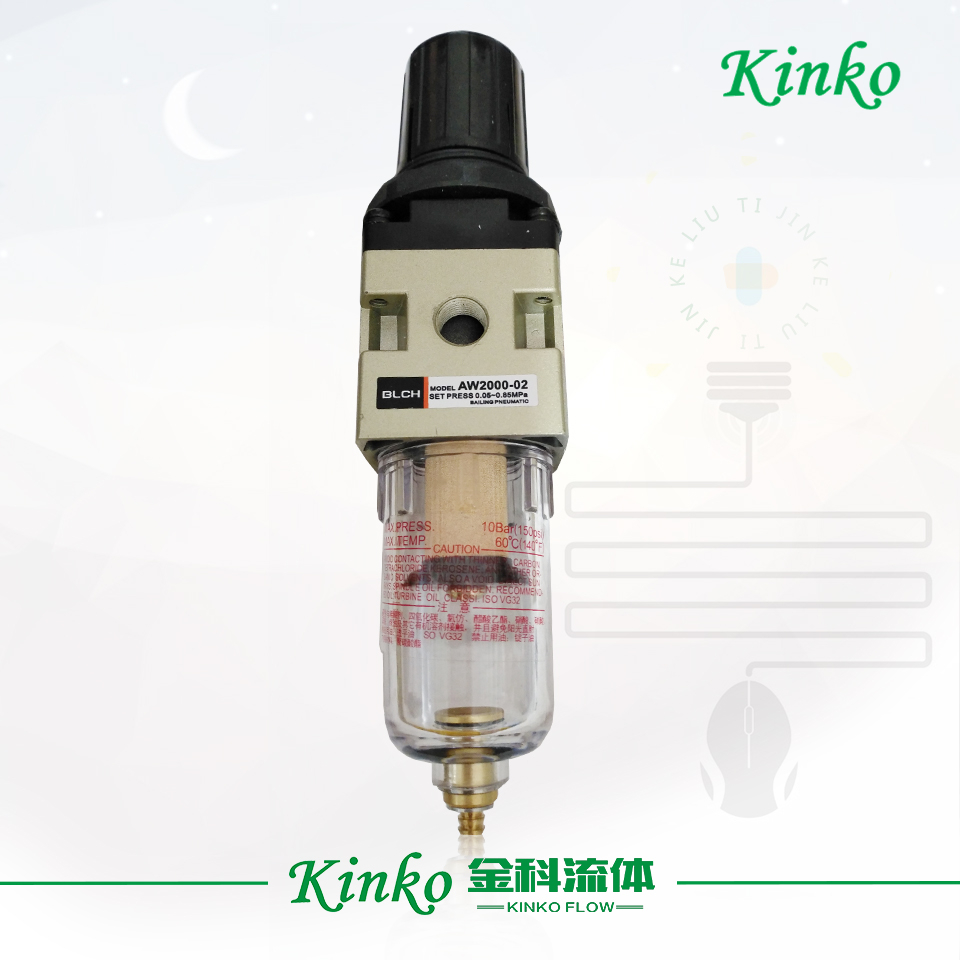
An F.R.L Unit—comprising a Filter, Regulator, and Lubricator—is the standard air preparation assembly installed upstream of pneumatic valves, actuators, and positioners. It conditions compressed air from the plant's main header before it enters sensitive control equipment.
Filter: Removes particulates, moisture, and oil aerosols.
Regulator: Maintains a stable, adjustable downstream pressure.
Lubricator: Adds a controlled mist of oil to lubricate moving internal parts.
The short answer: For any pneumatic valve system operating with instrumentation air (per ISO 8573-1), an F.R.L unit is not optional—it's mandatory for long-term reliability.
2. Function #1: Filtration – Protecting Internal Components
Compressed air from plant headers is rarely "clean." It contains:
Rust particles from steel pipes
Water condensate from inadequate drying
Residual compressor lubricant aerosols
Without a 5-micron (or finer) filter, these contaminants directly enter:
Positioner pilot valves (clogging tiny orifices)
Actuator cylinder bores (scratching seals)
Solenoid valve spools (causing stiction)
Consequence without filter: Valve response slows, positioner calibration drifts, and seal life shortens by up to 70%.
| Contaminant Size | Effect on Pneumatic Components |
|---|---|
| >5 microns | Visible dirt; clogs orifices and spool clearances |
| 1~5 microns | Abrasive wear on seals and cylinder walls |
| <1 micron (oil mist) | Causes rubber seal swelling and degradation |
3. Function #2: Pressure Regulation – Ensuring Stable Actuator Torque
Actuator output torque is directly proportional to supply pressure. Plant air headers often fluctuate between 5.5~8 bar depending on compressor cycling and demand spikes.
A precision regulator (within the F.R.L) stabilizes pressure to within ±0.1 bar of the setpoint, ensuring:
Consistent valve stroking speed
Repeatable shutoff torque
Accurate positioner calibration (since positioner calibration assumes fixed supply pressure)
Example: A double-acting actuator rated at 6 bar will under-torque at 5 bar (risk of failing to close against pressure) and over-speed at 8 bar (risk of mechanical shock to valve internals). The regulator eliminates both risks.
4. Function #3: Lubrication – Extending Seal and Spool Life
Pneumatic actuators and spool valves rely on a thin oil film to reduce friction between moving surfaces. While some modern valves use "dry" (non-lubricated) designs with PTFE-impregnated seals, most industrial actuators (rack-and-pinion, scotch-yoke) still require lubricated air for maximum cycle life.
The lubricator in an F.R.L unit:
Injects a fine oil mist (typically ISO VG 32 or 46) at a controlled drip rate (e.g., 1 drop per 10-20 strokes)
Extends seal life by 2~3× compared to dry air operation
Prevents galling on metal-to-metal sliding surfaces
Note: If your valve positioner or solenoid valve explicitly states "non-lubricated air only" (common for some compact ISO 15407 manifolds), you can skip the lubricator—but a filter-regulator (F.R) is still mandatory.
5. The Cost of Skipping an F.R.L Unit
Many cost-conscious buyers omit the F.R.L to save upfront capital. Here is the real cost breakdown over a 5-year lifecycle:
| Cost Item | With F.R.L Unit | Without F.R.L Unit |
|---|---|---|
| Actuator seal replacement | Once (planned) | 3~4 times (unplanned downtime) |
| Positioner replacement | Rarely | Frequent (clogged pilot nozzles) |
| Solenoid valve replacement | Minimal | Common (spool wear) |
| Production loss from unplanned downtime | Low | High (repeated valve failures) |
| 5-year total maintenance cost | Baseline | 2.5× ~ 4× higher |
6. Technical Specification Table – Typical F.R.L Unit
| Parameter | Recommended Value / Feature |
|---|---|
| Port size | 1/4" NPT, 3/8" NPT, or 1/2" NPT (matching valve manifold) |
| Filtration rating | 5 micron (standard) / 0.01 micron (coalescing, for oil-removal) |
| Pressure regulation range | 0.5 ~ 8.5 bar (adjustable) |
| Regulator sensitivity | ≤ ±0.1 bar |
| Lubricator oil capacity | 25 ~ 100 ml (transparent bowl for level check) |
| Lubricator drip rate | Adjustable (1~20 drops/min) |
| Bowl material | Polycarbonate (standard) or metal (for high-temp/chemical environments) |
| Drain type | Manual or automatic float drain |
| Max. inlet pressure | 10 bar (standard) / 16 bar (high-pressure option) |
| Ambient temp. range | -10°C ~ +60°C (standard) / -40°C (low-temp option) |
| Mounting | Bracket included (panel or pipe mounting) |
7. Installation Best Practices for F.R.L Units
To maximize performance and lifespan:
Orientation: Install with bowl downward (vertical) for proper condensate collection and drainage.
Sequence: Always follow Filter → Regulator → Lubricator (the acronym F.R.L is the order).
Distance: Place the F.R.L unit within 3~5 meters of the valve/actuator to minimize pressure drop in the hose.
Drainage: Use an automatic drain for high-humidity environments to prevent water re-entrainment.
Oil selection: Use only ISO VG 32 light turbine oil (never use motor oil or WD-40, which can degrade seals).
8. When Can You Use Just an F.R (Without Lubricator)?
Three common scenarios where the "L" is omitted:
Clean-room or food-grade applications (oil mist is prohibited)
Valves with "lubricated-for-life" PTFE seals (check manufacturer's datasheet)
High-cycle solenoid manifolds that specify dry air only
In these cases, a Filter-Regulator (F.R.) is still absolutely essential—you just skip the lubricator bowl.
Ivan (Mobile:+86-18968769287)
WhatsApp:+86-13579991606
Wechat:+86-18968769287
Website: www.kinko-flow.com
ZHEJIANG KINKO FLUID EQUIPMENT CO.,LTD

 info@kinko-flow.com
 +86-133 5611 9006