Tel:
Tel: E-Mail:
 English
 Chinese
 한국어
한국어
 Español




News
1. The Short Answer: Full Remote Capability Through Digital Integration
A motorized ball valve (ball valve + electric actuator) enables remote operation by converting an electrical control signal (4-20mA, dry contact, or digital bus) into mechanical rotation of the ball—without any manual intervention or pneumatic supply.
Remote operation capabilities:
Open/close from a DCS or PLC control room (hundreds of meters or kilometers away)
Modulating control for flow regulation (proportional positioning)
Status feedback (position, fault, cycle count) via hardwired or digital communication
Integration with SCADA, IoT platforms, and cloud-based asset management systems
This capability transforms a simple ball valve into a smart, network-connected final control element.
2. Core Technologies That Enable Remote Operation
Technology #1: Electric Actuator Drive System
The actuator contains a motor + gear train that converts electrical energy into mechanical torque. Key components:
Motor: AC induction (fixed speed) or brushless DC (variable speed)
Gearbox: Reduces motor RPM to produce high torque at low speed
Position feedback: Potentiometer, Hall-effect encoder, or absolute magnetic encoder
Remote capability: The motor starts/stops based solely on the received electrical signal—no operator presence required.
Technology #2: Control Signal Interface
| Signal Type | Operation | Remote Capability Level |
|---|---|---|
| Dry contact (OPEN/CLOSE) | Separate wires for open and close commands | Basic: On/Off from remote panel |
| 4-20mA analog | Modulating signal (e.g., 4mA=0%, 20mA=100%) | Advanced: Proportional positioning |
| 0-10V analog | Similar to 4-20mA, voltage-based | Advanced: Proportional positioning |
| Modbus RTU / Profibus / EtherNet/IP | Digital bus communication | Full: Control + diagnostics + parameterization |
| Wireless (LoRa, NB-IoT, Wi-Fi) | Radio signal transmission | Full: Control from anywhere with network coverage |
Technology #3: Position Feedback & Status Indication
Remote operation is not just about sending commands—it requires confirmation that the valve has responded correctly.
Feedback options:
| Feedback Type | Output Signal | Purpose |
|---|---|---|
| Mechanical visual dome | None (local visual only) | Operator confirmation when on-site |
| End-of-stroke limit switches | Dry contact (OPEN / CLOSED) | Remote status indication of full open/closed |
| 4-20mA position transmitter | Analog signal proportional to ball position | Modulating control confirmation |
| Digital bus feedback | Status, torque, temperature, cycle count, alarms | Full remote diagnostics |
| Bluetooth / NFC | Wireless local access | Smartphone configuration + troubleshooting via app |
Technology #4: Manual Override (Fail-Safe for Remote Operation)
When a valve is remotely operated, there must always be a local fallback in case of power/communication failure.
Handwheel: Manual gear drive for emergency operation (standard on most electric actuators).
Declutchable lever: For smaller actuators, a lever that disengages the motor gearbox.
Spring-return (fail-safe) actuator: Internal spring drives valve to a pre-defined safe position on power loss.
Remote operation benefit: Manual override ensures the valve can still be operated during emergencies, while the automation system remains in control during normal operation.
Technology #5: Communication Protocols for System Integration
To truly enable remote operation, the motorized ball valve must "speak" the language of the plant control system.
| Protocol | Physical Layer | Remote Capability |
|---|---|---|
| 4-20mA + HART | 2-wire analog + digital FSK overlay | Control + diagnostics + configuration |
| Modbus RTU | RS-485 (2-wire/4-wire) | Multi-drop; up to 247 devices per network |
| Modbus TCP/IP | Ethernet | Same as RTU, but TCP-based for wider area networks |
| Profibus PA | MBP (2-wire) | Process automation standard; intrinsic safety available |
| Profibus DP | RS-485 | Higher speed; factory automation |
| Foundation Fieldbus H1 | MBP (2-wire) | Advanced control in hostile environment |
| EtherNet/IP | Ethernet | Industrial Ethernet for Rockwell/Allen-Bradley integration |
| LoRaWAN / NB-IoT | Wireless (unlicensed/licensed bands) | Remote sites, pipeline monitoring, water distribution |
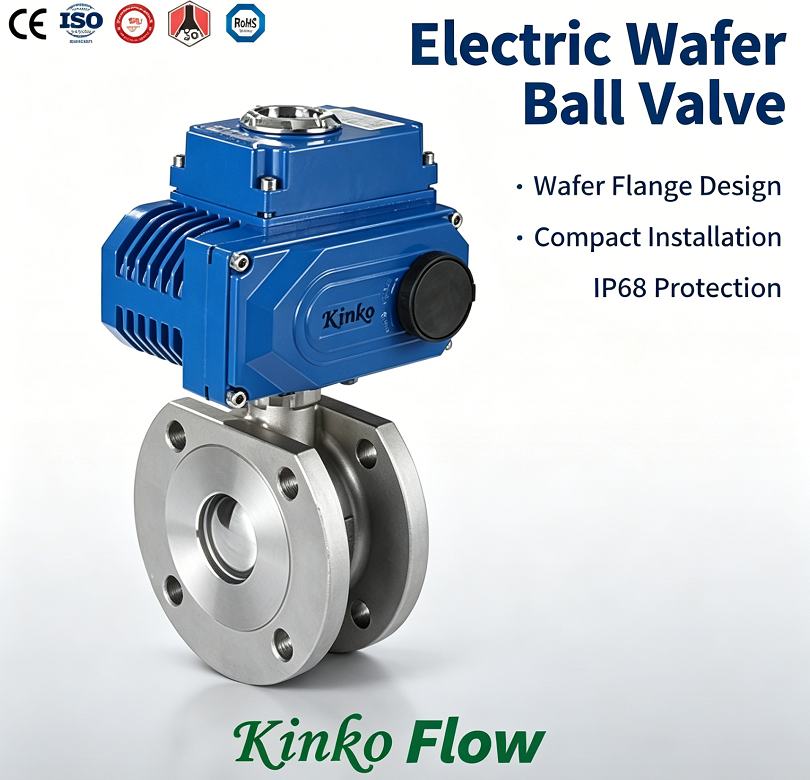
Technology #6: Smart Diagnostics for Remote Troubleshooting
Remote operation is only valuable if you can also diagnose problems remotely.
Diagnostic parameters available on modern electric actuators:
Stall detection: Actuator stops due to obstruction (torque/current exceeds limit)
Cycle count: Tracks total strokes for preventive maintenance scheduling
Run time: Motor running time per cycle (increases when packing friction rises)
Temperature: Internal actuator temperature (overheat alarm)
Power interruption log: Records last power loss event and valve position at that time
Partial stroke test (PST): For SIL-rated safety loops—can be initiated remotely
Benefit: Maintenance teams can diagnose 70% of issues without visiting the valve—reducing field service calls and increasing plant availability.
3. Performance Comparison: Motorized Ball Valve vs. Pneumatic Ball Valve for Remote Operation
| Feature | Motorized Ball Valve | Pneumatic Ball Valve |
|---|---|---|
| Remote control signal | 4-20mA / Digital bus / Dry contact | 4-20mA (I/P) or solenoid (3/2, 5/2) |
| Power requirement | 24V DC / 110V AC / 230V AC | Instrument air + (optional) electrical for solenoid |
| Communication integration | Native digital bus (Modbus, Profibus, etc.) | Requires smart positioner for bus communication |
| Position feedback | Built-in (encoder/limits) | Requires separate limit switch box + position transmitter |
| Diagnostic data | Extensive (motor torque, temp, cycle count, etc.) | Limited unless using smart positioner with diagnostics |
| Fail-safe on power loss | Spring-return (optional) or battery/UPS | Spring-return or volume tank (external) |
| Manual override | Handwheel (standard) | Handwheel (optional, requires extra cost) |
| Remotely adjustable parameters | Yes (deadband, stroke time, torque limits) | Limited (requires positioner adjustment) |
| Ideal for long-distance (>100m) | Excellent (no pressure drop in signal lines) | Acceptable (air lines >100m have lag) |
| Ideal for network integration | Excellent (native protocol support) | Good (requires positioner + gateway) |
| Relative cost (valve + actuator) | Medium | Low (if air available) |
4. Technical Specification Table – Typical Motorized Ball Valve for Remote Operation
| Parameter | Typical Range / Options |
|---|---|
| Valve size | DN15 ~ DN300 (1/2" ~ 12") |
| Valve design | Floating ball (≤DN80) / Trunnion-mounted (≥DN100) |
| Body material | WCB, CF8M (316SS), CF3M (316L), Duplex, Inconel |
| Seat material | PTFE, RPTFE, PEEK, PPL, Metal |
| Pressure rating | PN16 ~ PN420 / ANSI 150 ~ 2500 |
| Actuator type | Quarter-turn electric actuator |
| Supply voltage | 24V DC, 110V AC, 230V AC (50/60 Hz) |
| Control signal | 4-20mA, 0-10V, Dry contact, Modbus, Profibus, EtherNet/IP |
| Position feedback | 4-20mA (analog) + dry contact (limits) + digital bus |
| Positioning accuracy | ±0.5% ~ ±1.0% full stroke |
| Stroking time (90°) | 3~30 seconds (depending on torque and gear ratio) |
| Enclosure rating | IP67 / IP68 / NEMA 4X / NEMA 6P |
| Ex certification | ATEX / IECEx / CSA (Zone 1, Zone 2, Class I Div 1/2) |
| Manual override | Handwheel (standard) or declutchable lever |
| Operating temperature | -40°C ~ +85°C (standard) / -60°C ~ +200°C (special) |
| Communication protocols | HART, Modbus RTU, Modbus TCP, Profibus PA/DP, Foundation Fieldbus, EtherNet/IP |
| Diagnostic capability | Motor current monitoring, cycle count, run time, stall detection, temperature logging |
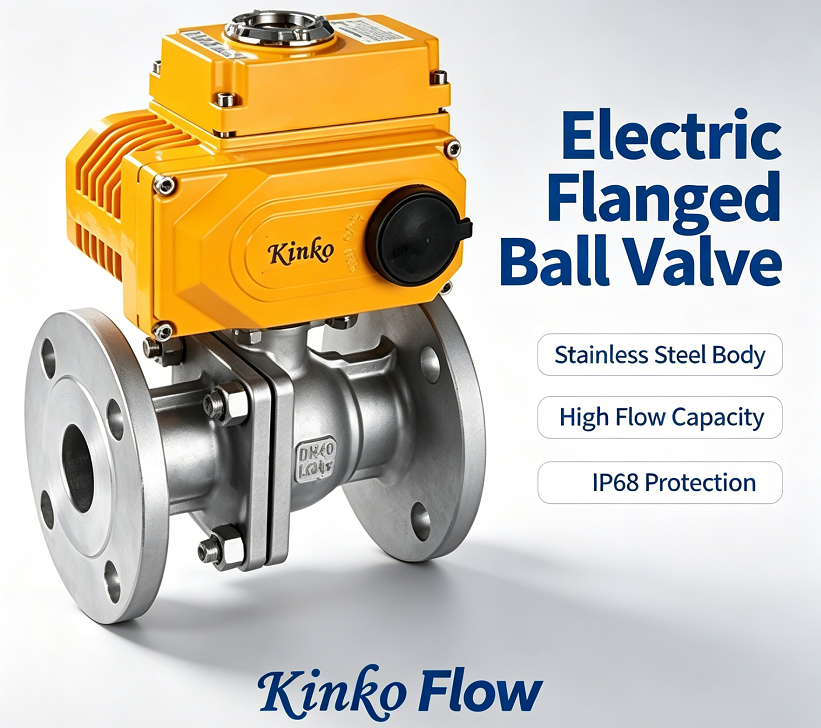
5. Remote Operation Scenarios – Typical Applications
| Scenario | Why Motorized Ball Valve Wins | Communication Used |
|---|---|---|
| Pipeline block valve (gas/oil) | Operate from central control room; no instrument air lines over long distances | Modbus RTU (RS-485) or satellite |
| Water treatment plant (remote wells) | No air infrastructure at well sites; solar-powered 24V DC operation | 4-20mA + LoRaWAN |
| Chemical reactor feed control | Precise modulating control with digital diagnostics for batch consistency | Profibus PA / Foundation Fieldbus |
| HVAC chilled water system | Controlled from building BMS; quiet operation; no air exhaust noise | BACnet over Modbus or EtherNet/IP |
| Tank farm emergency shut-off | Fail-safe spring-return + remote ESD trigger via DCS | Hardwired dry contact (ESD) + Modbus for status |
| Offshore platform (no air) | All-electric saves space; eliminates offshore air compressor maintenance | Modbus TCP over fiber optic |
| Remote mining site (desert) | Solar-powered 24V DC; radio communication to central monitoring station | Wireless (LoRa or cellular) |
Ivan (Mobile:+86-18968769287)
WhatsApp:+86-13579991606
Wechat:+86-18968769287
Website: www.kinko-flow.com
ZHEJIANG KINKO FLUID EQUIPMENT CO.,LTD

 info@kinko-flow.com
 +86-133 5611 9006