Tel:
Tel: E-Mail:
 English
 Chinese
 한국어
한국어
 Español




News
1. What Is an Explosion-Proof Electric Actuator?
An explosion-proof electric actuator is an electrically powered device designed to operate a valve while meeting the explosion-protection requirements specified for a particular hazardous location.
It converts electrical energy into mechanical movement, typically through an electric motor and a gear transmission, to open, close, or position a valve.
Depending on the actuator design and control configuration, it may provide:
Open/close control
On/off valve automation
Modulating control
Remote operation
Position feedback
Integration with PLC, DCS, or other industrial control systems
The term explosion-proof does not mean that the actuator can withstand every explosion or operate safely in every hazardous environment. It refers to a specific protection concept and equipment design that must be suitable for the applicable hazardous-area classification.
The actuator must be certified or approved for the actual hazardous location, gas or dust group, temperature requirements, and installation conditions.
2. How Does an Explosion-Proof Electric Actuator Work?
An explosion-proof electric actuator works on the same basic operating principle as a conventional electric actuator, but incorporates additional design and protection measures to meet the required explosion-protection standard.
A typical operating process includes the following steps:
Step 1: Receive the control signal
The actuator receives an electrical command from a local control device, PLC, DCS, or other control system.
Step 2: Drive the electric motor
The motor converts electrical energy into rotational movement.
Step 3: Transfer torque through the gearbox
A gear mechanism reduces motor speed and increases the output torque required to operate the valve.
Step 4: Operate the valve
The actuator turns the valve stem to open, close, or adjust the valve according to the selected control mode.
Step 5: Monitor position and operating status
Depending on the configuration, limit switches, position sensors, or other feedback devices report the valve position and operating status.
The explosion-protection design helps prevent the actuator from becoming an ignition source under the conditions covered by its protection concept and certification.
3. How Is an Explosion-Proof Electric Actuator Different from a Standard Electric Actuator?
The main difference is not simply the motor or the external housing. It is the overall explosion-protection design and suitability for a classified hazardous area.
| Comparison | Standard Electric Actuator | Explosion-Proof Electric Actuator |
|---|---|---|
| Intended environment | General industrial areas | Specified hazardous areas |
| Explosion protection | Not necessarily provided | Designed for a defined protection concept |
| Enclosure and construction | General environmental protection | Additional requirements for the applicable protection method |
| Electrical components | Selected for normal operating conditions | Must comply with the relevant explosion-protection requirements |
| Certification | General product compliance may apply | Hazardous-area certification or approval is required where applicable |
| Typical applications | HVAC, water systems, general manufacturing | Oil and gas, petrochemical, chemical and other classified areas |
A standard actuator should not be installed in a hazardous area unless its suitability for that specific location has been properly established.
Similarly, an explosion-proof actuator should not be assumed suitable for every hazardous location simply because it carries an explosion-protection marking.
4. Understanding Hazardous-Area Classification
Before purchasing an explosion-proof electric actuator, the installation area must be classified.
For gas and vapor atmospheres, IEC-based systems commonly use Zones 0, 1, and 2. For combustible dust, Zones 20, 21, and 22 are commonly used.
| Hazard Type | Zone | General Meaning |
|---|---|---|
| Gas or vapor | Zone 0 | Explosive atmosphere is present continuously, for long periods, or frequently |
| Gas or vapor | Zone 1 | Explosive atmosphere is likely to occur occasionally during normal operation |
| Gas or vapor | Zone 2 | Explosive atmosphere is not likely during normal operation and, if it occurs, exists only briefly |
| Combustible dust | Zone 20 | Explosive dust atmosphere is present continuously, for long periods, or frequently |
| Combustible dust | Zone 21 | Explosive dust atmosphere is likely to occur occasionally during normal operation |
| Combustible dust | Zone 22 | Explosive dust atmosphere is not likely during normal operation and, if it occurs, exists only briefly |
These definitions are simplified. The site classification must be established by qualified personnel according to the applicable regulations and standards.
The actuator's equipment protection level, gas or dust group, temperature class or maximum surface temperature, and other marking requirements must match the installation.
For example, equipment suitable for one gas group or zone is not automatically suitable for a more demanding classification.
5.Typical Applications of Explosion-Proof Electric Actuators
Oil and Gas
Applications may include fuel transfer, pipeline isolation, storage facilities, and related process systems, subject to the area's classification and equipment suitability.
Chemical and Petrochemical Plants
They can automate valves handling flammable solvents, process gases, and other hazardous materials.
Material compatibility and the correct hazardous-area certification are both essential.
Refineries
Automated valve control may be required across process lines, storage areas, and utility systems where hazardous-area requirements apply.
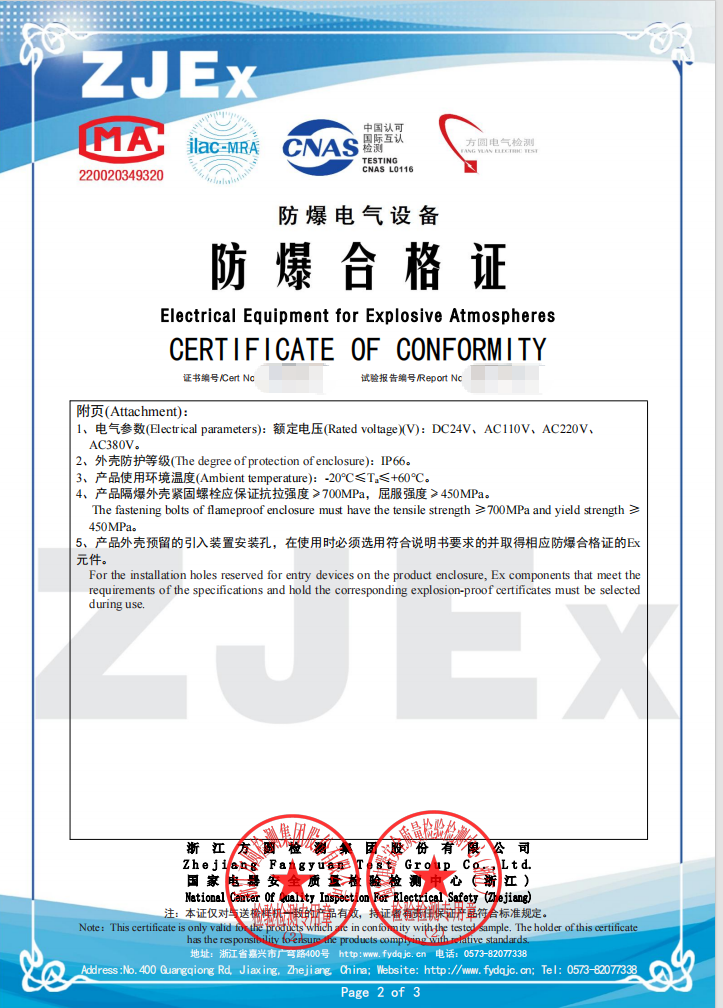
6. Explosion-Proof Certification: What Should Buyers Check?
Explosion-protection certification is one of the most important considerations when purchasing an explosion-proof electric actuator.
Depending on the destination market and project requirements, relevant frameworks may include:
ATEX: European Union framework for equipment intended for use in potentially explosive atmospheres.
IECEx: International certification system for equipment used in explosive atmospheres.
CCC explosion-protection certification: Relevant to applicable products and regulatory requirements in China.
Other local approvals: Additional national or project-specific requirements may apply.
These frameworks are not identical, and one certificate should not automatically be treated as a substitute for another.
When reviewing a supplier's documents, check:
The exact actuator model covered by the certificate.
The protection method and complete Ex marking.
The applicable gas or dust group.
The temperature class or maximum surface temperature.
The permitted hazardous zone or equipment protection level.
The certificate validity and issuing body.
Any installation, ambient-temperature, or maintenance restrictions.
Whether accessories, control boxes, sensors, cable glands, and other components are included in the certified configuration.
A supplier's general statement that its products are “explosion-proof” is not enough. Request the actual certificate and confirm that it applies to the exact configuration being purchased.
7. How to Choose the Right Explosion-Proof Electric Actuator
Correct selection requires matching the actuator to both the valve and the hazardous environment.
7.1 Identify the Valve Type
Determine whether the actuator will operate a:
Ball valve
Butterfly valve
Plug valve
Damper or other quarter-turn device
Multi-turn valve, where a suitable actuator design is available
The valve type determines the required output movement, torque or thrust, and mounting arrangement.
7.2 Calculate the Required Torque
For quarter-turn valves, obtain the manufacturer's torque data and consider breakaway, running, seating, and unseating torque where applicable.
The torque requirement depends on:
Valve size and design
Differential pressure
Seat material
Medium
Operating temperature
Operating frequency
Valve condition and service life requirements
Do not select an actuator based only on valve diameter.
7.3 Confirm Voltage and Control Requirements
Confirm the available power supply and control method, such as:
AC or DC supply, as supported by the model
On/off control
Modulating control
Local or remote control
Required feedback signals
PLC or DCS integration
Electrical components and control accessories must also be suitable for the hazardous-area requirements.
7.4 Verify the Hazardous-Area Requirements
Provide the supplier with:
Hazardous zone or division
Gas or dust classification
Required equipment protection level
Temperature class or maximum surface-temperature requirement
Applicable certification framework
Ambient temperature
Installation environment
The supplier should verify the proposed actuator against these requirements before confirming the configuration.
7.5 Consider Operating Frequency and Service Conditions
Frequent operation can affect motor temperature, gearbox wear, and overall service life.
Check the actuator's duty rating, allowable operating frequency, torque output, and thermal protection features.
For corrosive or humid environments, consider the enclosure, surface treatment, fasteners, cable entries, and external accessories as part of the complete assembly.
Conclusion
An explosion-proof electric actuator is not simply a standard electric actuator with a stronger housing. It is equipment designed and assessed for a defined explosion-protection concept and a specific range of hazardous operating conditions.
To select the right model, buyers should evaluate the valve torque, power supply, control requirements, hazardous-area classification, gas or dust group, temperature requirements, certification, and environmental conditions.
The key principle is simple: match the actuator to the valve, and match its verified explosion-protection specification to the actual hazardous area.
By confirming these requirements before purchase, industrial users can improve equipment compatibility, support safer operation, and reduce the risk of costly selection errors.
 info@kinko-flow.com
 +86-133 5611 9006