Tel:
Tel: E-Mail:
 English
 Chinese
 한국어
한국어
 Español




News
What Defines a Heavy-Duty Actuator?
Heavy-duty actuators are designed for demanding applications that exceed the capabilities of standard industrial actuators. Key distinguishing features include:
| Feature | Heavy-Duty Characteristics |
|---|---|
| Construction | Cast iron, stainless steel, or heavy-gauge aluminum housings |
| Torque/Thrust | High output capacity; designed for large valves and high pressures |
| Duty cycle | Continuous operation capability (S1 duty for electric; high-cycle for pneumatic) |
| Lifespan | Designed for millions of cycles; 10–20+ years service life |
| Environmental protection | IP67/IP68, corrosion-resistant coatings, explosion-proof options |
| Safety features | SIL certification, fail-safe redundancy, manual override |
Heavy-Duty vs. Standard Actuators
| Parameter | Standard Actuator | Heavy-Duty Actuator |
|---|---|---|
| Typical torque | Up to 1,000 Nm | 1,000–500,000+ Nm |
| Duty cycle | Intermittent (S2, S4) | Continuous (S1, S5) or high-cycle |
| Housing material | Aluminum (coated) | Cast iron, ductile iron, stainless steel |
| Seal life | 100,000–500,000 cycles | 1,000,000–2,000,000+ cycles |
| Gear train | Standard gears | Hardened, ground, or helical gears |
| Motor type | Standard industrial | High-efficiency, high-start torque |
| Temperature range | -20°C to +80°C | -40°C to +150°C+ |
| MTBF | 5–10 years | 15–25 years |
Types of Heavy-Duty Actuators
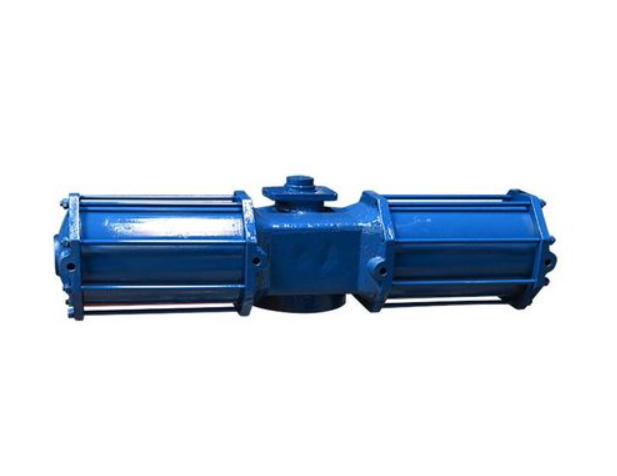
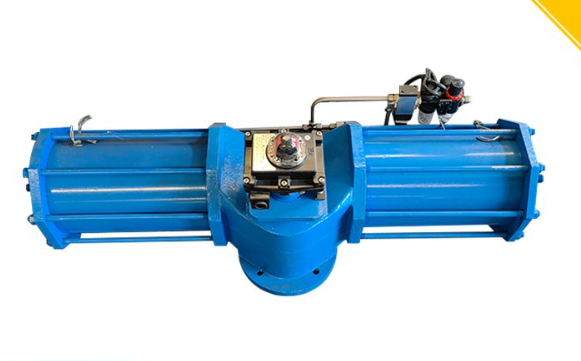
1. Heavy-Duty Pneumatic Scotch Yoke Actuators
Best for: Large quarter-turn valves (ball, butterfly, plug) in oil & gas, pipeline, and power generation.
| Feature | Benefit |
|---|---|
| High torque output | Delivers maximum torque at stroke ends — where it's needed most |
| Robust construction | Cast iron or ductile iron housing for extreme durability |
| Fail-safe options | Spring-return with high spring torque for emergency shutdown |
| High cycle life | Designed for continuous operation with minimal maintenance |
Typical Applications:
Pipeline isolation
Wellhead control
Refinery processes
Power plant cooling water
2. Heavy-Duty Electric Actuators
Best for: Continuous modulating service, remote locations, and applications without compressed air infrastructure.
| Feature | Benefit |
|---|---|
| Continuous duty (S1) | Operates indefinitely without overheating |
| High torque | Up to 10,000+ Nm with integrated gearboxes |
| Diagnostic capabilities | Torque monitoring, cycle counting, predictive maintenance |
| Communication protocols | Modbus, Profibus, Foundation Fieldbus, HART |
Typical Applications:
Control valve automation
Water/wastewater treatment
Power generation
Chemical processing
3. Heavy-Duty Hydraulic Actuators
Best for: Ultra-high torque requirements, subsea applications, and heavy industrial processes.
| Feature | Benefit |
|---|---|
| Extremely high force | Torque/thrust beyond pneumatic or electric capabilities |
| Precise control | Excellent for modulating service |
| Fail-safe | Accumulator-based spring-return |
| Subsea capability | Designed for deepwater installations |
Typical Applications:
Subsea Christmas trees
Large gate valves
Hydroelectric power
Steel mills
4. Heavy-Duty Rack and Pinion Actuators
Best for: High-cycle quarter-turn applications requiring compact footprint and reliable torque.
| Feature | Benefit |
|---|---|
| High cycle life | Designed for millions of cycles |
| Compact design | Smaller footprint than scotch yoke for equivalent torque |
| Corrosion resistant | Stainless steel or heavy-coated aluminum options |
| Modular design | Easy maintenance and accessory mounting |
Typical Applications:
Automated production lines
Packaging machinery
High-cycle testing
Marine and offshore
Key Considerations for Continuous Operation
1. Duty Cycle Classification
Understanding duty cycle ratings is essential for selecting actuators that match your operational demands.
| Duty Cycle | Definition | Typical Applications |
|---|---|---|
| S1 – Continuous duty | Operation at constant load for sufficient time to reach thermal equilibrium | Modulating control, continuous processes |
| S2 – Short-time duty | Operation at constant load for specified time, then idle | Intermittent isolation |
| S4 – Intermittent duty with starting | Repeated cycles of starting, running, and braking | Frequent cycling, automated lines |
| S5 – Intermittent duty with electric braking | Similar to S4 with additional braking | High-precision positioning |
For continuous industrial operation: Select actuators rated for S1 (electric) or high-cycle pneumatic designs with adequate thermal capacity.
2. Thermal Management
Continuous operation generates heat that must be managed to prevent premature failure.
| Actuator Type | Thermal Considerations |
|---|---|
| Electric | Motor temperature rise; enclosure cooling; duty cycle limitations |
| Pneumatic | Minimal heat generation; but cold environments may affect seals |
| Hydraulic | Fluid temperature management; cooling requirements for continuous service |
Best Practices:
Oversize electric actuators to reduce percentage of rated load
Provide adequate ventilation around actuators
Consider thermal switches for motor protection
Monitor housing temperature during commissioning
3. Mechanical Wear and Lifespan
Continuous operation accelerates mechanical wear. Heavy-duty actuators address this through:
| Feature | Benefit |
|---|---|
| Hardened gears | Resists wear under continuous cycling |
| Heavy-duty bearings | Supports high radial and axial loads |
| Replaceable wear components | Extends overall service life |
| High-grade seals | Maintains integrity over millions of cycles |
Expected Lifespan:
Heavy-duty pneumatic: 2–5 million cycles (or more) with proper maintenance
Heavy-duty electric: 1–3 million cycles or 15–20 years continuous service
Heavy-duty hydraulic: 10–20 years with fluid maintenance
4. Maintenance Accessibility
For continuous operations, maintenance must be performed without extended shutdowns.
| Design Feature | Benefit |
|---|---|
| Modular construction | Components can be replaced without disconnecting the valve |
| External adjustment | Limit switches, positioners adjustable without disassembly |
| Sight glasses | Visual indication of position without opening enclosure |
| Tool-free access | Quick access for routine inspection |
5. Redundancy and Fail-Safe
Critical continuous processes often require redundancy to prevent production loss.
| Redundancy Type | Application |
|---|---|
| Dual actuators | Parallel actuators on single valve |
| Battery backup | Electric actuators with UPS for power outages |
| Accumulator | Hydraulic actuators with stored energy |
| Spring-return | Pneumatic actuators with fail-safe positioning |
Application Examples by Industry
Oil & Gas
| Application | Actuator Type | Key Requirements |
|---|---|---|
| Pipeline isolation | Pneumatic scotch yoke | High torque, fail-safe, SIL certification |
| Gas compression | Electric or hydraulic | Continuous operation, remote monitoring |
| LNG terminals | Stainless steel scotch yoke | Low-temperature, corrosion resistance |
Power Generation
| Application | Actuator Type | Key Requirements |
|---|---|---|
| Boiler feedwater | Electric linear | Precise modulating, continuous duty |
| Cooling water | Pneumatic scotch yoke | Large valves, high cycle life |
| Steam isolation | Pneumatic with thermal protection | High temperature, fail-safe |
Chemical Processing
| Application | Actuator Type | Key Requirements |
|---|---|---|
| Reactor feed | Electric or hydraulic | Precise control, hazardous area |
| Transfer lines | Pneumatic rack and pinion | High cycle life, corrosion resistant |
| Emergency shutdown | Spring-return scotch yoke | SIL rating, fast response |
Water & Wastewater
| Application | Actuator Type | Key Requirements |
|---|---|---|
| Pump station | Electric multi-turn | Continuous duty, remote monitoring |
| Filter operation | Pneumatic rack and pinion | High cycle life, corrosion resistant |
| Chemical dosing | Electric modulating | Precise positioning, low maintenance |
Mining & Minerals
| Application | Actuator Type | Key Requirements |
|---|---|---|
| Slurry lines | Heavy-duty pneumatic | Abrasion resistance, high torque |
| Concentrator | Hydraulic | High force, dust protection |
Heavy-Duty Actuator Comparison
| Parameter | Pneumatic Scotch Yoke | Heavy-Duty Electric | Hydraulic | Heavy-Duty Rack & Pinion |
|---|---|---|---|---|
| Torque range | 1,000–500,000+ Nm | 100–10,000+ Nm | 5,000–1,000,000+ Nm | 100–10,000 Nm |
| Duty cycle capability | High-cycle | S1 continuous | Continuous | High-cycle |
| Speed | Fast | Moderate | Moderate | Fast |
| Precision | Good with positioner | Excellent | Excellent | Good with positioner |
| Fail-safe | Spring-return | Battery backup | Accumulator | Spring-return |
| Service life | 2–5M cycles | 15–20 years | 10–20 years | 1–3M cycles |
| Best application | Large quarter-turn valves | Modulating, remote | Ultra-high torque | High-cycle, compact |
Selection Criteria for Heavy-Duty Continuous Operation
1. Torque/Thrust Calculation
| Factor | Consideration |
|---|---|
| Break torque | Highest torque required to initiate movement |
| Running torque | Torque during travel |
| Seating torque | Torque required for tight shutoff |
| Safety margin | 20–30% for heavy-duty applications |
| Temperature effects | Derate for extreme temperatures |
2. Cycle Frequency
| Cycle Frequency | Actuator Recommendation |
|---|---|
| < 10 cycles/day | Standard heavy-duty suitable |
| 10–100 cycles/day | Heavy-duty with high-cycle components |
| 100–1,000 cycles/day | High-cycle design; consider pneumatic |
| > 1,000 cycles/day | Specialized high-cycle actuators; frequent maintenance |
3. Environmental Conditions
| Condition | Heavy-Duty Requirement |
|---|---|
| Outdoor | IP67/IP68, UV-resistant coatings |
| Corrosive | Stainless steel or heavy epoxy coating |
| Hazardous | ATEX/IECEx certified |
| High temperature | Thermal isolation, high-temp seals |
| Submerged | IP68, subsea-rated materials |
4. Control and Integration
| Requirement | Consideration |
|---|---|
| On/off control | Simple open/close; limit switches |
| Modulating control | Positioner or analog control (4–20 mA) |
| Network integration | Modbus, Profibus, Foundation Fieldbus, HART |
| Diagnostics | Torque monitoring, cycle counting, predictive alerts |
| SIL rating | For safety instrumented systems |
Maintenance Strategies for Continuous Operation
| Strategy | Description | Benefit |
|---|---|---|
| Predictive maintenance | Monitor torque trends, cycle counts, and temperature | Identifies issues before failure |
| Scheduled inspection | Regular visual inspection, seal checks, lubrication | Extends service life |
| Component replacement | Replace seals, lubricants, and wear parts on schedule | Prevents unplanned downtime |
| Spare parts inventory | Stock critical components (actuator, positioner, solenoids) | Minimizes repair time |
| Remote monitoring | Real-time status and alerts | Enables proactive response |
For assistance with heavy-duty actuator selection, sizing, or project specifications, feel free to reach out.
Ivan (Mobile:+86-18968769287)
WhatsApp:+86-13579991606
Wechat:+86-18968769287
Website:www.kinko-flow.com
ZHEJIANG KINKO FLUID EQUIPMENT CO.,LTD

 info@kinko-flow.com
 +86-133 5611 9006