Tel:
Tel: E-Mail:
 English
 Chinese
 한국어
한국어
 Español




News
1. Fail-Safe Positioning (Spring-Return)
The most reliable safety mechanism is a mechanical spring-return actuator. Upon power or signal loss, the spring instantly moves the valve to a preset safe position:
Fail-Closed (FC): Spring closes the valve. Used for fuel lines, toxic chemicals.
Fail-Open (FO): Spring opens the valve. Used for cooling water, relief lines.
Battery backup or capacitor-based systems exist, but pure mechanical spring-return remains the gold standard for safety-critical applications.
2. Emergency Shutdown (ESD) & SIL Certification
For high-risk processes, actuators must meet IEC 61508 / 61511 standards and carry a Safety Integrity Level (SIL) rating.
SIL 2 capable: Single actuator suitable for many ESD functions.
SIL 3 capable: Often requires redundant actuators or additional diagnostics.
A certified actuator comes with a defined Safety Function (e.g., de-energize to close) and documented Safe Failure Fraction (SFF). Always request the manufacturer’s Safety Manual, not just the product brochure.
3. Partial Stroke Testing (PST)
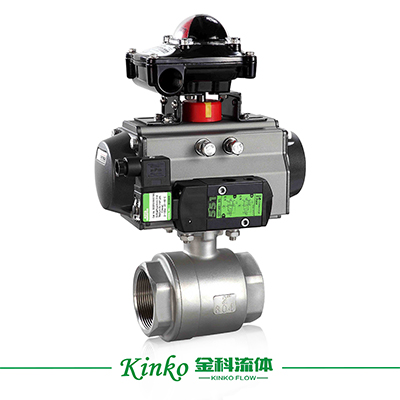
One hidden danger: a valve that sits closed for months may seize without anyone knowing. Partial Stroke Testing (PST) allows the actuator to move the valve 10–20% of travel without disrupting the process.
Smart electric and electro-hydraulic actuators offer integrated PST, which verifies mechanical integrity while the plant runs. This is now a common requirement for tank overfill protection and pipeline ESD valves.
4. Explosion-Proof & Hazardous Area Compliance
Fluid control systems often handle flammable fluids. The actuator itself must not become an ignition source.
Common certifications include:
ATEX / IECEx (international)
UL / cUL (North America)
Typical protection methods are Ex d (flameproof enclosure) or Ex e (increased safety) . Always verify the gas group (IIC vs. IIB) and temperature class for your specific zone.
5. Over-Torque & Overload Protection
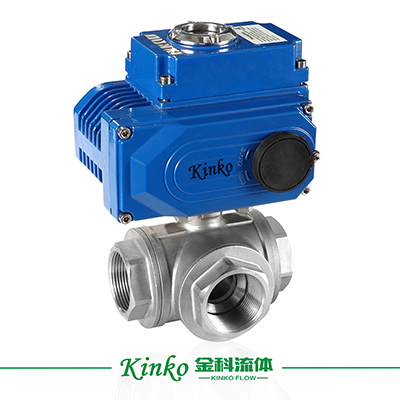
Too much force can damage the valve seat, stem, or disc, leading to leaks. Safety-rated actuators include torque limiting features:
Mechanical clutch: Disengages the motor if torque exceeds a set threshold.
Electronic shutoff: Monitors motor current and stops or reverses instantly upon obstruction.
This prevents valve breakage and maintains process containment.
6. Position Feedback & Self-Diagnostics
An actuator cannot be safe if you don’t know its position. Modern actuators include:
Non-contact position sensors (potentiometer or encoder) for continuous feedback to DCS/PLC.
Diagnostic logs for cycle count, torque profile, battery health, and air supply pressure.
These alerts allow maintenance teams to act before a failure occurs.
Technical Comparison Table
Use this table to evaluate actuator types for safety-critical applications:
| Feature / Safety Function | Pneumatic (Spring-Return) | Electro-Hydraulic | Electric (Spring-Return) |
|---|---|---|---|
| Fail-Safe Mechanism | Mechanical spring | Spring or accumulator | Mechanical spring |
| Typical Torque Range | Low to high | Medium to very high | Medium to high (up to 9000 Nm) |
| SIL Capability | SIL 2 / SIL 3 | SIL 2 / SIL 3 | SIL 2 (SIL 3 in series) |
| Partial Stroke Test | Requires add-ons | Integrated available | Integrated smart PST |
| Hazardous Area Rating | Excellent (intrinsically safe) | Excellent (Ex d) | Excellent (Ex d) |
| Key Safety Advantage | Simple, robust, low cost | High force, precise control | Digital diagnostics, no leaks |
Ivan (Mobile:+86-18968769287)
WhatsApp:+86-13579991606
Wechat:+86-18968769287
Website:www.kinko-flow.com
ZHEJIANG KINKO FLUID EQUIPMENT CO.,LTD

 info@kinko-flow.com
 +86-133 5611 9006