Tel:
Tel: E-Mail:
 English
 Chinese
 한국어
한국어
 Español




News
Why Maintenance Matters
| Without Maintenance | With Regular Maintenance |
|---|---|
| Unexpected valve failure | Predictable replacement intervals |
| Process downtime | Continuous operation |
| Emergency parts shipping | Planned spare parts stock |
| Shortened service life | Full 1–3 million cycle life |
| Higher total cost | Lower total cost of ownership |
Daily / Weekly Checks
| Check | What to Look For | Action if Found |
|---|---|---|
| External leakage | Drips, stains, vapor around stem or body | Tighten or replace stem seals |
| Unusual noise | Hissing (air leak), banging (water hammer) | Locate source; repair |
| Cycle time | Valve opens/closes slower than normal | Check air pressure; clean actuator |
| Solenoid operation | Click when energized; valve responds | Replace coil if no click |
Time required: 2–3 minutes per valve.
Monthly Maintenance
| Task | Procedure | Frequency |
|---|---|---|
| Visual inspection | Check for corrosion, loose bolts, damaged tubing | Monthly |
| Manual cycle | Use manual override to cycle valve 2–3 times | Monthly |
| Check strainer | Clean upstream strainer if pressure drop observed | Monthly (first month after install, then quarterly) |
| Listen for leaks | Air leaks at fittings or solenoid exhaust | Monthly |
Time required: 5–10 minutes per valve.
Quarterly Maintenance
| Task | Procedure |
|---|---|
| Check air pressure | Measure at actuator inlet (should be 5–6 bar) |
| Inspect air preparation unit | Drain filter bowl; check regulator setting; refill lubricator |
| Tighten mounting bolts | Check actuator-to-valve and valve-to-pipe bolts |
| Test fail-safe | Remove air supply; verify NC valve closes, NO valve opens |
Time required: 15 minutes per valve.
Annual Maintenance
| Task | Procedure |
|---|---|
| Seat seal inspection | Remove actuator and stem; inspect PTFE seat for wear or damage |
| Stem seal replacement | Replace PTFE V-rings or O-rings (preventive) |
| Actuator inspection | Check piston seal, cylinder bore, spring condition |
| Solenoid valve cleaning | Disassemble and clean pilot ports |
| Full cycle test | Record open/close times; compare to baseline |
Time required: 30–60 minutes per valve.
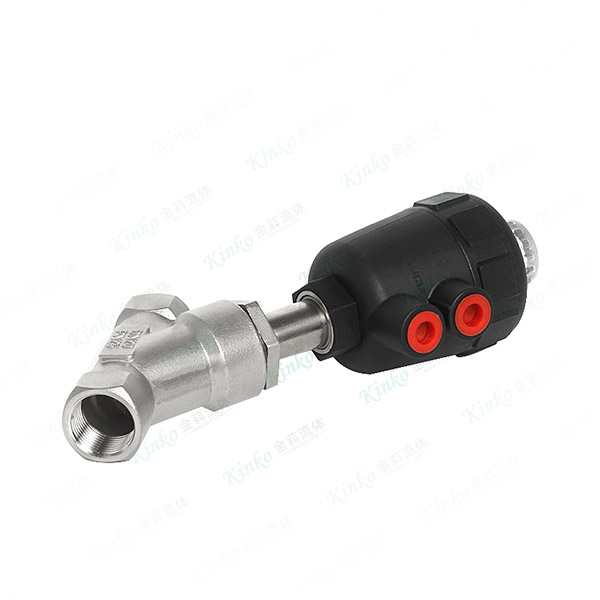
Seal Replacement Procedure (Step by Step)
PTFE seat seals are wear parts. Replace when leakage occurs or as preventive maintenance.
| Step | Action |
|---|---|
| 1 | Isolate valve from pressure and media. Depressurize. |
| 2 | Remove actuator from valve body (unbolt yoke). |
| 3 | Remove stem and seal holder from body. |
| 4 | Remove old PTFE seat seal. Clean seat area. |
| 5 | Inspect metal seat surface for damage. Replace body if damaged. |
| 6 | Install new PTFE seat seal. |
| 7 | Reassemble stem and seal holder. |
| 8 | Reattach actuator. Torque bolts to specification. |
| 9 | Pressure test for leakage before returning to service. |
Kinko tip: Always replace stem seals when replacing the main seat seal. Both wear at similar rates.
Actuator Maintenance
Pneumatic actuators require periodic rebuilds.
| Component | Inspect For | Replace Interval |
|---|---|---|
| Piston seal | Cuts, wear, hardening | 1 million cycles |
| Guide rings | Scoring, wear | 1 million cycles |
| Return spring (NC/NO) | Fatigue, cracking, loss of force | 2 million cycles |
| Cylinder bore | Scoring, corrosion, pitting | Replace actuator if damaged |
| O-rings | Cracking, flattening | 1 million cycles |
Actuator Rebuild Steps
| Step | Action |
|---|---|
| 1 | Remove actuator from valve. |
| 2 | Disassemble cylinder (remove end caps). |
| 3 | Remove piston and rod assembly. |
| 4 | Clean all parts with isopropyl alcohol. |
| 5 | Inspect cylinder bore for damage. |
| 6 | Install new piston seal, guide rings, and O-rings. |
| 7 | Lubricate with light grease (compatible with seals). |
| 8 | Reassemble. Test with air pressure (no load). |
Solenoid Valve Maintenance
| Problem | Check | Solution |
|---|---|---|
| No actuation | Coil resistance | Replace coil if open or shorted |
| Slow actuation | Pilot port blockage | Clean with compressed air |
| Intermittent operation | Loose wiring | Tighten connections |
| Coil hot | Wrong voltage or continuous duty | Replace with correct coil |
| Hissing exhaust | Worn spool seals | Replace solenoid valve |
Preventive measure: Install a 5-micron filter before the solenoid valve.
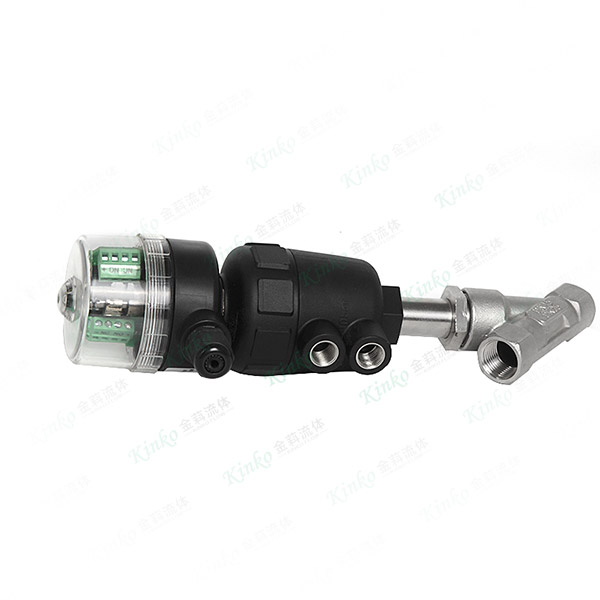
Maintenance Schedule Summary Table
| Interval | Tasks | Time per Valve |
|---|---|---|
| Daily / Weekly | Visual check, listen for leaks, check cycle time | 2–3 min |
| Monthly | Manual cycle, inspect strainer, check bolts | 5–10 min |
| Quarterly | Check air pressure, drain FRL, test fail-safe | 15 min |
| Annual | Inspect seat, replace stem seals, rebuild actuator | 30–60 min |
| Every 500k cycles | Replace PTFE seat seal | 30 min |
| Every 1M cycles | Rebuild actuator (seals, guides, lubricant) | 45 min |
| Every 2M cycles | Replace return spring (NC/NO) | 30 min |
Signs That Maintenance Is Overdue
| Sign | What It Means |
|---|---|
| Visible media leakage | Stem seals or seat seal worn |
| Valve takes >1 second to cycle | Low air pressure or dirty actuator |
| Valve fails to close completely | Debris on seat or worn seat seal |
| Actuator hisses continuously | Piston seal leaking |
| Water hammer on closing | Closing too fast (need flow control) |
| Solenoid coil very hot | Wrong voltage or continuous duty overuse |
Maintenance Records Template
Keep a log for each critical valve.
| Date | Valve ID | Maintenance Performed | Parts Replaced | Next Due | Technician |
|---|---|---|---|---|---|
Spare Parts to Stock
For each valve size in critical service, Kinko recommends:
| Spare Part | Quantity per 10 Valves |
|---|---|
| PTFE seat seal | 5–10 |
| Stem seal kit | 5–10 |
| Actuator rebuild kit (piston seal, O-rings, guides) | 3–5 |
| Return spring (NC) | 2–3 |
| Solenoid coil (24V DC, 110V AC, or 220V AC) | 2–3 per voltage |
| Complete solenoid valve (NAMUR) | 1–2 |
| Flow control silencer | 2–3 |
Do's and Don'ts of Angle Seat Valve Maintenance
| Do | Don't |
|---|---|
| Do install a strainer upstream | Don't operate without a strainer |
| Do use clean, dry, lubricated air | Don't use untreated plant air |
| Do replace seat seals preventively | Don't wait for catastrophic failure |
| Do use torque wrench for bolts | Don't overtighten (damages seals) |
| Do keep maintenance records | Don't rely on memory |
| Do test fail-safe after maintenance | Don't assume it works |
| Do use Kinko genuine spare parts | Don't use unknown generic seals |
When to Replace the Complete Valve
| Condition | Repair or Replace? |
|---|---|
| Worn PTFE seat only | Repair (replace seat) |
| Worn stem seals only | Repair (replace seals) |
| Damaged body seat surface | Replace valve |
| Corroded or scored actuator bore | Replace actuator (or complete valve) |
| Bent or damaged stem | Replace stem if available; otherwise replace valve |
| Valve age > 10 years | Consider replacement for reliability |
| Multiple failures within 12 months | Replace complete valve |
Why Kinko Angle Seat Valves Are Easy to Maintain
Kinko designs valves with maintenance in mind:
Modular construction – Actuator removes from body with 4 bolts
Standard seal kits – Same parts across multiple sizes
Visible position indicator – Easy to verify valve state
NAMUR mounting – Solenoid changes without tools
Live-loaded stem seals – Self-adjust, less frequent adjustment
Conclusion
Regular maintenance is the difference between a valve that lasts 2 years and one that lasts 10 years.
| Action | Benefit |
|---|---|
| Daily visual checks | Catch problems early |
| Monthly manual cycling | Prevent seat sticking |
| Quarterly air system check | Ensure full actuator force |
| Annual seal replacement | Prevent unexpected leakage |
| Keep spare parts on hand | Minimize downtime |
Need maintenance kits or replacement parts? Contact Kinko with your valve model and size. We stock seat seals, stem seals, actuator rebuild kits, and complete valves for quick shipment.
FAQ: Angle Seat Valve Maintenance
Q: How often should I replace the PTFE seat?
A: Every 500,000 to 1,000,000 cycles, or when leakage occurs.
Q: Can I use any grease for actuator maintenance?
A: No. Use only grease compatible with NBR or PU seals. Kinko recommends lithium-based or silicone-free grease.
Q: Do I need to lubricate the air supply?
A: For maximum actuator life, use a lubricator set to 1–2 drops per minute of ISO VG 32 oil.
Q: How do I know if my stem seals need replacement?
A: Visible media leakage from the stem area, or if the valve passes the annual inspection interval.
Q: Can I replace the seat seal without removing the valve from the pipe?
A: Yes, on most Kinko angle seat valves. Remove actuator and stem; seal is accessible from top. No need to break pipe connections.
Ivan (Mobile:+86-18968769287)
WhatsApp:+86-13579991606
Wechat:+86-18968769287
Website:www.kinko-flow.com
ZHEJIANG KINKO FLUID EQUIPMENT CO.,LTD

 info@kinko-flow.com
 +86-133 5611 9006