Tel:
Tel: E-Mail:
 English
 Chinese
 한국어
한국어
 Español




News
Overview: Common Failure Modes
| Failure Mode | Typical Symptoms | Most Common Causes |
|---|---|---|
| Seat leakage (internal) | Media leaks through closed valve | Worn PTFE seat, debris on seat, damaged sealing surface |
| External leakage (stem) | Media leaks from stem area | Worn stem seal, damaged stem surface |
| Valve fails to open | Actuator cycles but valve stays closed | Low air pressure, stuck seat, damaged actuator |
| Valve fails to close | Actuator cycles but valve stays open | Debris under seat, broken spring, worn seal |
| Sticking / slow operation | Valve opens or closes slowly | Dirty actuator, low air pressure, debris in body |
| Water hammer | Loud bang when valve closes | Closing too fast, high flow velocity, condensate |
| Actuator failure | No movement when air applied | Worn piston seal, damaged solenoid, low air pressure |
| Solenoid valve failure | Actuator does not respond to electrical signal | Burned coil, blocked pilot port, stuck spool |
| Fluttering / chattering | Valve rapidly opens and closes | Low differential pressure, undersized actuator |
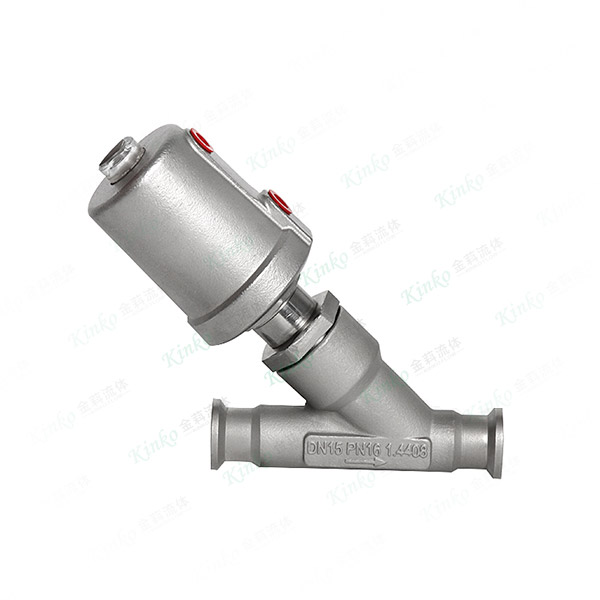
Failure 1: Seat Leakage (Internal Leakage)
Symptoms: Media flows through the valve when it should be closed. Visible flow downstream. Pressure drops in the closed line.
Root Causes
| Cause | Explanation |
|---|---|
| Worn PTFE seat | Normal wear after 500k–2M cycles |
| Debris on seat | Dirt, scale, or weld slag trapped between seat and seal |
| Damaged seat sealing surface | Scratches or pitting on metal seat |
| Seat seal extrusion | High pressure or temperature pushed seal into gap |
| Incorrect flow direction | Flow pushing seal open (for NC valves) |
Solutions
| Cause | Solution |
|---|---|
| Worn PTFE seat | Replace seat seal. Use reinforced PTFE for longer life. |
| Debris on seat | Install 40-mesh strainer upstream. Disassemble and clean. |
| Damaged seat surface | Replace valve body or re-machine seat surface. |
| Seal extrusion | Verify pressure/temperature within rating. Use backup ring. |
| Wrong flow direction | Install valve with flow arrow matching direction (under seat for NC). |
Preventive measure: Always install a strainer upstream of any angle seat valve, especially in older piping systems.
Failure 2: External Leakage (Stem Seal Leakage)
Symptoms: Media leaks from the area where the valve stem enters the actuator. Visible drips or vapor.
Root Causes
| Cause | Explanation |
|---|---|
| Worn PTFE stem seal | Normal wear over time |
| Damaged stem surface | Scoring or corrosion on stem |
| Dry operation (no lubrication) | Stem seal requires slight lubrication from media or external source |
| Over-tightened packing | Excessive friction accelerates wear |
Solutions
| Cause | Solution |
|---|---|
| Worn stem seal | Replace stem seal kit (PTFE V-rings or O-rings). |
| Damaged stem | Replace stem. If body damaged, replace valve. |
| Dry operation | For dry gases, apply food-grade grease to stem periodically. |
| Over-tightened packing | Follow torque specifications in Kinko manual. |
Preventive measure: For dry gas applications, specify a valve with live-loaded PTFE stem seals that self-adjust for wear.
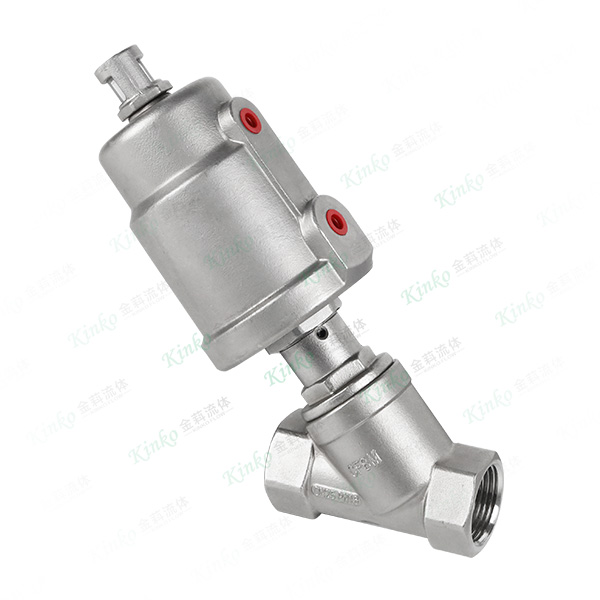
Failure 3: Valve Fails to Open
Symptoms: Actuator makes sound or moves slightly, but valve does not open. No flow when actuated.
Root Causes
| Cause | Explanation |
|---|---|
| Low air pressure | Insufficient force to overcome spring and differential pressure |
| Stuck seat seal | Seal welded to seat due to high temperature or long static period |
| Damaged actuator piston seal | Air leaks past piston; no force transmitted to stem |
| Blocked pilot port (solenoid) | Solenoid valve not delivering full air flow |
| Mechanical obstruction | Debris wedged between seal and seat |
Solutions
| Cause | Solution |
|---|---|
| Low air pressure | Increase pressure to 5–6 bar (minimum). Measure at actuator inlet. |
| Stuck seat seal | Apply higher pressure briefly to break free. Replace seal if recurring. |
| Damaged piston seal | Rebuild actuator with new seal kit. |
| Blocked pilot port | Clean solenoid valve. Install FRL (filter-regulator-lubricator). |
| Mechanical obstruction | Disassemble and remove debris. Install strainer. |
Preventive measure: For steam service, cycle the valve periodically (even when not needed) to prevent seal sticking.
Failure 4: Valve Fails to Close
Symptoms: Valve stays open when air is exhausted. Media continues to flow.
Root Causes
| Cause | Explanation |
|---|---|
| Debris under seat | Particle prevents seal from contacting seat |
| Broken return spring | Spring no longer provides closing force |
| Worn or missing seat seal | Seal deteriorated or dislodged |
| Bent or damaged stem | Stem cannot travel fully to closed position |
| Actuator not exhausting air | Solenoid valve fails to vent actuator |
Solutions
| Cause | Solution |
|---|---|
| Debris under seat | Disassemble and clean. Install strainer upstream. |
| Broken spring | Replace actuator spring kit. |
| Worn seat seal | Replace PTFE seat seal. |
| Bent stem | Replace stem. Inspect for cause of bending (pipe stress). |
| Solenoid not exhausting | Replace solenoid valve or clean exhaust port. |
Preventive measure: For normally closed (NC) valves, the spring is a wear part. Replace springs every 2–3 million cycles as preventive maintenance.
Failure 5: Sticking or Slow Operation
Symptoms: Valve takes longer than normal to open or close. Movement feels sluggish.
Root Causes
| Cause | Explanation |
|---|---|
| Dirty actuator | Contaminated air causes sticky deposits inside cylinder |
| Low air pressure | Reduced force slows movement |
| Undersized actuator | Actuator too small for differential pressure |
| High media viscosity | Thick media slows flow through valve |
| Flow control silencer adjusted too tight | Restricts exhaust air, slowing closing speed |
Solutions
| Cause | Solution |
|---|---|
| Dirty actuator | Disassemble, clean, and lubricate actuator. Install FRL. |
| Low air pressure | Increase to 5–6 bar. Check for restrictions in air lines. |
| Undersized actuator | Replace with larger actuator. Consult Kinko sizing. |
| High viscosity | Use larger valve or heated actuator. |
| Flow control too tight | Adjust silencer for desired speed (1–3 seconds typical). |
Preventive measure: Use clean, dry, lubricated air (ISO 8573-1 Class 3.4.3 or better) for pneumatic actuators.
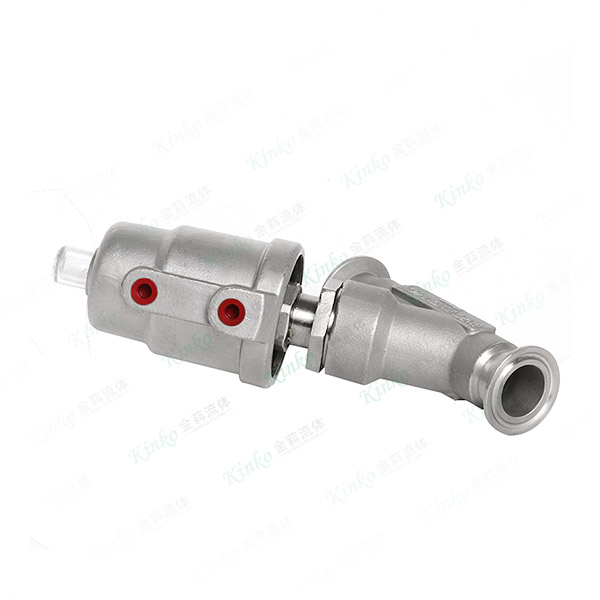
Failure 6: Water Hammer
Symptoms: Loud bang or hammering sound when valve closes. Pipes shake. Potential pipe or valve damage.
Root Causes
| Cause | Explanation |
|---|---|
| Valve closing too fast | Sudden stop of flow creates pressure spike |
| High flow velocity | Velocity above 3 m/s for liquids increases hammer risk |
| Condensate in steam line | Liquid slug hits closed valve |
| Long pipe runs | Large mass of moving fluid suddenly stopped |
Solutions
| Cause | Solution |
|---|---|
| Closing too fast | Install flow control silencer on actuator exhaust port. Increase closing time to 1–3 seconds. |
| High flow velocity | Use larger valve or reduce flow rate. |
| Condensate in steam | Install steam trap upstream of valve. Use self-draining angle seat valve. |
| Long pipe runs | Install check valve or accumulators. Reduce pipe length if possible. |
Preventive measure: For liquid service, always slow the closing speed using a flow control silencer. For steam, ensure proper condensate drainage.
Failure 7: Actuator Failure
Symptoms: No movement when air is applied. Actuator may hiss or leak air.
Root Causes
| Cause | Explanation |
|---|---|
| Worn piston seal | Air leaks past seal; no force generated |
| Damaged cylinder bore | Scoring prevents piston movement |
| Broken piston or yoke | Mechanical failure from over-stress |
| Corrosion inside actuator | Moisture in air supply rusts internal components |
Solutions
| Cause | Solution |
|---|---|
| Worn piston seal | Rebuild actuator with new seal kit. |
| Damaged cylinder bore | Replace actuator. |
| Broken internal parts | Replace actuator. |
| Corrosion | Replace actuator. Install FRL with air dryer. |
Preventive measure: For wet or outdoor environments, specify stainless steel actuator or IP67 aluminum actuator with corrosion-resistant coating.
Kinko angle seat valves are designed to minimize common failure modes:
Reinforced PTFE seats tested to 1.5 million cycles
Live-loaded stem seals that self-adjust for wear
NAMUR mounting for reliable solenoid attachment
316 stainless steel stems with polished finish to reduce seal wear
Factory pressure testing on every valve
Conclusion
Most angle seat valve failures are preventable with proper installation, maintenance, and operating conditions.
| Failure | Best Prevention |
|---|---|
| Seat leakage | Install strainer. Replace seat at recommended intervals. |
| Stem leakage | Use live-loaded seals. Replace stem seals periodically. |
| Fails to open | Maintain 5–6 bar air pressure. Use correct actuator size. |
| Fails to close | Install strainer. Replace springs preventively. |
| Water hammer | Add flow control silencer. Drain condensate from steam. |
| Actuator failure | Use clean, dry, lubricated air. |
For critical applications, stock recommended spare parts and follow the maintenance schedule above.
Need troubleshooting help or replacement parts? Contact Kinko with your valve model, size, and failure description. We will provide diagnosis and parts quickly.
FAQ: Angle Seat Valve Failures and Solutions
Q: Why does my angle seat valve leak externally after a year of service?
A: Normal wear of PTFE stem seals. Replace the stem seal kit. For longer life, ensure media provides some lubrication (steam and dry gas are less lubricating).
Q: Can I repair an actuator or should I replace it?
A: Most actuators can be rebuilt with a seal kit. Replace if the cylinder bore is scored or corroded.
Q: What is the most common cause of sudden valve failure?
A: Debris. A small piece of weld slag, Teflon tape, or pipe scale lodged under the seat is the most common sudden failure.
Q: How do I prevent water hammer in my steam line?
A: Install a steam trap upstream of the valve. Use a flow control silencer to slow closing speed to 2–3 seconds. Ensure piping slopes toward the valve for drainage.
Q: My valve chatters at partial opening. Is this normal?
A: No. Angle seat valves are not designed for throttling. Partial opening causes seat vibration. Use a globe control valve if modulation is required
Ivan (Mobile:+86-18968769287)
WhatsApp:+86-13579991606
Wechat:+86-18968769287
Website:www.kinko-flow.com
ZHEJIANG KINKO FLUID EQUIPMENT CO.,LTD

 info@kinko-flow.com
 +86-133 5611 9006