Tel:
Tel: E-Mail:
 English
 Chinese
 한국어
한국어
 Español




News
Key Properties of Stainless Steel for Angle Seat Valves
| Property | SS304 | SS316 |
|---|---|---|
| Corrosion resistance | Good | Excellent |
| Maximum temperature (with PTFE seal) | 180°C (356°F) | 180°C (356°F) |
| Pressure rating (DN15–50) | 16 bar (232 PSI) | 16 bar (232 PSI) |
| Pressure rating (DN65–80) | 10 bar (145 PSI) | 10 bar (145 PSI) |
| Tensile strength | 500–700 MPa | 500–700 MPa |
| Food/medical approval | Yes (FDA, 3A) | Yes (FDA, 3A, preferred) |
| Typical applications | Steam, water, air, mild chemicals | Salt water, acids, pharmaceuticals |
Advantage 1: Superior Corrosion Resistance
Corrosion is the leading cause of premature valve failure in industrial environments. Stainless steel resists rust, pitting, and chemical attack across a wide range of media.
Corrosion Resistance by Environment
| Environment | SS304 | SS316 |
|---|---|---|
| Fresh water | Good | Excellent |
| Salt water / marine | Moderate | Excellent |
| Steam (condensate) | Good | Excellent |
| Dilute acids (pH 4-6) | Moderate | Good |
| Alkalis (pH 8-10) | Good | Excellent |
| Chlorides (bleach, salt, brine) | Moderate | Good (resists pitting) |
| Food / dairy | Excellent | Excellent |
| Pharmaceutical / WFI | Good | Excellent (preferred) |
When to Choose SS316 Over SS304
| Condition | Recommended Grade |
|---|---|
| Fresh water, steam, air, mild chemicals | SS304 (sufficient) |
| Salt water, marine environment | SS316 (required) |
| Chloride-containing media (bleach, brine, seawater) | SS316 |
| Acidic chemicals (acetic, citric, dilute sulfuric) | SS316 |
| Pharmaceutical / sanitary / WFI | SS316 (preferred) |
| General industrial with no corrosives | SS304 (cost-effective) |
Kinko recommendation: For long-term reliability in corrosive environments, specify SS316. The extended service life justifies the investment.
Advantage 2: High Temperature Tolerance
Stainless steel maintains its strength and sealing integrity at high temperatures.
| Valve Material | Maximum Continuous Media Temperature | Effect at High Temperature |
|---|---|---|
| SS304 / SS316 with PTFE seal | 180°C (356°F) | No degradation |
| SS304 / SS316 with FKM seal | 160°C (320°F) | No degradation |
| SS304 / SS316 with EPDM seal | 120°C (248°F) | Seal limits temperature |
Steam Service Suitability
| Steam Type | Temperature | Stainless Steel Suitability |
|---|---|---|
| Low-pressure steam (0.5 bar) | 110°C | Excellent |
| Saturated steam (4 bar) | 150°C | Excellent |
| Saturated steam (8 bar) | 170°C | Excellent |
| Saturated steam (12 bar) | 190°C | Exceeds PTFE limit (consult Kinko) |
Note: PTFE seals are rated to 180°C. For steam above 180°C, consult Kinko for special high-temperature seal materials.
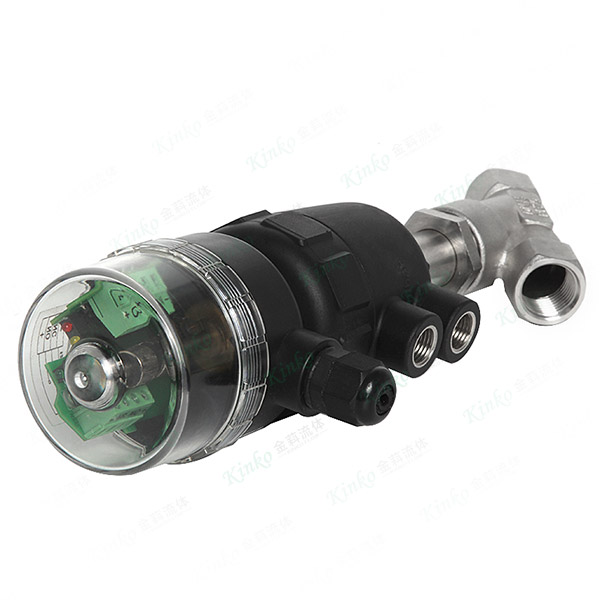
Advantage 3: High Pressure Capability
Stainless steel angle seat valves maintain their pressure rating across the full temperature range.
| Valve Size | SS304 / SS316 Pressure Rating |
|---|---|
| DN15 – DN50 | 16 bar (232 PSI) |
| DN65 – DN80 | 10 bar (145 PSI) |
Important: Stainless steel retains over 90% of its room-temperature strength at 180°C.
Advantage 4: Sanitary and Food-Grade Compliance
Industries that process food, beverages, or pharmaceuticals require valves made from materials that are non-toxic, non-absorbent, and easy to clean.
Stainless Steel Compliance
| Standard / Certification | SS304 | SS316 |
|---|---|---|
| FDA food contact | Yes | Yes |
| EU 1935/2004 (food contact) | Yes | Yes |
| 3A sanitary standard | Yes (with proper finish) | Yes |
| EHEDG (hygienic design) | Yes (with proper finish) | Yes |
| CIP / SIP compatible | Yes | Yes |
| USP Class VI (biocompatibility) | Limited | Yes |
Surface Finish Requirements for Sanitary Applications
| Application | Required Surface Finish |
|---|---|
| Dairy, beverage | Ra ≤ 0.8 µm (mechanical polish) |
| Pharmaceutical | Ra ≤ 0.4 µm (electropolished) |
| Ultra-pure (WFI, pure steam) | Ra ≤ 0.25 µm (electropolished) |
Kinko offers stainless steel angle seat valves with sanitary finishes and clamp (tri-clamp) connections for food and pharmaceutical applications.
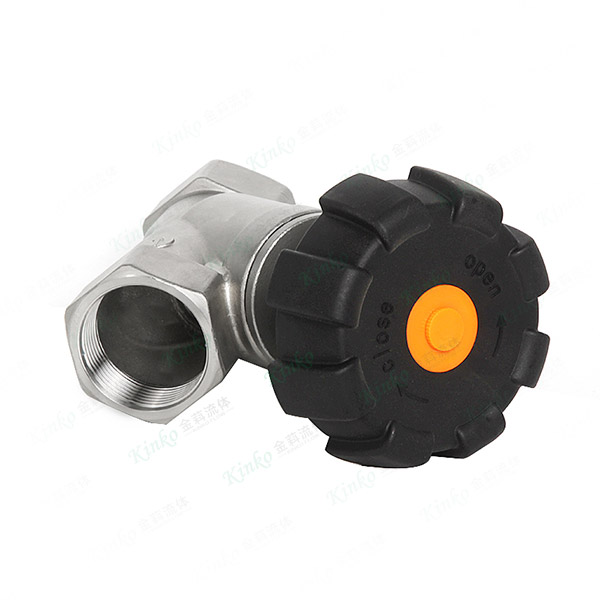
Advantage 5: Mechanical Strength and Durability
Stainless steel valves withstand high mechanical stresses. This matters in applications with:
Vibration (near compressors, pumps, or engines)
Thermal cycling (frequent heating and cooling)
Pipe stress (misaligned piping or inadequate supports)
High cycle rates (millions of operations)
| Mechanical Property | SS304 / SS316 |
|---|---|
| Tensile strength (MPa) | 500 – 700 |
| Yield strength (MPa) | 200 – 300 |
| Hardness (Brinell) | 150 – 200 |
| Fatigue resistance | Excellent |
Result: Stainless steel angle seat valves provide reliable operation for millions of cycles in demanding mechanical environments.
Advantage 6: Long Service Life
Stainless steel angle seat valves offer extended service life, reducing replacement frequency and downtime.
| Cost Factor | SS316 Angle Seat Valve |
|---|---|
| Initial purchase price | Higher than alternative materials |
| Installation cost | Standard |
| Expected service life (typical industrial) | 5–10 years |
| Replacement frequency | Low |
| Downtime cost per replacement | Infrequent |
| Long-term value | Excellent due to reliability |
Kinko note: For critical processes where valve failure causes expensive downtime, stainless steel is the preferred specification.
Technical Specifications: Kinko Stainless Steel Angle Seat Valves
| Parameter | Kinko SS304 Series | Kinko SS316 Series |
|---|---|---|
| Body material | Cast stainless steel CF8 (SS304 equivalent) | Cast stainless steel CF8M (SS316 equivalent) |
| Internal components | SS304 stem, guides | SS316 stem, guides |
| Seat seal material | PTFE (standard), FKM, EPDM (optional) | PTFE (standard), FKM, EPDM (optional) |
| Temperature range (PTFE) | -10°C to +180°C (14°F to 356°F) | -10°C to +180°C (14°F to 356°F) |
| Pressure rating (DN15–50) | 16 bar (232 PSI) | 16 bar (232 PSI) |
| Pressure rating (DN65–80) | 10 bar (145 PSI) | 10 bar (145 PSI) |
| End connections | Threaded (BSP/NPT), flanged, clamp | Threaded (BSP/NPT), flanged, clamp |
| Actuation | Pneumatic NC (standard), NO, DA | Pneumatic NC (standard), NO, DA |
| Actuator material | Aluminum (standard), SS316 (optional) | Aluminum (standard), SS316 (optional) |
| Suitable for sanitary | Yes (with polished finish) | Yes (preferred) |
| Suitable for corrosive media | Moderate | Excellent |
| Typical applications | Steam, hot water, air, mild chemicals | Salt water, acids, pharmaceuticals, food |
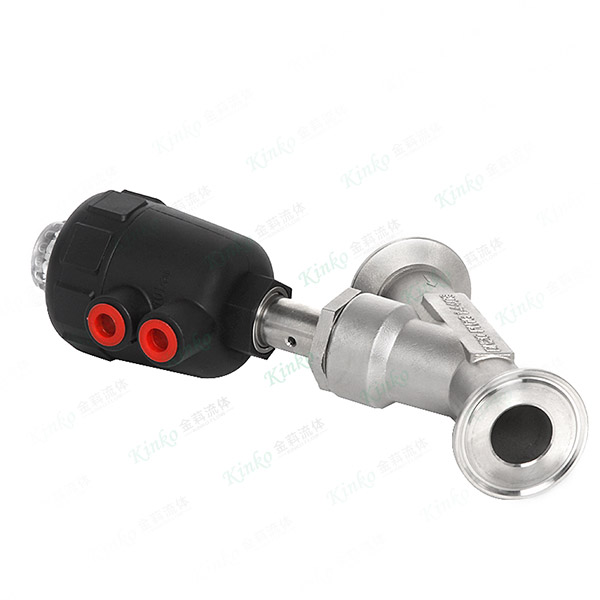
Available Sizes and Connection Types
| Valve Size (DN) | Pipe Size (Inch) | Threaded Connections | Flanged Connections | Clamp Connections |
|---|---|---|---|---|
| DN15 | 1/2" | BSP / NPT | PN16 / ANSI 150 | 1" or 1.5" clamp |
| DN20 | 3/4" | BSP / NPT | PN16 / ANSI 150 | 1.5" clamp |
| DN25 | 1" | BSP / NPT | PN16 / ANSI 150 | 2" clamp |
| DN32 | 1-1/4" | BSP / NPT | PN16 / ANSI 150 | 2" clamp |
| DN40 | 1-1/2" | BSP / NPT | PN16 / ANSI 150 | 2" or 2.5" clamp |
| DN50 | 2" | BSP / NPT | PN16 / ANSI 150 | 2.5" or 3" clamp |
| DN65 | 2-1/2" | BSP / NPT | PN16 / ANSI 150 | 3" clamp |
| DN80 | 3" | BSP / NPT | PN16 / ANSI 150 | 3" or 4" clamp |
Application-Specific Advantages of Stainless Steel
Steam Systems
| Advantage | Why It Matters |
|---|---|
| No corrosion | Condensate is slightly acidic (pH 5-6); stainless steel resists |
| High temperature tolerance | Maintains strength at 180°C |
| Long service life | Withstands thermal cycling without cracking |
Chemical Processing
| Advantage | Why It Matters |
|---|---|
| Wide chemical compatibility | SS316 resists hundreds of chemicals |
| No media contamination | Stainless steel does not leach metals into process |
| Cleanable for batch changes | Easy to flush; no residue absorption |
Food and Beverage
| Advantage | Why It Matters |
|---|---|
| FDA compliance | Required for legal food contact |
| Smooth surface finish | Prevents bacterial growth and biofilm formation |
| CIP compatibility | Withstands cleaning chemicals at high temperature |
Marine and Offshore
| Advantage | Why It Matters |
|---|---|
| Salt water resistance | SS316 resists pitting and crevice corrosion |
| Chloride tolerance | Marine environments have high chloride levels |
| Long life in humid air | No rust formation on external surfaces |
Pharmaceutical and Biotechnology
| Advantage | Why It Matters |
|---|---|
| Ultra-pure surface finishes | Electropolishing to Ra ≤ 0.25 µm available |
| Validation support | Material certifications and traceability provided |
| WFI (water for injection) compatible | No extractables or leachables |
SS304 vs SS316: Selection Guide
| Application Condition | Recommended Grade |
|---|---|
| Clean steam, saturated steam | SS304 or SS316 |
| Hot water (below 180°C) | SS304 |
| Compressed air | SS304 |
| Mild chemicals (non-chlorinated) | SS304 |
| Salt water, seawater | SS316 |
| Chlorides, bleach, brine | SS316 |
| Acidic chemicals | SS316 |
| Pharmaceutical / WFI | SS316 |
| Food / dairy | SS304 or SS316 |
| Offshore / marine environment | SS316 |
Maintenance Considerations for Stainless Steel Valves
| Maintenance Task | Frequency (Stainless Steel) |
|---|---|
| Visual inspection for leakage | Monthly |
| PTFE seat replacement | 500k – 2M cycles |
| Stem seal replacement | 500k – 2M cycles |
| Actuator rebuild | 1M – 3M cycles |
| Complete valve replacement | 5–10 years |
Why Kinko Stainless Steel Angle Seat Valves?
Kinko stainless steel angle seat valves are manufactured to ISO standards with:
CF8 / CF8M cast stainless steel bodies (equivalent to SS304 and SS316)
Reinforced PTFE seats tested to 1.5 million cycles
Live-loaded PTFE stem seals for zero external leakage
NAMUR mounting pad for direct solenoid attachment
100% pressure tested before shipment
Material certifications available for traceability
FAQ: Stainless Steel Angle Seat Valves
Q: What is the difference between SS304 and SS316?
A: SS316 contains molybdenum (2-3%), which provides superior resistance to chlorides, salt water, and acidic environments. SS304 is suitable for fresh water, steam, and mild chemicals.
Q: Can stainless steel angle seat valves be used for steam?
A: Yes. With PTFE seals, they handle saturated steam up to 180°C.
Q: Are stainless steel valves suitable for food applications?
A: Yes. SS304 and SS316 are FDA-compliant for food contact. Kinko offers sanitary finishes and clamp connections.
Q: How long do stainless steel angle seat valves last?
A: In typical industrial service (steam, water, air), expect 5–10 years of service life with proper maintenance.
Q: Do stainless steel valves require special maintenance?
A: No. Standard maintenance includes periodic inspection and PTFE seat replacement after 500k–2M cycles.
Q: Can I get material certifications for Kinko stainless steel valves?
A: Yes. Kinko provides material test reports (MTRs) and traceability documentation upon request
Ivan (Mobile:+86-18968769287)
WhatsApp:+86-13579991606
Wechat:+86-18968769287
Website: www.kinko-flow.com
ZHEJIANG KINKO FLUID EQUIPMENT CO.,LTD

 info@kinko-flow.com
 +86-133 5611 9006