Tel:
Tel: E-Mail:
 English
 Chinese
 한국어
한국어
 Español




News
Introduction
When pipelines exceed 2 inches or pressures rise above 1000 PSI, threaded ball valves become impractical. Torquing a 3" threaded connection risks cracking the valve body, and disassembly for maintenance requires cutting pipe.
Flanged ball valves solve both problems. They bolt directly between pipe flanges, offering easy removal, high pressure ratings, and reliable sealing.
This guide explains when to choose flanged ball valves, which flange standards to specify, and how to procure them correctly.
What Is a Flanged Ball Valve?
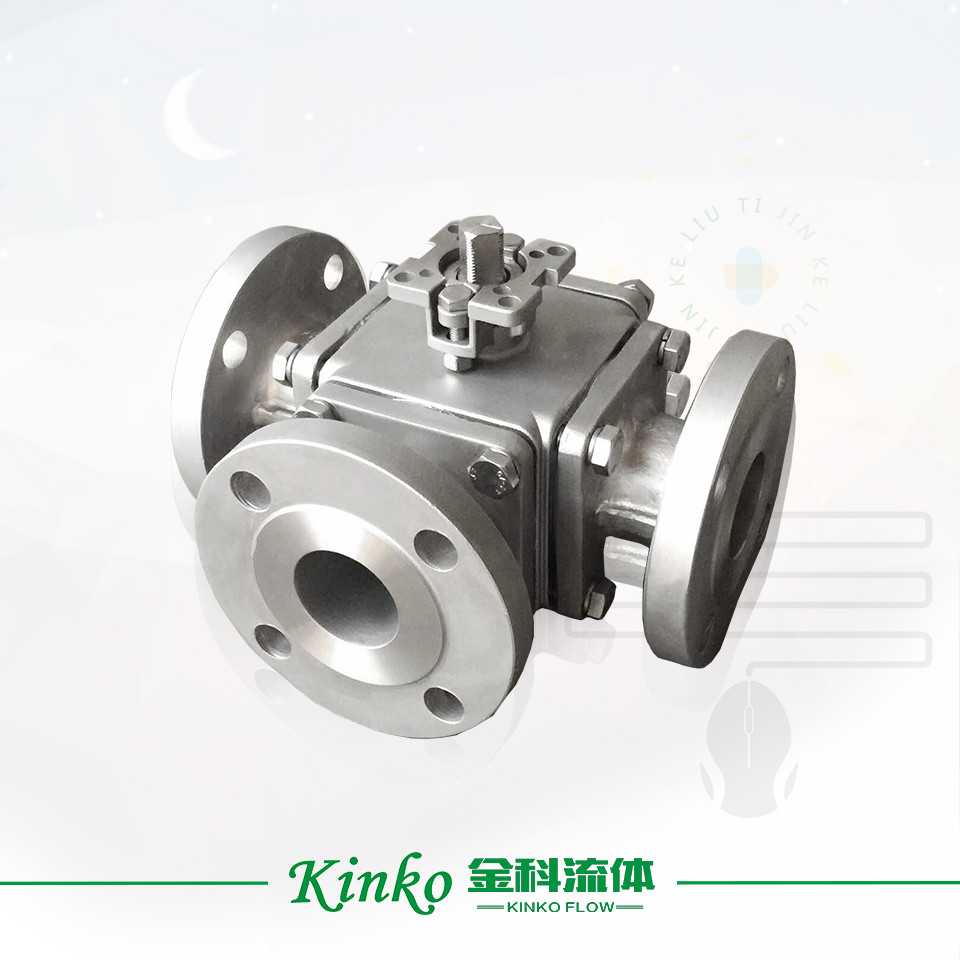
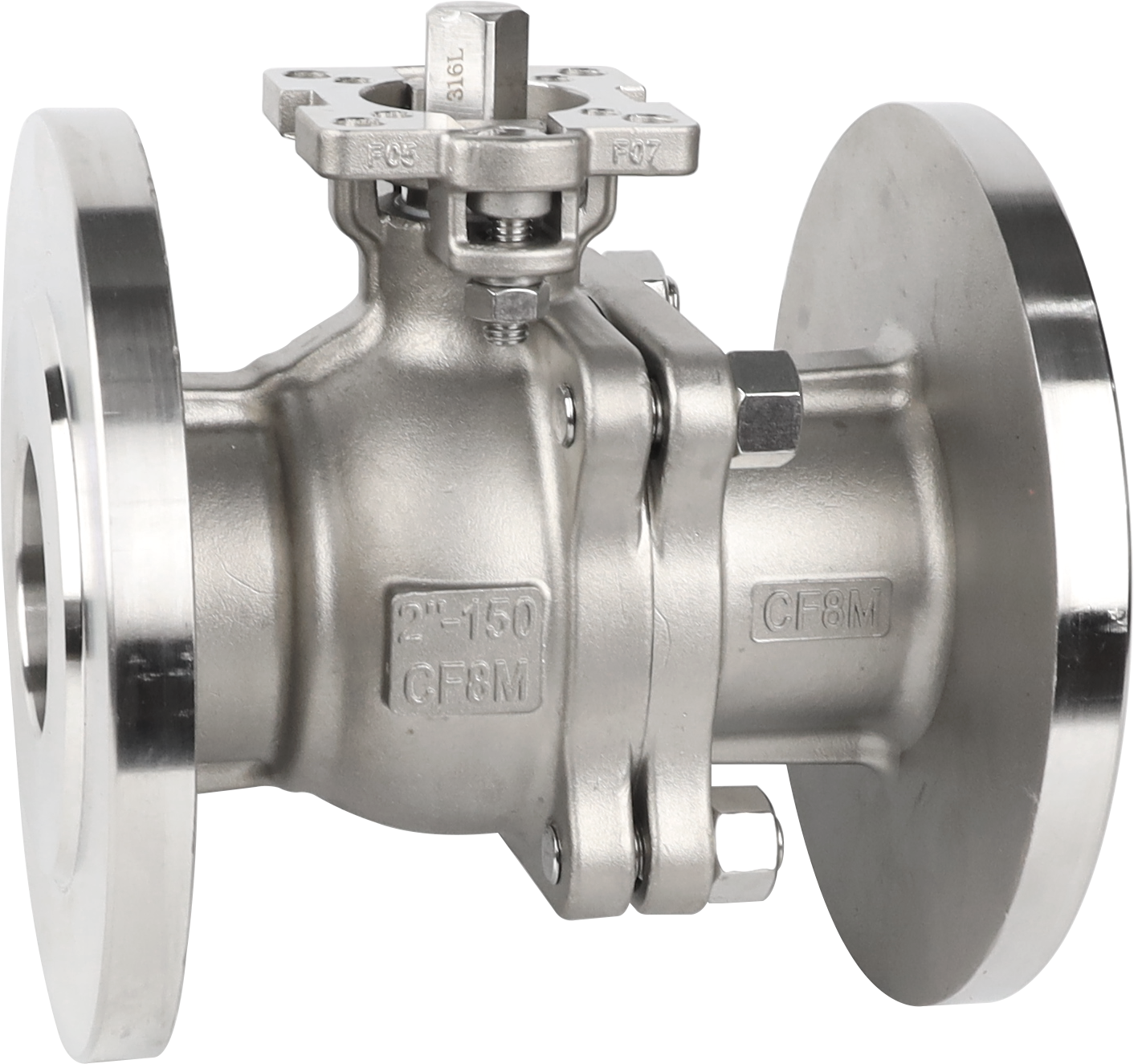
A flanged ball valve has flat or raised-face flanges on one or both ends. The flanges bolt to matching pipe flanges with gaskets in between.
Key characteristics:
Sizes: Typically 1/2" to 24" (common range: 2" to 12")
Pressure ratings: Class 150 to Class 2500 (up to 6000+ PSI)
Removal: Unbolt, replace valve, rebolt – no pipe cutting
Sealing: Gasket between flange faces
Best for: Large pipelines, steam systems, chemical plants, refineries, water treatment facilities.
Flanged vs Threaded vs Welded – Full Comparison
| Parameter | Threaded | Flanged | Butt Weld |
|---|---|---|---|
| Size range | 1/4" – 2" (max 3") | 1/2" – 24"+ | All sizes |
| Removal for service | Yes (unscrew) | Yes (unbolt) | No (cut out) |
| Pressure rating | Up to 2000 PSI | Up to 6000+ PSI | Unlimited |
| Installation time | 5-10 minutes | 20-40 minutes | 1-2 hours (weld + inspect) |
| Leak potential | Thread seal dependent | Gasket dependent | Zero (if welded correctly) |
| Cost (2" valve) | Low ($30-100) | Medium ($80-300) | Medium ($60-200) |
| Best application | Small lines, maintenance | Large lines, frequent service | Permanent, high temp/pressure |
Kinko recommendation: Use flanged valves for all new installations above 2" diameter where future maintenance is expected.
Flange Standards (Critical for Procurement)
Specifying the wrong flange standard guarantees mismatched bolt holes or gasket surfaces.
North America:
| Standard | Description | Common class |
|---|---|---|
| ASME B16.5 | Steel pipe flanges (½" to 24") | 150, 300, 600, 900, 1500, 2500 |
| ASME B16.42 | Ductile iron flanges | 150, 300 |
| MSS SP-44 | Steel pipeline flanges (large diameter) | 150, 300, 400, 600 |
International:
| Standard | Region | Compatibility |
|---|---|---|
| EN 1092-1 | Europe | Not compatible with ASME (different bolt circles) |
| JIS B2220 | Japan | Not compatible with ASME or EN |
| BS 4504 | UK (older) | Replaced by EN 1092 |
Kinko rule: Always specify the exact standard and class. "150 lb flange" means ASME B16.5 Class 150 unless stated otherwise.
Flange Face Types (Sealing Surface)
The flange face type determines which gasket to use and how the joint seals.
| Face type | Symbol | Gasket | Best for |
|---|---|---|---|
| Raised Face (RF) | RF | Full-face or ring | General industrial (most common) |
| Flat Face (FF) | FF | Full-face | Cast iron, low-pressure |
| Ring-Type Joint (RTJ) | RTJ | Metal ring | High pressure, high temperature |
| Male-Female (M/F) | M/F | Full-face | Large diameter, confined spaces |
| Tongue & Groove (T&G) | T&G | Full-face | Toxic or expensive fluids |
Procurement note: 90% of industrial flanged ball valves are Raised Face (RF) with a 1/16" or 1/4" raised sealing surface.
Pressure Classes (ANSI/ASME)
Flanged ball valves are rated by class number – not PSI.
| Class | Max pressure at ambient | Max pressure at 400°F (204°C) | Typical applications |
|---|---|---|---|
| Class 150 | 285 PSI | 180 PSI | Water, air, low-pressure steam |
| Class 300 | 740 PSI | 565 PSI | Process lines, medium steam |
| Class 600 | 1480 PSI | 1115 PSI | Chemical, oil, gas |
| Class 900 | 2220 PSI | 1665 PSI | High-pressure gas |
| Class 1500 | 3705 PSI | 2780 PSI | Refinery, hydraulic |
| Class 2500 | 6170 PSI | 4630 PSI | Extreme pressure |
Important: Do not assume Class 150 means 150 PSI. It means 285 PSI cold. Always check the temperature derating table.
Flanged Ball Valve Dimensions (ASME B16.10 Face-to-Face)
Short pattern and long pattern are both common. Always confirm.
| Valve size | Class 150 (short) | Class 300 (short) | Class 600 (long pattern typical) |
|---|---|---|---|
| 1/2" | 5.0" (127mm) | 5.5" (140mm) | 6.5" (165mm) |
| 3/4" | 5.5" (140mm) | 6.0" (152mm) | 7.0" (178mm) |
| 1" | 6.0" (152mm) | 6.5" (165mm) | 7.5" (191mm) |
| 1-1/2" | 7.0" (178mm) | 7.5" (191mm) | 9.0" (229mm) |
| 2" | 7.5" (191mm) | 8.5" (216mm) | 10.5" (267mm) |
| 3" | 9.5" (241mm) | 11.0" (279mm) | 13.0" (330mm) |
| 4" | 11.5" (292mm) | 13.0" (330mm) | 15.0" (381mm) |
| 6" | 15.5" (394mm) | 17.5" (445mm) | 21.0" (533mm) |
Request Kinko's dimension sheet – variations exist between manufacturers.
Advantages of Flanged Ball Valves
1. Easy installation and removal
Unbolt four to eight stud bolts.
Remove valve without disturbing pipe alignment.
Replace gasket each time for fresh seal.
2. High pressure and temperature capability
Class 1500+ valves handle extreme conditions.
No thread sealant to fail.
3. No pipe stress
Threaded connections can over-torque and crack valve bodies.
Flanged connections spread load across bolted joint.
4. Suitable for all materials
Cast iron, ductile iron, carbon steel, stainless steel, alloy.
Flange design is material-agnostic.
5. Visual confirmation of seal
See gasket compression.
Detect leaks immediately during pressure test.
Material Options for Flanged Ball Valves
| Material | ASTM spec | Best for | Limitation |
|---|---|---|---|
| Cast iron | A126 | Water, air (low pressure) | No steam, no shock |
| Ductile iron | A395 | Water, moderate pressure | Limited corrosion resistance |
| Carbon steel (WCB) | A216 WCB | Steam, oil, gas (most common) | Rusts in water |
| 304 SS (CF8) | A351 CF8 | Food, mild chemical | Chloride cracking |
| 316 SS (CF8M) | A351 CF8M | Saltwater, acids, marine | Higher cost |
| Alloy 20 | A351 CN7M | Sulfuric acid | Very high cost |
Kinko recommendation: For 80% of industrial applications above 2", specify carbon steel WCB body with 316 SS trim (ball and stem).
Flange Gaskets (Critical for Leak-Free Service)
Gasket selection depends on fluid, temperature, and pressure.
| Gasket type | Max temp | Best for | Limitations |
|---|---|---|---|
| Non-asbestos fiber (compressed) | 400°F (204°C) | Water, air, oil | Not for steam or chemicals |
| PTFE (virgin) | 450°F (232°C) | Acids, chemicals, food | Cold flow under high bolt load |
| Spiral wound (316/Graphite) | 1200°F (649°C) | Steam, high temp, high pressure | Not for oxidizing acids |
| Flexible graphite | 850°F (454°C) | Steam, hydrocarbons | Requires careful handling |
Rule: For steam service, use spiral wound gasket with inner ring. Never use PTFE on steam over 400°F.
Installation Best Practices
Step 1 – Inspect flange faces
Remove old gasket material completely.
Check for scratches, gouges, or pitting.
Damaged faces require resurfacing or replacement.
Step 2 – Align flanges
Pipe flanges must be parallel within 1/16" per foot.
Use two bolts to pull flanges together – never force.
Step 3 – Install proper gasket
Center gasket between flange faces.
Do not re-use gaskets (always replace).
Step 4 – Torque bolts cross-pattern
Use lubricated studs and nuts.
Follow torque pattern (opposite pairs).
Minimum torque: 50-100 ft-lbs for 1/2" studs (Class 150).
Step 5 – Pressure test
Fill system slowly.
Check all flange joints for leaks at 1.5x working pressure.
Re-torque after first heat cycle (for high-temperature service).
Common Flange Problems and Solutions
| Problem | Likely cause | Solution |
|---|---|---|
| Leak at flange | Worn gasket or low bolt torque | Replace gasket, re-torque to spec |
| Bolt corrosion | Wrong material | Upgrade to stainless steel studs |
| Gasket blowout | Over-pressure or wrong gasket type | Verify pressure rating, use spiral wound |
| Flange face pitting | Corrosive fluid | Resurface or replace flange |
| Bolt hole misalignment | Wrong flange standard | Verify ASME vs EN vs JIS before ordering |
Procurement Checklist for Flanged Ball Valves
Copy this checklist into your RFQ to Kinko:
Valve size: _____ inch
Flange standard: ASME B16.5 / EN 1092-1 / JIS B2220 / Other: _____
Flange class: 150 / 300 / 600 / 900 / 1500 / 2500
Flange face: Raised Face (RF) / Flat Face (FF) / RTJ / Other: _____
Face-to-face dimension: Standard ASME B16.10 / Custom: _____
Body material: Cast iron / Ductile iron / WCB / CF8 / CF8M / Other: _____
Ball & stem material (trim): Same as body / 316 SS / Other: _____
Seat material: PTFE / PEEK / Nylon / Metal-seated
Pressure required: _____ PSI at _____°C
Fluid type: _____
Operation: Lever / Gear operator / Pneumatic / Electric
Quantity: _____ pieces
Cost Factors for Flanged Ball Valves
| Factor | Cost impact (relative to threaded same size) |
|---|---|
| Flanged vs threaded (2") | +100% to +200% |
| Class 150 to Class 300 | +30% to +50% |
| Class 300 to Class 600 | +50% to +80% |
| Carbon steel to 316 SS | +60% to +100% |
| Lever to gear operator (4"+) | +100to300 |
| Anti-static, fire-safe design | +15% to +25% |
Conclusion
Flanged ball valves are the standard for large pipelines, high-pressure systems, and any installation where future maintenance is expected. Specify the correct flange standard (ASME B16.5 for North America), class (150 to 2500), and face type (RF for most). Carbon steel body with 316 SS trim covers the majority of industrial applications.
Kinko’s flanged ball valve product line includes:
ASME B16.5 Class 150, 300, and 600
Carbon steel WCB body with 316 SS ball and stem
304 SS and 316 SS all-stainless options
Raised Face (RF) as standard – RTJ available
Fire-safe design (API 607) optional
Lever, gear, or actuator-ready mounting
Sizes: 1/2" to 12" (larger custom on request)
Send Kinko your flange specification checklist for a detailed quotation with drawings
Ivan (Mobile:+86-18968769287)
WhatsApp:+86-13579991606
Wechat:+86-18968769287
Website:www.kinko-flow.com
ZHEJIANG KINKO FLUID EQUIPMENT CO.,LTD

 info@kinko-flow.com
 +86-133 5611 9006