Date:2026-05-25 13:26:02 Author:Zhejiang Kinko Fluid Equipment Co., Ltd
Lug Type Butterfly Valves: Installation, Benefits, and Dead-End Service Guide
Lug type butterfly valves differ from wafer valves in one critical way: they can be used for dead-end service. This makes them the preferred choice for isolation, maintenance, and systems requiring downstream line removal.
This guide covers lug type features, installation requirements, and comparison with wafer valves.
Lug vs. Wafer: Key Differences
| Feature | Lug Type | Wafer Type |
|---|
| Design | Threaded inserts (lugs) on both sides | Smooth bore, no inserts |
| Mounting | Bolts pass through lugs | Long bolts pass through entire valve |
| Dead-end service | Yes | No |
| Downstream line removal | Yes (valve stays in place) | No (valve drops out) |
| Weight | Slightly heavier | Lightest option |
| Cost | Higher (15-25% more) | Lower |
| Flange alignment | Self-centering | Requires careful centering |
| Typical use | Isolation, end-of-line, frequent maintenance | General inline service |
What Is Dead-End Service?
Dead-end service means the valve is installed at the end of a line with a blank flange on one side.
| Installation Scenario | Wafer Type | Lug Type |
|---|
| Between two flanges (inline) | Acceptable | Acceptable |
| End of line with blank flange | Not acceptable | Acceptable |
| Line removal downstream (valve stays) | Not possible | Possible |
| Bypass line with future tie-in | Not recommended | Recommended |
Why wafer fails at dead-end: The downstream flange is missing. Line pressure pushes the valve out of position or blows the gasket.
Lug Valve Components
| Component | Material Options | Function |
|---|
| Body | Ductile iron, SS316, Cast steel | Main housing with threaded lugs |
| Lugs (threaded inserts) | Integral to body (cast or drilled) | Accept flange bolts |
| Disc | Epoxy-coated DI, SS304, SS316 | Flow control |
| Seat | EPDM, Viton, PTFE, NBR | Sealing against disc and flanges |
| Stem | SS416, SS630 (17-4 PH) | Torque transmission |
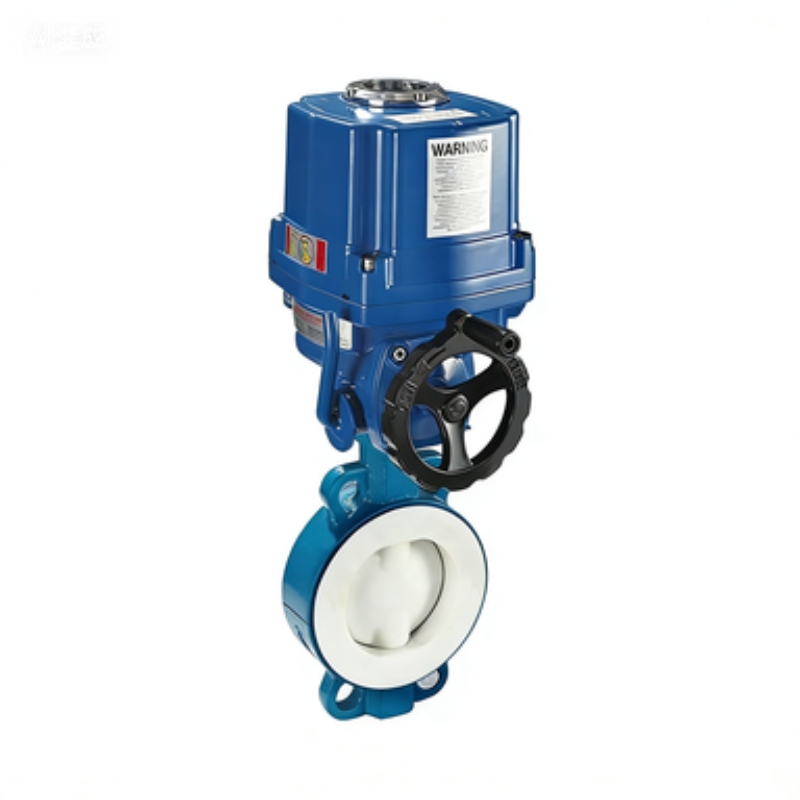
Installation Methods
Method 1: Between Two Flanges (Standard)
| Step | Action |
|---|
| 1 | Center valve between flanges |
| 2 | Insert bolts through flange holes and through lug holes |
| 3 | Install nuts on opposite side |
| 4 | Tighten crosswise to recommended torque |
Method 2: Dead-End Service (End of Line)
| Step | Action |
|---|
| 1 | Mount valve to existing flange using bolts into lugs |
| 2 | Install blank flange on the downstream side |
| 3 | Bolt blank flange to downstream lugs |
| 4 | Valve holds pressure from one side only |
Method 3: Downstream Line Removal (Maintenance)
| Step | Action |
|---|
| 1 | Close valve |
| 2 | Remove downstream flange bolts |
| 3 | Remove downstream pipe section |
| 4 | Valve remains bolted to upstream flange, holding line pressure |
Key advantage: Lug valves act as their own isolation flange.
Bolt Torque Recommendations
| Valve Size | Recommended Torque (Nm) – Ductile Iron Body |
|---|
| DN50 – DN65 | 40 – 50 Nm |
| DN80 – DN100 | 60 – 80 Nm |
| DN125 – DN150 | 90 – 110 Nm |
| DN200 | 120 – 140 Nm |
| DN250 – DN300 | 150 – 180 Nm |
| DN350 – DN400 | 180 – 220 Nm |
Warning: Overtightening compresses the seat and causes high operating torque. Undertightening causes flange leakage.
Installation Checklist
| Check | Requirement |
|---|
| Flange alignment | Flange bolt holes align with lugs |
| Gasket | Not required (seat acts as flange gasket) |
| Disc position | Slightly open (10°) during bolt tightening |
| Bolt length | Must fully engage lugs + nut |
| Tightening pattern | Crosswise, even pressure |
| Actuator clearance | Allow space for actuator swing on lug side |
Benefits Summary
| Benefit | Description |
|---|
| Dead-end capable | Holds pressure with one flange only |
| Maintenance friendly | Downstream line can be removed without valve removal |
| Bidirectional | Seals equally in both flow directions |
| No gasket needed | Seat seals against both flanges |
| Self-centering | Lugs align valve between flanges |
| Retrofittable | Direct replacement for wafer valves |
Lug Type vs. Flanged Type
| Feature | Lug Type | Flanged Type |
|---|
| Weight | Light | Heavy |
| Cost | Medium | High |
| Dead-end service | Yes | Yes |
| Removal for maintenance | Valve stays, pipe removed | Entire valve removed |
| Bolt count | Matches flange holes | Matches flange holes |
| Face-to-face length | Short (wafer dimension) | Long |
| Typical DN range | DN50 – DN600 | DN50 – DN2000+ |
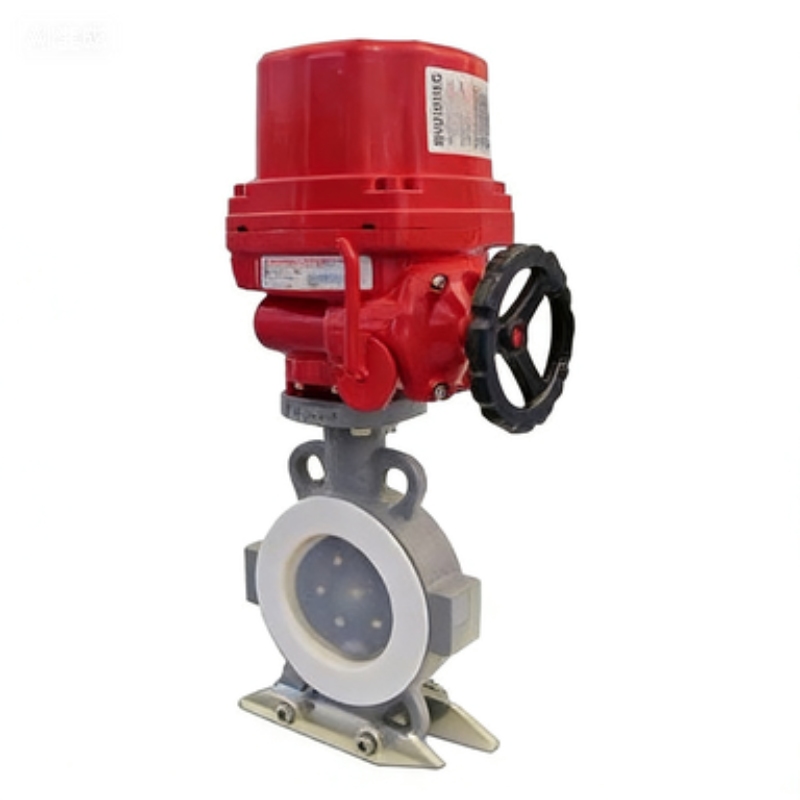
Application Selection Guide
| Application | Recommended Type | Why |
|---|
| General inline water | Wafer | Lowest cost |
| End of pipeline | Lug | Dead-end required |
| Pump suction isolation | Lug | Allows pump removal |
| Chiller/branch isolation | Lug | Downstream maintenance |
| Cooling tower cells | Lug | Individual cell isolation |
| Fire protection system | Lug | System sectional isolation |
| Chemical plant (lined) | Flanged | Lined lug valves unavailable |
Common Installation Mistakes
| Mistake | Consequence | Correction |
|---|
| Using wafer at dead-end | Valve blows out | Replace with lug type |
| Overtightening bolts | High torque, seat damage | Use torque wrench |
| Fully closed disc during install | Seat pinched | Open to 10° before tightening |
| Missing gasket between lug valve and flange | Not needed – seat seals directly | No gasket required (verify with manual) |
| Wrong bolt length | Incomplete thread engagement | Bolts must fully pass lugs |
Cost Comparison (DN150, Ductile Iron)
| Component | Wafer | Lug | Difference |
|---|
| Valve price | $150 | $185 | +23% |
| Gaskets required | None | None | Same |
| Bolts (set) | 8 long bolts | 8 short bolts (each side) | Similar |
| Installation time | Standard | Standard | Same |
| Dead-end capability | No | Yes | Lug advantage |
Summary
| Criterion | Lug Type Verdict |
|---|
| Best for | Dead-end service, line isolation, maintenance access |
| Not ideal for | Extreme budget projects (choose wafer) |
| Dead-end capable | Yes |
| Bidirectional | Yes |
| Gasket needed | No (seat seals flanges) |
| Cost premium over wafer | 15-25% |
Ivan (Mobile:+86-18968769287)
WhatsApp:+86-13579991606
Wechat:+86-18968769287
Website:www.kinko-flow.com
ZHEJIANG KINKO FLUID EQUIPMENT CO.,LTD

 Tel:
Tel: E-Mail:
 English
 Chinese
 한국어
한국어
 Español




 info@kinko-flow.com
 +86-133 5611 9006