Date:2026-05-25 13:28:13 Author:Zhejiang Kinko Fluid Equipment Co., Ltd
Wafer Type Butterfly Valves: Applications, Advantages, and Selection Guide
Wafer type butterfly valves are the most commonly specified butterfly valve in the HVAC and industrial piping industry. Their compact design, low cost, and ease of installation make them the default choice for inline general service.
This guide covers wafer type features, advantages, limitations, and typical applications.
Wafer vs. Lug vs. Flanged – Quick Comparison
| Feature | Wafer Type | Lug Type | Flanged Type |
|---|
| Weight | Lightest | Light | Heavy |
| Cost | Lowest | Medium | Highest |
| Dead-end service | No | Yes | Yes |
| Face-to-face length | Short | Short | Long |
| Bolts required | Long bolts through body | Short bolts into lugs | Integral flanges |
| Gasket required | No (seat seals) | No (seat seals) | Yes |
| Typical DN range | DN25 – DN600 | DN50 – DN600 | DN50 – DN2000+ |
What Is a Wafer Type Butterfly Valve?
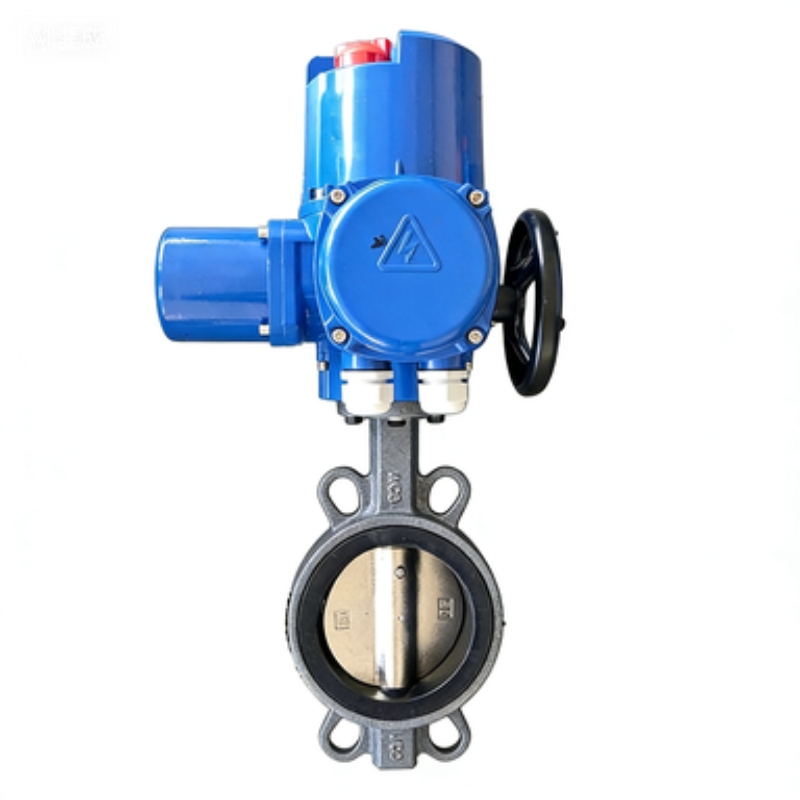
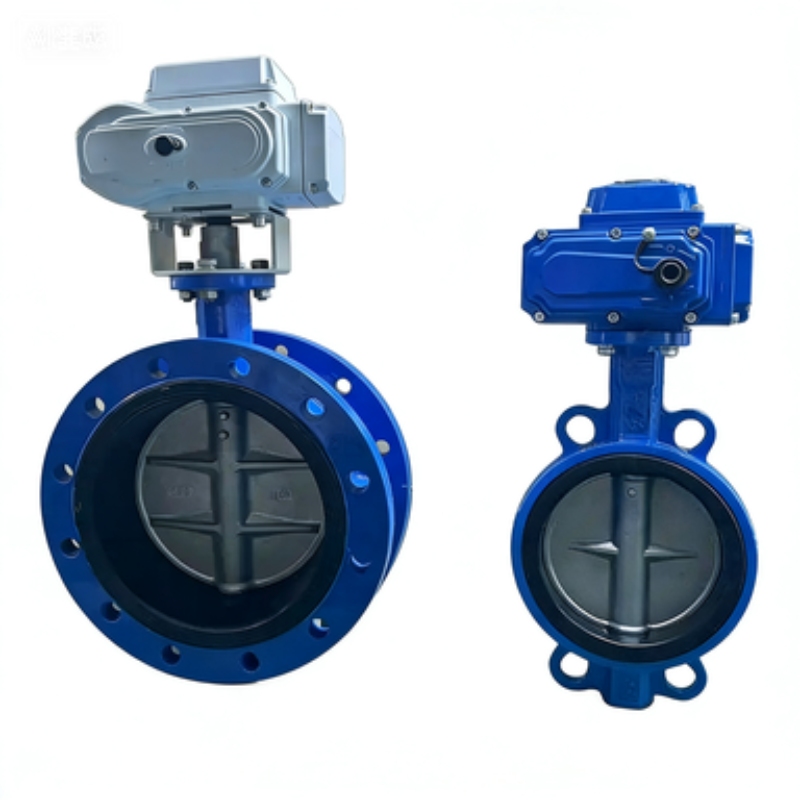
A wafer type valve has a uniform circular body with no threaded inserts or flanges. It is centered between two pipe flanges and held in place by long bolts that pass through both flanges and the valve body.
How it stays in place: Compression from flange bolts sandwiches the valve between flanges. Friction and seat compression prevent movement.
| Design Feature | Description |
|---|
| Body | Smooth bore, no lugs or threaded holes |
| Mounting | Sandwiched between two pipe flanges |
| Sealing | Seat seals against both flange faces |
| Bolt holes | Align with flange bolt holes (no threading) |
| Orientation | Self-centering when bolts are tightened |
Key Advantages
| Advantage | Explanation |
|---|
| Lowest cost | No lugs, less machining, less material |
| Lightest weight | Minimal body material |
| Shortest face-to-face | Fits in tight spaces |
| No gaskets needed | Rubber seat seals directly against flanges |
| Quick installation | Centered by bolts, no alignment lugs |
| Small actuator required | Low torque due to thin disc profile |
| Easy replacement | Drop-in replacement for same size |
Weight Comparison (Wafer vs. Lug – Same Size)
| Valve Size | Wafer Weight | Lug Weight | Weight Savings |
|---|
| DN50 | 3 kg | 4 kg | 25% |
| DN100 | 12 kg | 15 kg | 20% |
| DN150 | 18 kg | 23 kg | 22% |
| DN200 | 32 kg | 40 kg | 20% |
| DN300 | 65 kg | 82 kg | 21% |
Cost Comparison (Wafer vs. Lug – Same Size)
| Valve Size | Wafer Price (est.) | Lug Price (est.) | Cost Savings |
|---|
| DN50 | $45 | $55 | 18% |
| DN100 | $85 | $105 | 19% |
| DN150 | $150 | $185 | 19% |
| DN200 | $280 | $340 | 18% |
| DN300 | $550 | $680 | 19% |
Typical Applications
| Industry | Application | Why Wafer Works |
|---|
| HVAC | Chilled water coils | Low cost, low pressure, light weight |
| HVAC | Cooling tower bypass | No dead-end requirement |
| Water treatment | Filtered water lines | Clean media, low pressure |
| Irrigation | Main lines and branches | Budget-friendly, large volumes |
| Industrial | Compressed air | Low torque, compact |
| Fire protection | Wet pipe systems (NFPA compliant) | Acceptable for inline use |
| Marine | Non-critical ballast lines | Light weight advantage |
Limitations (When NOT to Use Wafer)
| Limitation | Why | Better Alternative |
|---|
| Dead-end service | No downstream flange to hold valve | Lug or flanged type |
| Downstream line removal | Valve drops out when flange removed | Lug type |
| Vacuum service | May draw air past seat | Flanged type |
| Heavy slurry | Abrasion wears thin body bore | Lined flanged valve |
| Frequent thermal cycling | Differential expansion risk | Lug type with longer bolts |
| High vibration | Valve may shift between flanges | Lug type |
Installation Requirements
| Requirement | Specification |
|---|
| Flange type | Flat face or raised face (both acceptable) |
| Flange standard | ASME B16.5, EN1092, JIS, etc. |
| Bolt length | Must span: flange1 + valve + flange2 + nuts |
| Disc position during install | 10° open (to protect seat) |
| Gasket | None required (seat seals to flanges) |
| Tightening pattern | Crosswise, even compression |
| Centering | Visual centering; bolts align automatically |
Installation Steps
| Step | Action |
|---|
| 1 | Separate pipe flanges slightly |
| 2 | Insert valve between flanges with disc slightly open (10°) |
| 3 | Align valve bolt holes with flange holes |
| 4 | Insert bolts through flange 1, valve, flange 2 |
| 5 | Add nuts and tighten finger-tight |
| 6 | Tighten crosswise to recommended torque |
| 7 | Cycle valve fully open and fully closed to verify operation |
Bolt Torque Recommendations
| Valve Size | Recommended Torque (Nm) – Ductile Iron Body |
|---|
| DN50 – DN65 | 35 – 45 Nm |
| DN80 – DN100 | 50 – 70 Nm |
| DN125 – DN150 | 80 – 100 Nm |
| DN200 | 110 – 130 Nm |
| DN250 – DN300 | 130 – 160 Nm |
Note: Overtightening compresses the seat, increasing torque and shortening seat life.
Common Installation Mistakes
| Mistake | Consequence | Correction |
|---|
| Disc fully closed during install | Seat pinched, permanent deformation | Open to 10° before tightening |
| Uneven bolt tightening | Flange leakage, misalignment | Crosswise pattern with torque wrench |
| Missing gasket | Not needed – but some installers add one unnecessarily | No gasket; seat seals directly |
| Wrong bolt length | Insufficient thread engagement | Bolts must pass both flanges + valve |
| Valve installed backwards | Not a problem (bidirectional) | No correction needed |
Pressure Rating by Size (PN16 Standard)
| Valve Size | PN16 Max Pressure (Bar) | Temperature Limit |
|---|
| DN25 – DN200 | 16 Bar (232 PSI) | -10°C to +80°C (EPDM) |
| DN250 – DN300 | 14 Bar (203 PSI) | -10°C to +80°C |
| DN350 – DN400 | 10 Bar (145 PSI) | -10°C to +80°C |
| DN450 – DN600 | 8 Bar (116 PSI) | -10°C to +80°C |
Pressure derates at higher temperatures. Consult P-T chart for steam or thermal oil service.
Wafer Type Selection Checklist
| Question | Answer Required |
|---|
| Is this dead-end service? | If yes, do NOT use wafer |
| Will downstream pipe be removed? | If yes, do NOT use wafer |
| Is budget the primary constraint? | If yes, wafer is best |
| Is weight a concern? | If yes, wafer is best |
| Are flanges available on both sides? | If yes, wafer works |
| Is vacuum service required? | If yes, do NOT use wafer |
Summary
| Criterion | Wafer Type Verdict |
|---|
| Best for | Inline general service, HVAC, water, low pressure |
| Not for | Dead-end, downstream removal, vacuum |
| Cost | Lowest of all butterfly valve types |
| Weight | Lightest of all butterfly valve types |
| Installation | Fast, no gaskets, self-centering |
| Dead-end capable | No |
| Bidirectional | Yes |
Ivan (Mobile:+86-18968769287)
WhatsApp:+86-13579991606
Wechat:+86-18968769287
Website:www.kinko-flow.com
ZHEJIANG KINKO FLUID EQUIPMENT CO.,LTD

 Tel:
Tel: E-Mail:
 English
 Chinese
 한국어
한국어
 Español




 info@kinko-flow.com
 +86-133 5611 9006