Tel:
Tel: E-Mail:
 English
 Chinese
 한국어
한국어
 Español




News
How to Extend Butterfly Valve Service Life: Installation, Operation, and Maintenance Guide
A butterfly valve that fails prematurely is almost always due to incorrect installation, improper operation, or lack of maintenance. With proper care, a rubber-seated butterfly valve can last 10-15 years, and a metal-seated valve 20+ years.
This guide covers practical steps to maximize valve life.
Common Failure Modes and Prevention
| Failure Mode | Cause | Prevention |
|---|---|---|
| Seat damage | Disc closed during installation | Open disc 10° before tightening bolts |
| Stem leakage | Worn packing | Periodic stem nut retorque |
| High operating torque | Overtightened flange bolts | Use torque wrench, follow spec |
| Disc binding | Thermal expansion or debris | Verify clearance, strain upstream |
| Seat extrusion | Excessive pressure | Stay within pressure rating |
| Cavitation damage | High pressure drop | Throttle at lower ΔP or relocate valve |
| Corrosion | Wrong material for media | Verify chemical compatibility |
Installation Best Practices
| Practice | Detail | Impact on Life |
|---|---|---|
| Disc position | Install with disc 10° open | Prevents seat pinching |
| Flange bolt torque | Follow manufacturer spec | Prevents seat compression |
| Bolt tightening pattern | Crosswise, even steps | Even gasket/seat compression |
| Gasket | Not required (seat seals flanges) | No double gasketing |
| Upstream strainer | Install for dirty media | Prevents debris damage |
| Pipe alignment | Align flanges before inserting valve | Prevents body stress |
Recommended Bolt Torque (Ductile Iron Body)
| Valve Size | Torque (Nm) |
|---|---|
| DN50 – DN65 | 35 – 45 |
| DN80 – DN100 | 50 – 70 |
| DN125 – DN150 | 80 – 100 |
| DN200 | 110 – 130 |
| DN250 – DN300 | 130 – 160 |
Overtightening symptom: Valve difficult to operate. Undertightening symptom: Leakage at flange.
Operation Best Practices
| Practice | Why | How |
|---|---|---|
| Avoid throttling <15° open | High velocity damages disc and seat | Keep modulating range 30°-70° |
| Cycle fully occasionally | Prevents seat sticking | Open/close fully once per month |
| Gradual operation (automated) | Reduces water hammer | Use slow-close actuator or ramp signal |
| Do not exceed pressure rating | Prevents seat extrusion | Verify system pressure |
| Do not exceed temperature rating | Prevents seat softening | Monitor media temperature |
Recommended Operating Ranges by Seat Material
| Seat Material | Max Temp | Max Pressure | Best Operating Range |
|---|---|---|---|
| EPDM | 120°C | 16 Bar | -10°C to 80°C, <12 Bar |
| Viton | 200°C | 16 Bar | 0°C to 150°C, <12 Bar |
| PTFE | 230°C | 25 Bar | -20°C to 200°C, <20 Bar |
| NBR | 90°C | 16 Bar | -10°C to 70°C, <12 Bar |
| Metal-seated | 650°C | 40 Bar | Within full P-T chart |
Maintenance Schedule
| Interval | Task | Tool Required |
|---|---|---|
| Monthly | Visual inspection for external leaks | None |
| Quarterly | Cycle valve fully open/close | Hand lever or actuator |
| Bi-annually | Check stem packing; retorque if leaking | Wrench |
| Annually | Check flange bolt torque | Torque wrench |
| Annually | Inspect disc edge for wear (if accessible) | Visual |
| Every 2-3 years | Replace soft seat (if frequent cycling) | Basic hand tools |
| Every 5-10 years | Full overhaul or replacement | As needed |
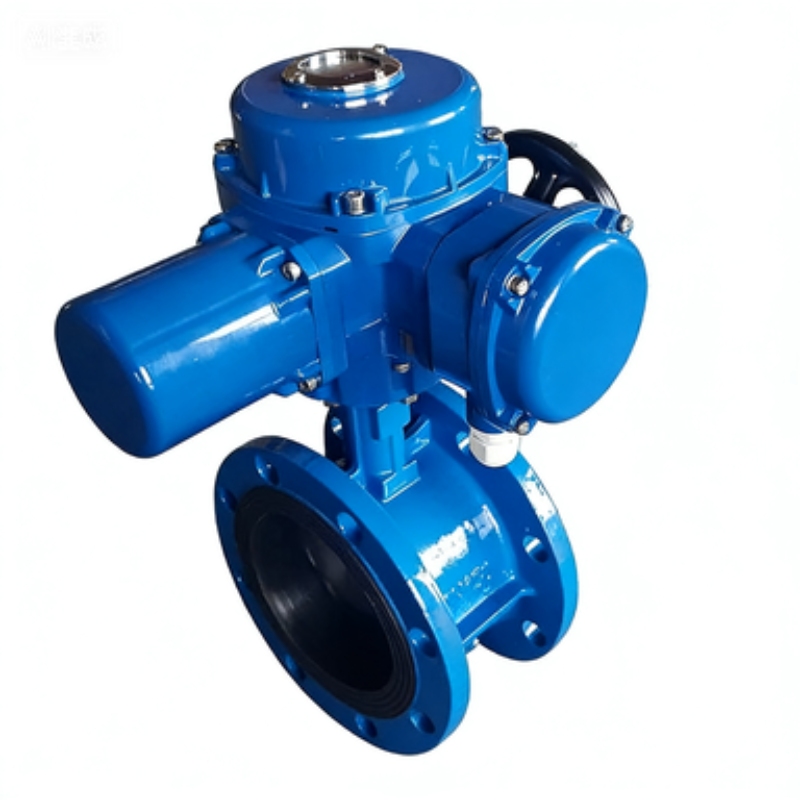
Stem Packing Adjustment
| Step | Action |
|---|---|
| 1 | Loosen stem nut/packing gland bolts slightly |
| 2 | Clean around stem area |
| 3 | Retighten packing evenly (crosswise) |
| 4 | Do not overtighten – valve should still rotate freely |
| 5 | Cycle valve to verify smooth operation |
Signs packing needs adjustment: Visible leakage at stem, or valve feels loose.
Seat Replacement Guide (Soft-Seated Valves)
| Step | Action |
|---|---|
| 1 | Remove valve from line |
| 2 | Remove disc and stem |
| 3 | Extract old seat (cut if necessary) |
| 4 | Clean body groove thoroughly |
| 5 | Install new seat (lubricate edge with silicone) |
| 6 | Reinstall disc and stem |
| 7 | Test operation before reinstalling |
Typical seat replacement interval:
Clean water: 8-12 years
Cooling tower: 5-8 years
Chemical service: 2-5 years
Frequent cycling (10+/day): 3-5 years
Debris Prevention
| Debris Type | Damage Caused | Prevention |
|---|---|---|
| Weld slag | Scratches disc, jams seat | Flush line before valve installation |
| Sand / grit | Abrades seat and disc | Upstream strainer (40 mesh) |
| Scale / rust | Prevents full closure | Strainer + periodic flushing |
| Fibers / string | Wraps around disc | Upstream filter |
Recommended Upstream Strainer by Application
| Application | Mesh Size | Cleaning Interval |
|---|---|---|
| Chilled water | 20-40 mesh | Annually |
| Cooling tower | 40-60 mesh | Quarterly |
| Raw water | 60-80 mesh | Monthly |
| Chemical service | 40-60 mesh | As needed |
Cavitation Prevention
Cavitation occurs when pressure drops below vapor pressure, forming bubbles that collapse and erode the disc and seat.
| Cavitation Sign | Solution |
|---|---|
| Noise (cracking/popping sound) | Reduce pressure drop |
| Pitted disc edge | Install two valves in series |
| Eroded seat near disc edge | Relocate valve to lower ΔP location |
Pressure drop limit to avoid cavitation (water):
| Inlet Pressure (Bar) | Max Safe ΔP (Bar) |
|---|---|
| 2 Bar | 1.0 Bar |
| 4 Bar | 1.8 Bar |
| 6 Bar | 2.5 Bar |
| 8 Bar | 3.2 Bar |
| 10 Bar | 3.8 Bar |
Rule of thumb: ΔP should not exceed 40% of inlet pressure (absolute).
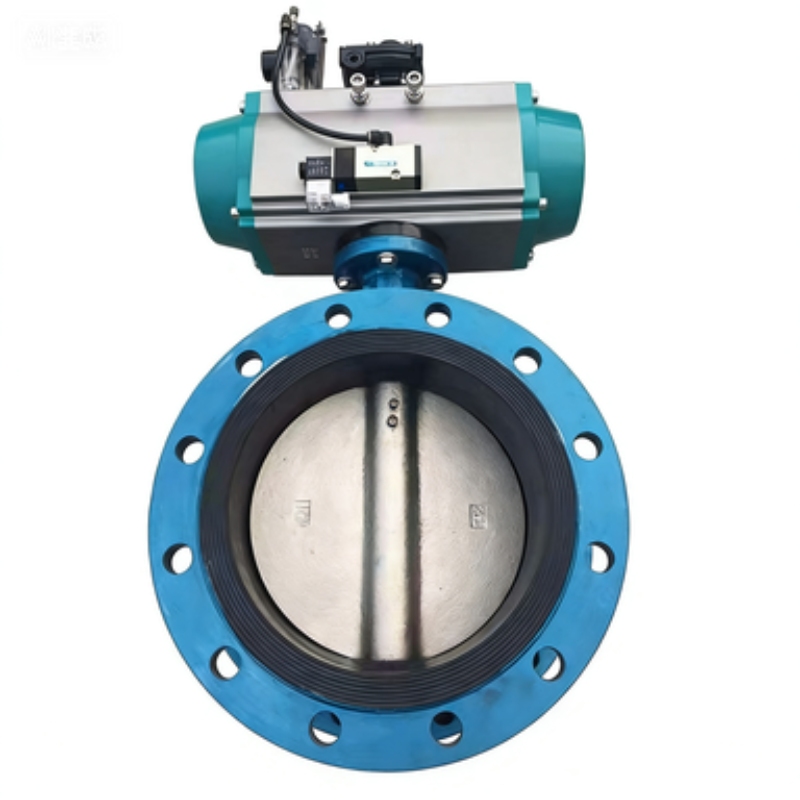
Winter / Freeze Protection
| Risk | Consequence | Prevention |
|---|---|---|
| Water freezing in valve | Disc locked, body cracked | Drain valve if system offline |
| Frozen actuator | Gears damaged, seals cracked | Insulate or heat-trace actuator |
| Condensation in electric actuator | Circuit board failure | IP67 enclosure + breather drain |
Freeze Protection Measures
| Measure | When to Use |
|---|---|
| Drain valve completely | System shutdown for winter |
| Heat tracing | Valves in unheated buildings |
| Insulation wrap | Outdoor valves |
| Glycol mixture | Year-round cold climate systems |
| Actuator heater | Electric actuators below -10°C |
Life Extension Summary Table
| Action | Life Extension Impact |
|---|---|
| Proper installation (10° open) | +3-5 years |
| Correct bolt torque | +2-4 years |
| Upstream strainer | +3-6 years |
| Avoid throttling <15° | +2-4 years |
| Annual stem packing check | +1-3 years |
| Monthly cycle (sticking prevention) | +2-3 years |
| Cavitation avoidance | +3-5 years |
| Freeze protection | Prevents catastrophic failure |
| Timely seat replacement | Resets service life |
Signs Your Valve Needs Replacement
| Sign | Action |
|---|---|
| Seat leaking even after replacement | Body groove worn – replace valve |
| Disc edge severely pitted | Replace disc or entire valve |
| Body cracked | Replace immediately |
| Stem seized despite lubrication | Replace valve |
| Flange bolt holes stripped | Replace valve (lug/wear issue) |
Quick Checklist for Valve Longevity
| Check | Status |
|---|---|
| Installed with disc 10° open | ☐ |
| Flange bolts torqued to spec | ☐ |
| Upstream strainer installed | ☐ |
| Operating within pressure/temp limits | ☐ |
| Modulating range 30°-70° | ☐ |
| Monthly cycle performed | ☐ |
| Stem packing checked annually | ☐ |
| Freeze protection in place | ☐ |
| Seat replaced at recommended interval | ☐ |
Contact our team for seat replacement kits, maintenance tools, or application-specific recommendations.
Ivan (Mobile:+86-18968769287)
WhatsApp:+86-13579991606
Wechat:+86-18968769287
Website:www.kinko-flow.com
ZHEJIANG KINKO FLUID EQUIPMENT CO.,LTD

 info@kinko-flow.com
 +86-133 5611 9006