Tel:
Tel: E-Mail:
 English
 Chinese
 한국어
한국어
 Español




News
1. Actuators – The Power Source
Actuators convert energy into mechanical motion to open or close a valve.
Pneumatic actuators – Powered by compressed air. Fast, safe for hazardous areas, and available in quarter-turn or multi-turn configurations. Spring-return models provide fail-safe action.
Electric actuators – Powered by electricity. Ideal where pneumatic supply is unavailable. Offer precise positioning and easy integration with control systems.
Hydraulic actuators – Powered by pressurized fluid. Used for very high torque or thrust applications.
Select based on: Available utility supply, torque/thrust requirements, speed needs, and fail-safe requirements.
2. Solenoid Valves – The Command Relay
Solenoid valves are electromechanical devices that direct pneumatic pressure to the actuator.
When an electrical signal is received, the solenoid energizes and shifts an internal spool, allowing air to flow to or exhaust from the actuator.
Key selection factors:
Voltage (typically DC or AC)
Port size and flow capacity
Normally open vs. normally closed
Direct-mount vs. tubing connections
Application: Essential for any pneumatic actuation requiring remote on/off control.
3. Positioners – The Precision Controller
Positioners ensure the valve reaches and maintains the exact position commanded by the control system.
They receive an analog signal (typically 4-20mA), compare it to the actual valve position, and adjust the actuator pressure accordingly to eliminate error.
Types:
Pneumatic positioners – Use air signals only.
Analog positioners – Accept standard electrical signals.
Smart positioners – Offer diagnostics, auto-calibration, and communication protocols.
Application: Essential for modulating control. Optional for simple on/off service.
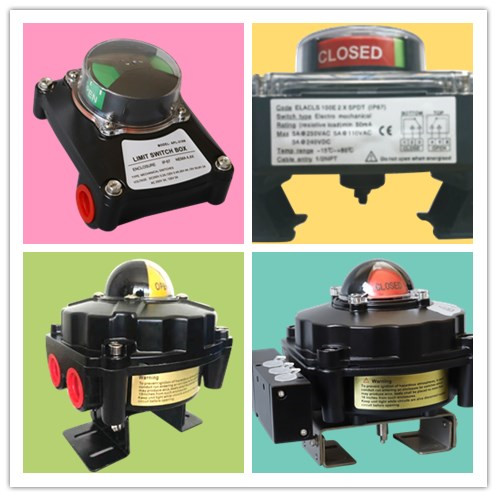
4. Limit Switch Boxes – The Feedback Provider
Limit switches confirm the valve's actual position and send that information back to the control room.
Types:
Mechanical switches – Physical contact with a cam.
Proximity switches – Non-contact sensing (inductive or magnetic).
Visual indicators – Local open/closed display.
Application: Critical for safety interlocks, remote monitoring, and confirmation of valve status.
5. Filter Regulators – The Air Quality Guardian
Filter regulators condition the compressed air supply before it reaches the actuator or positioner.
Filter – Removes moisture, oil, and particulates.
Regulator – Maintains a stable, set pressure.
Application: Required for all pneumatic systems. Protects internal components from contamination and pressure fluctuations.
6. Quick Exhaust Valves – The Speed Booster
Quick exhaust valves accelerate actuator stroking by releasing trapped air directly to atmosphere, bypassing the solenoid exhaust path.
Application: Emergency shutdown, fast-cycling processes, and applications requiring rapid response.
7. Mounting Kits and Brackets – The Connectors
Mounting kits physically attach the actuator and accessories to the valve.
Standardized mounting patterns (such as ISO 5211 for quarter-turn valves) simplify integration. Custom brackets are available for non-standard configurations.
Putting It All Together
The following table shows which accessories are typically required for different control objectives:
| Control Objective | Actuator | Solenoid | Positioner | Limit Switch | Filter Regulator | Quick Exhaust |
|---|---|---|---|---|---|---|
| Basic On/Off (Remote) | ✓ | ✓ | ✓ | ✓ | ||
| Modulating Control | ✓ | ✓ | ✓ | |||
| Modulating with Feedback | ✓ | ✓ | ✓ | ✓ | ||
| Fail-Safe On/Off | ✓ (Spring-Return) | ✓ | ✓ | ✓ | ✓ | |
| Emergency Shutdown | ✓ (Spring-Return) | ✓ | ✓ | ✓ | ✓ |
System Design Principles
Start with the Valve
Understand the valve type, size, pressure class, and torque or thrust requirements. This determines actuator sizing.
Define the Control Signal
Is the valve receiving a simple on/off command or a modulating 4-20mA signal? This determines whether a positioner is needed.
Consider Fail-Safe Needs
What happens on loss of power or air? Spring-return actuators provide a safe default position.
Plan for Feedback
How will the control system know the valve position? Limit switches or positioner feedback provide this data.
Protect the System
Always include a filter regulator for pneumatic systems. Clean, dry air is essential for long component life.
Factor in Environment
Temperature, humidity, corrosive exposure, and hazardous area classifications all influence material and certification choices.
Common Mistakes to Avoid
Undersizing the actuator – Leads to slow operation or failure to open/close. Always account for breakaway torque and pressure variations.
Skipping the filter regulator – Contaminated air shortens solenoid and actuator life significantly.
Overlooking feedback – Without position confirmation, operators cannot verify that commands were executed.
Mismatching voltage – Ensure solenoid and positioner power requirements match your control system.
Forgetting environmental ratings – Standard enclosures fail quickly in corrosive or wet environments.
The KINKO Advantage
KINKO offers fully integrated accessory packages engineered for compatibility and reliability.
Factory-matched components eliminate field integration issues.
Single-source supply simplifies procurement and warranty.
Certified products meet global safety and performance standards.
Engineering support ensures correct sizing and selection.
Ivan (Mobile:+86-18968769287)
WhatsApp:+86-13579991606
Wechat:+86-18968769287
Website: www.kinko-flow.com
ZHEJIANG KINKO FLUID EQUIPMENT CO.,LTD

 info@kinko-flow.com
 +86-133 5611 9006