Tel:
Tel: E-Mail:
 English
 Chinese
 한국어
한국어
 Español




News
Why Butterfly Valves Dominate Large Diameter Applications
Butterfly valves offer several distinct advantages over other valve types in large diameter service:
| Advantage | Why It Matters for Large Diameters |
|---|---|
| Lightweight | Significantly lighter than gate or globe valves of the same size, reducing structural support requirements. |
| Compact Design | Short face-to-face length saves space in valve stations and pipe galleries. |
| Economical | Lower manufacturing cost compared to ball valves of equivalent size. |
| Low Maintenance | Simple design with fewer components means easier servicing. |
| Quick Operation | 90° rotation allows fast open/close cycles. |
| Low Pressure Drop | Disc design minimizes flow restriction when fully open. |
Key Factors in Selecting a Motorized Butterfly Valve
1. Valve Design and Construction
For large diameter pipelines, the valve body and disc design are critical to long-term performance.
Wafer vs. Lug vs. Flanged:
Wafer style: Lightest and most economical. Fits between flanges with through-bolts. Suitable for most general applications.
Lug style: Features threaded inserts for bolting. Allows end-of-line service and isolation of one side for maintenance.
Flanged style: Provides the most secure connection. Ideal for high-pressure or high-temperature applications.
Disc and seat design:
Concentric (rubber-lined): The most common design. The disc rotates within a resilient seat. Excellent for general water and low-pressure service.
Double-offset (high-performance): The disc moves away from the seat during rotation, reducing wear. Suitable for higher pressures and temperatures.
Triple-offset (metal-seated): The ultimate design for severe service. The disc rotates with a cam-like action, achieving zero leakage with metal-to-metal sealing.
Selection tip: For most large diameter water and wastewater applications, a concentric rubber-lined butterfly valve with a flanged or wafer connection is the most cost-effective choice. For higher pressures, temperatures, or abrasive media, consider double-offset or triple-offset designs.
2. Torque Requirements and Actuator Sizing
Large diameter butterfly valves require significant torque to overcome the hydrodynamic forces acting on the disc. The required torque varies throughout the 90° stroke and is influenced by:
Differential pressure: Higher pressure across the disc increases torque significantly, especially at the initial opening and final closing positions.
Disc size: Larger discs generate higher torque requirements, proportional to the square of the diameter.
Seat friction: The friction between the disc and seat increases with larger seating surfaces. Rubber seats generally have higher friction than metal seats.
Flow velocity: Higher flow velocities create additional forces on the disc, increasing torque demand.
Safety margin: Always apply a safety margin of at least 20-30% above the calculated maximum torque to account for pressure fluctuations, temperature variations, and wear over time.
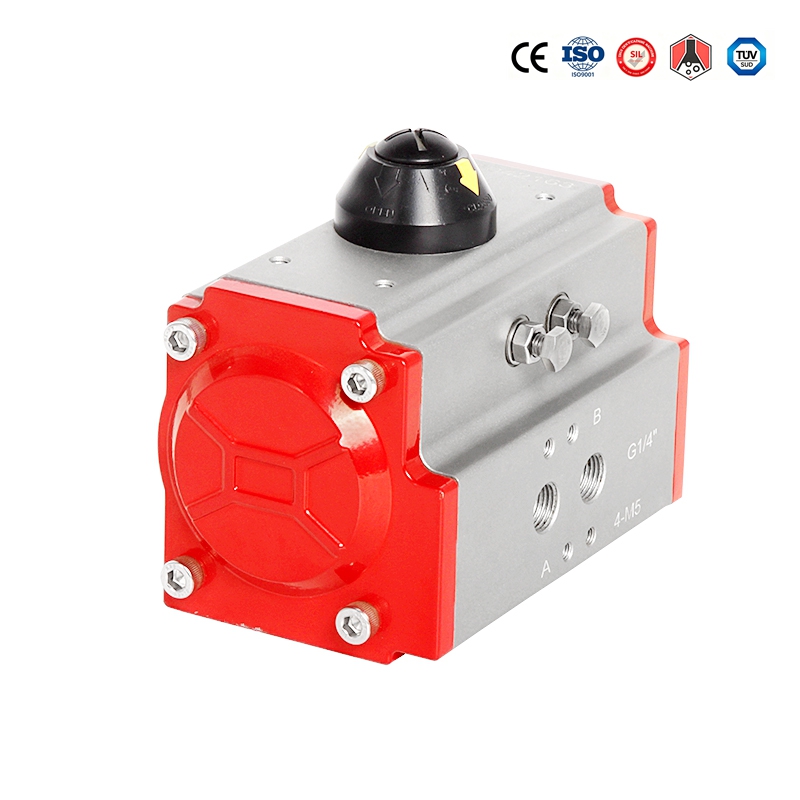
3. Actuator Selection
The motorized actuator must match the valve's torque requirements and operating environment.
Key actuator considerations:
Torque output: Must exceed the valve's maximum required torque across all operating conditions.
Speed: For large diameter pipelines, slower actuation speeds are often preferred to prevent water hammer.
Duty cycle: Define the expected frequency of operation. High-cycle applications require actuators rated for continuous or frequent operation.
Power supply: Choose between AC or DC power based on site availability.
Control type: Determine if you need on/off control or modulating (4-20mA) capability.
Fail-safe: Spring-return or battery backup options for emergency closure.
4. Pipeline and Installation Factors
Piping configuration: The butterfly valve's disc intrudes into the flow stream even when fully open. Ensure adequate upstream and downstream straight pipe runs to minimize flow disturbances and pressure drop.
Installation orientation: For large diameter valves, correct orientation is essential. For example, the disc should not close against the flow when installed near elbows or bends without proper straight pipe.
Flange compatibility: Ensure the valve's face-to-face dimensions, bolt pattern, and flange facing match the pipeline flanges. Large diameter standards vary by region (ANSI, DIN, JIS, etc.).
Support: Large butterfly valves are heavy. Proper support of the pipeline and valve body prevents distortion and ensures smooth operation.
Comparison by Seat and Disc Design
| Feature | Concentric (Rubber-Lined) | Double-Offset | Triple-Offset |
|---|---|---|---|
| Seal Material | Resilient (EPDM, NBR, etc.) | PTFE or flexible metal | Metal-to-metal |
| Leakage Rate | Tight shut-off (bubble-tight) | Very low | Zero leakage (inherently) |
| Temperature Range | Limited by seat material | Moderate | Very high |
| Pressure Range | Moderate (≤ 25 bar) | Higher (≤ 40 bar) | Highest (≤ 100+ bar) |
| Abrasive Media | Not recommended | Moderate tolerance | Excellent tolerance |
| Cost | Lowest | Moderate | Highest |
| Typical Application | Water, wastewater, HVAC | Chemical, oil & gas | Severe service, steam, cryogenic |
| Large Diameter Suitability | Excellent (up to 120") | Good (up to 60") | Moderate (typically smaller) |
Typical Applications for Large Diameter Motorized Butterfly Valves
| Application | Typical Size Range | Valve Type | Key Feature |
|---|---|---|---|
| Water Treatment Plants | 8" - 120" | Concentric, rubber-lined | Cost-effective, reliable |
| Wastewater / Effluent | 8" - 96" | Concentric, rubber-lined | Corrosion-resistant |
| Raw Water Intake | 12" - 120" | Concentric, flanged | Large flow capacity |
| Cooling Water (Power) | 10" - 80" | Concentric or double-offset | High reliability |
| HVAC Chilled Water | 8" - 36" | Concentric, wafer | Compact, economical |
| Chemical Process | 8" - 48" | Double-offset | Chemical resistance |
| Pump Discharge | 8" - 60" | Concentric, lug | Isolation capability |
| Irrigation | 8" - 72" | Concentric, wafer | Low cost, simple |
Common Mistakes to Avoid
Undersizing the actuator: The most common failure in large diameter valve automation. Always include a generous safety margin above the calculated torque.
Ignoring flow velocity effects: High flow velocities can cause "dynamic torque" that exceeds static calculations. Consider both static and dynamic conditions.
Incorrect valve orientation: Installing the valve without proper upstream straight pipe can cause cavitation, vibration, and reduced seat life.
Overlooking water hammer risk: Large diameter pipelines have significant fluid mass. Fast closure can cause pressure surges that damage pipelines and valves.
Seat material mismatch: Ensure the seat material is compatible with the media and temperature. Rubber seats degrade in oil or high-temperature applications.
Ignoring maintenance access: Large valves are heavy and difficult to service. Plan for adequate clearance for actuator removal and seal replacement.
Ivan (Mobile:+86-18968769287)
WhatsApp:+86-13579991606
Wechat:+86-18968769287
Website:www.kinko-flow.com
ZHEJIANG KINKO FLUID EQUIPMENT CO.,LTD

 info@kinko-flow.com
 +86-133 5611 9006